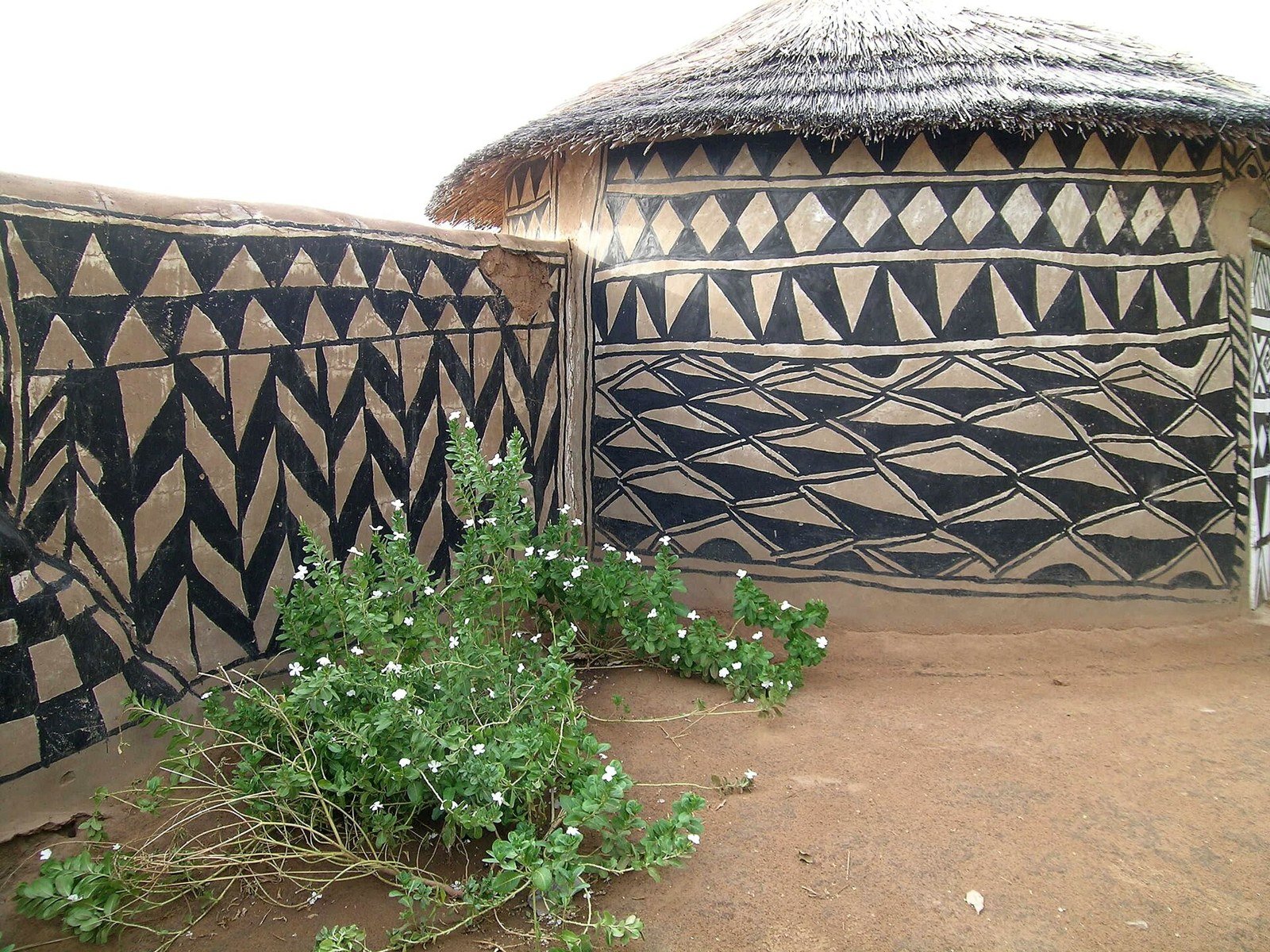
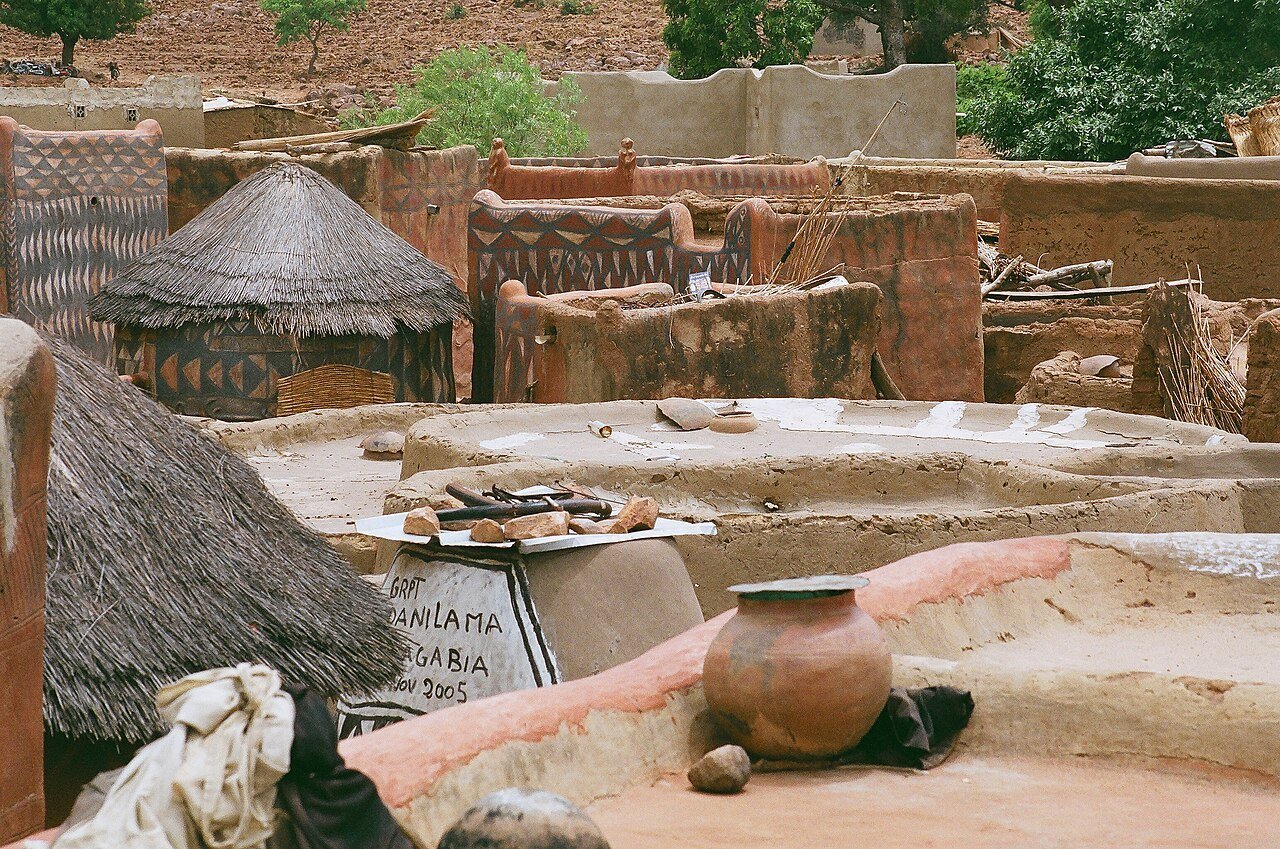
Tiébélé’s Royal Court is a living cultural landscape, not an abandoned decorative village. Its buildings, spaces and painted surfaces reflect Kasena social and cultural traditions. Understanding who creates and maintains them matters more than collecting an attractive photograph.
Cultural reference · current travel warningFocus · people & heritageContext before itineraries
UNESCO inscribed the court in 2024. The arrangement of buildings, passages and ceremonial spaces expresses an organised social world, rather than a collection of unrelated painted houses.
Read the court as an arrangement of living spaces. Passages, walls and courtyards have relationships and meanings that a photograph of one decorated façade cannot explain.
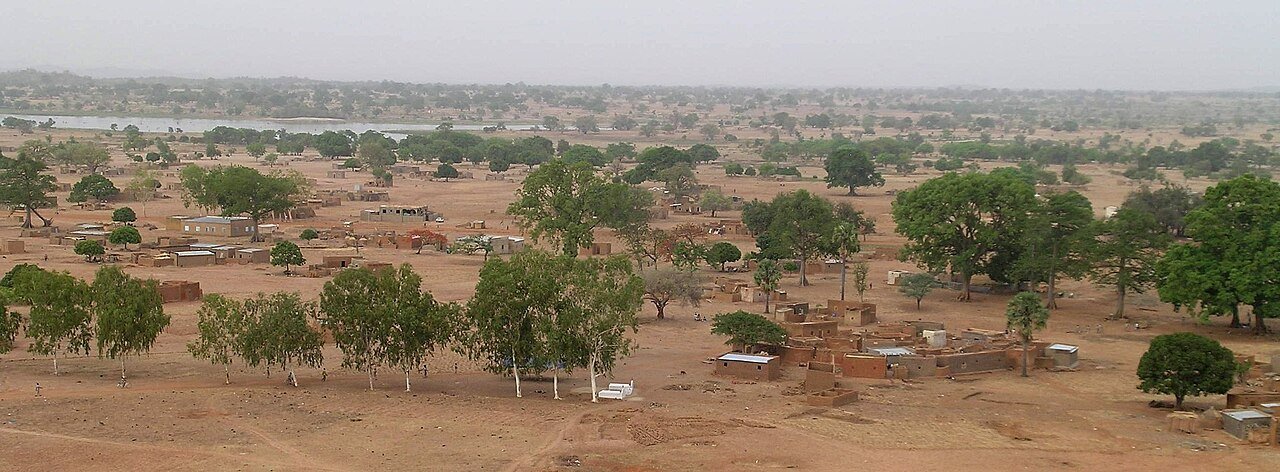
Tiébélé and its wider landscapeHugues · CC BY-SA 2.0 · Resized; display crop.
02
Decoration and knowledge
Women maintain the symbolic decorative knowledge associated with the court. The surfaces require ongoing work; they are not permanent museum objects untouched by weather or community life.
Decoration is knowledge and skilled work, not merely a pattern to copy. Credit the community and makers when discussing the designs, and avoid assuming a symbol has one universal meaning.
Any future access must follow the wishes of the community and custodians. Never assume a house, courtyard or ceremony is public simply because it appears in travel photography.
A photograph taken with permission does not make future entry automatic. Private areas, ceremonial spaces and permission to publish images are separate matters controlled by the relevant custodians.
This is a cultural reference, not a current touring recommendation. Do not use older itineraries, hotel listings or photographs as evidence that a journey is safe or permitted.
A closer cultural reading
Read the UNESCO description alongside photographs of the whole court and close architectural details. The wider arrangement helps explain why the site is more than a collection of painted walls.
Local life, one meal at a time
Eat & drink.
Food and hospitality belong to a living community. A cultural visit should not presume access to a household meal, private room or ceremony.
Use food descriptions to learn about people and place, without assuming a restaurant or market is currently accessible. Where possible, seek the cook’s or producer’s own account of the ingredients and preparation.
Cultural hospitality should never be treated as an entitlement to enter a private home or photograph a family meal.
The right base changes the visit
Where to stay.
CHOOSE YOUR SETTING
Location before labels.
An overnight stay in a household or nearby town should never be assumed from a previous visitor’s account. Community consent, current access and official advice are separate requirements.
LOCAL ENQUIRIES
Confirm the exact place.
No currently operating accommodation is asserted for this destination. Use the official visitor source to identify the appropriate local contact, and check the exact address and travel conditions before making arrangements.
This is a heritage reference under a do-not-travel advisory. UNESCO inscription does not establish current visitor access, a safe route or an operating guided visit. No road itinerary is recommended here.
Useful contacts
Go to the source.
Use current official information for access and conditions, and the destination or property itself for its own services. An old photograph or previously published itinerary does not establish today’s arrangements.
Photographs are credited beside each image and may show earlier conditions. The suggested pacing and base comparisons are ATA editorial planning ideas, not bookable itineraries or guaranteed operating information.