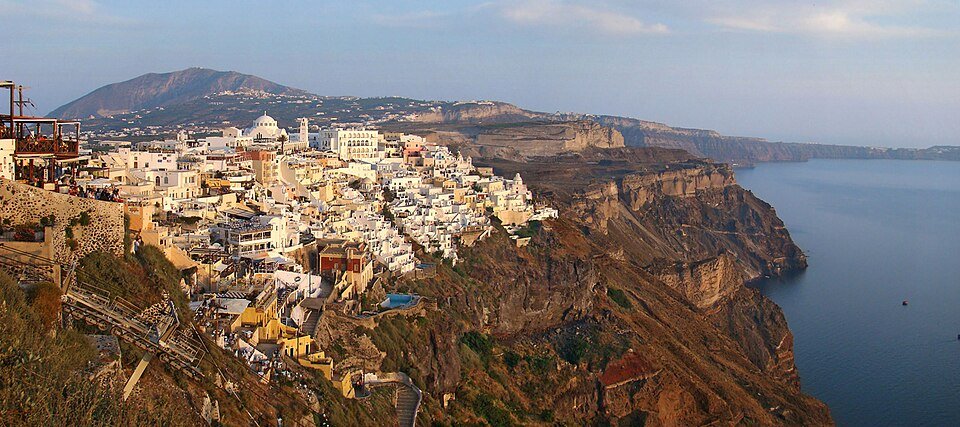
Fira & the caldera
Enjoy viewpoints without blocking narrow paths. Many terraces and hotels involve stairs.
Official visitor information ↗
CYCLADES · VOLCANIC ISLAND
Caldera views, volcanic history and villages beyond the sunset queue.
Santorini is spectacular, but a good visit needs more than a sunset plan. Give the archaeological story a morning, explore a village away from the busiest viewpoints and allow time for transfers. The island’s steep edges and busy ports make a relaxed schedule particularly valuable.
Santorini’s dramatic rim is only one part of its identity. The caldera explains the island’s volcanic setting, while Akrotiri and the Museum of Prehistoric Thera reveal a sophisticated society that existed long before the present villages. Fira and Oia bring those landscapes into the pattern of an inhabited island, with buildings, terraces and routes closely fitted to steep ground. The archaeological and modern settlements offer complementary ways to understand the place.
Suggested stay: 3 nights. Adapt the pace to your interests.
Enjoy viewpoints without blocking narrow paths. Many terraces and hotels involve stairs.
Official visitor information ↗
Visit the prehistoric settlement and connect the view above ground with the island’s deeper history.
Official visitor information ↗
Add context to the island’s ancient settlements and objects before or after Akrotiri.
Official visitor information ↗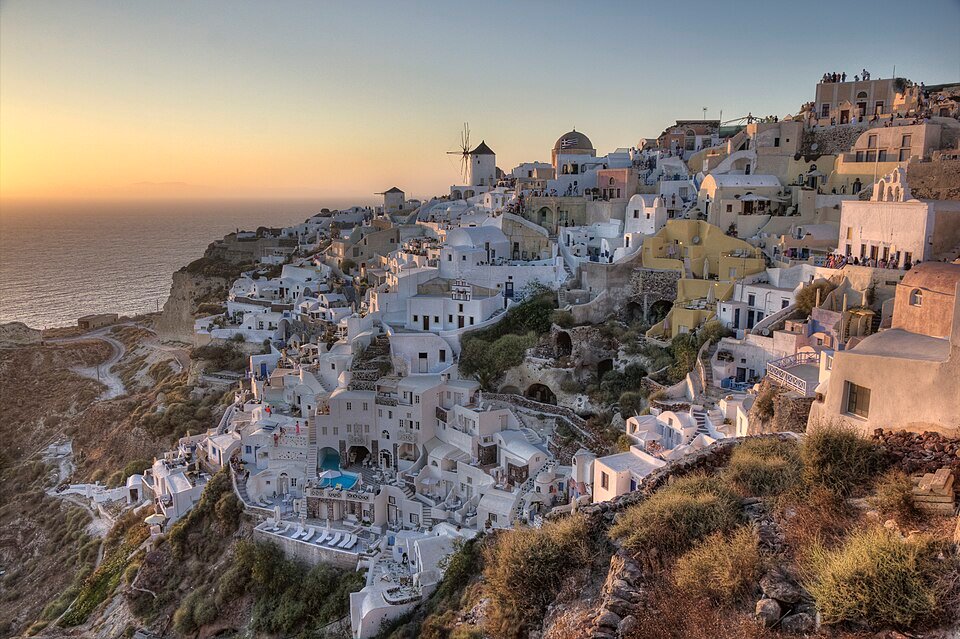
Try a morning walk rather than making sunset the only reason to go. Respect private roofs and terraces.
Official visitor information ↗Reserve ferries or flights, your hotel and any boat outing ahead. Keep a buffer before an international departure in case sea conditions disrupt services.
Choose short shaded outings and keep clear of unprotected drops. A boat excursion should suit the children’s comfort and the conditions.
Ask about every flight of steps from the drop-off to the room. A caldera view does not imply step-free access.
Summer brings crowds and wind as well as heat. Outside the main season, check restaurant and ferry availability.
A LOCAL DINING OPTION
Cretan and Santorinian flavours in Exo Gonia, away from the caldera promenade. Reserve directly and ask about the steps down from Agios Charalambos church.
Two places to consider, compare location and facilities directly with the property.
DIRECT PROPERTY CONTACT
A Fira base for exploring Santorini. Compare the actual room and transfer arrangements.
Fira Town, Santorini 84700DIRECT PROPERTY CONTACT
A Fira property overlooking the caldera. Discuss stairs and the precise arrival point.
89 Markou Nomikou, Fira, Santorini 84700Fewer than 15 rooms? Contact the hotel directly. 15 rooms or more? Ask ATA for low group rates → We use existing agreements where available and negotiate for your group when needed. We respond within 48 hours, allowing for worldwide time zones.
The ferry port at Athinios requires a road transfer. Check the exact port and pickup point, a map pin at Fira is not an arrival plan.
Official transport or local travel resource ↗Use the official resource below for local information, current visitor arrangements and tourism contacts. For a specific attraction or booking, contact its operator directly.
Official destination information ↗Written for ATA, published October 26, 2026. Official resources are linked beside the subjects they support. A live source link is not a guarantee that conditions will remain unchanged.
Attraction descriptions and photograph credits reviewed October 30, 2026.