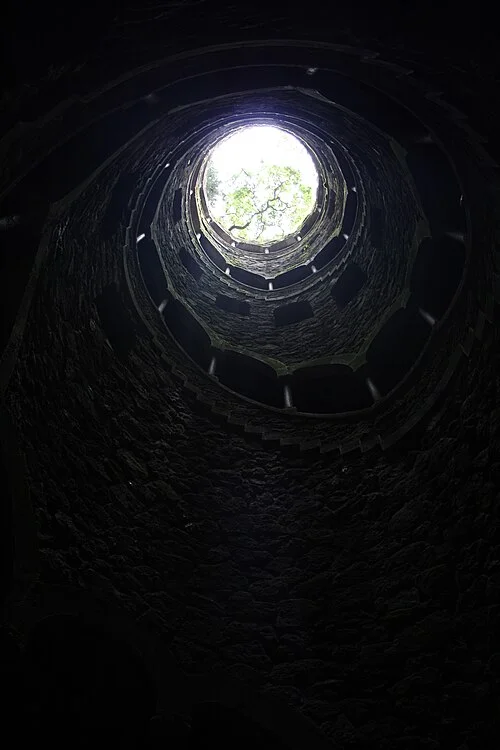
From above, the initiation well looks like a stone spiral sinking into the earth. From below, the daylight becomes a circle of sky. It is one extraordinary part of a garden designed to make you look, wonder and lose track of the ordinary.
Regaleira is best understood as an entire designed estate, where buildings and planted routes create a sequence of changing viewpoints. Carvalho Monteiro’s interests met Manini’s experience as an architect and stage designer. That partnership helps explain the deliberate shifts between exposed towers, intricate stonework and enclosed underground spaces, rather than reducing the property to a single mysterious feature.
Quinta da Regaleira took shape around the turn of the twentieth century for António Augusto Carvalho Monteiro, working with the architect Luigi Manini. Its palace, towers, grottoes and garden structures belong to a deliberately theatrical world. The well is an architectural feature of that landscape, not an ancient water source discovered by accident.
Carvalho Monteiro acquired the property in 1893, and garden-making under Manini’s direction began later in that decade. Work on the house and chapel intensified in the early twentieth century. The estate’s combination of architecture, sculpture and landscape was therefore a sustained artistic commission, developed over years rather than assembled as an ancient ruin.
The spiral stair is the famous moment, but do not make the entire visit a queue for one picture. Follow the approved garden route, look at the stone details and leave time for the estate around it. Symbolic interpretations are part of its appeal, avoid treating every modern legend as established history.
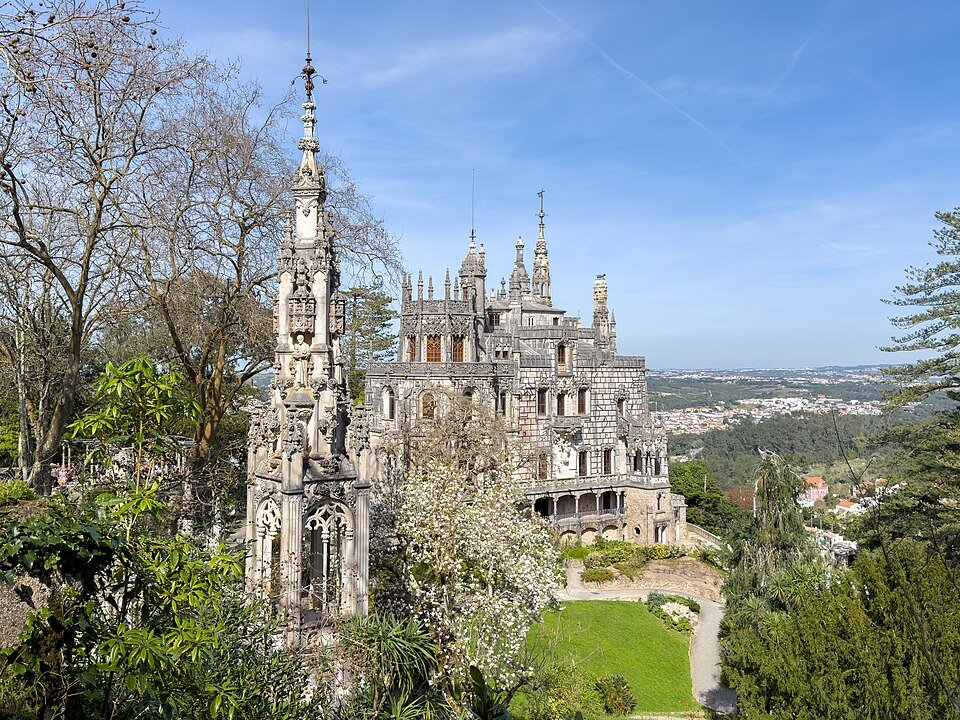
The palace exterior reveals another side of the same project, with carved pinnacles, openings and ornament set against planted grounds. The estate opened to the public in 1998 after municipal acquisition and the beginning of restoration. Current operator notices limit palace access to its main floor and list the aquarium as closed; the garden’s symbolic reputation should not obscure these concrete arrangements.
Make the visit work for you
Tickets, access & reservations
Reserve a dated, timed visit through the estate’s official ticket service. Read the current visitor notices, accessible areas and well-route instructions before booking. The stairways, enclosed passages and potentially damp surfaces need care. Ask about an alternative garden visit if stairs or confined spaces are unsuitable.
Use the visitor entrance on Rua Barbosa du Bocage, 2710-567 Sintra. Plan the final approach from Sintra village or station, it is not the entrance to Pena Palace. Local traffic restrictions and limited parking make a transport plan worthwhile.