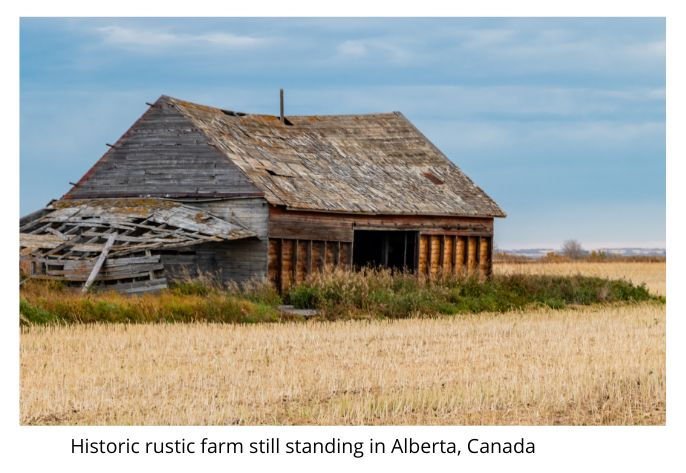
Alberta, located in western Canada, has a diverse history that
spans thousands of years, from the Indigenous peoples who first inhabited the
region to the European exploration and settlement that shaped the province.
Here's an overview of the history of Alberta:
Indigenous Peoples: The land that is now Alberta has been inhabited by
Indigenous peoples for thousands of years. The area was home to various tribes,
including the Blackfoot Confederacy (which includes the Siksika, Piikani, and
Kainai nations), the Cree, and the Métis. These Indigenous groups lived off the
land, relying on hunting, fishing, and gathering for their sustenance and
cultural practices.
European Exploration: European exploration of Alberta began in the late 18th
century. In the late 1700s, British explorer Anthony Henday ventured into the
region on behalf of the Hudson's Bay Company, establishing trade relationships
with Indigenous peoples. Scottish explorer Alexander Mackenzie reached the
western part of Alberta in 1793, becoming the first recorded person of European
descent to reach the Pacific Ocean by land.
Fur Trade and Hudson's Bay Company: The fur trade played a crucial role in
Alberta's history. The Hudson's Bay Company established trading posts throughout
the region, facilitating the exchange of furs with Indigenous peoples. Fort
Edmonton, founded in 1795, became a major trading hub and the nucleus of future
development.
Rise of Settlement: In the late 19th century, the Canadian government encouraged
settlement in the western territories, including Alberta. The Dominion Lands Act
of 1872 provided settlers with the opportunity to acquire land. Settlers from
various countries, including Britain, the United States, and Eastern Canada,
arrived in Alberta to farm, ranch, and establish communities.
North-West Mounted Police: The North-West Mounted Police (NWMP) played a vital
role in maintaining law and order in the region during the late 19th century.
The NWMP, later renamed the Royal Northwest Mounted Police and eventually
becoming the Royal Canadian Mounted Police (RCMP), established forts and
patrolled the area, ensuring peaceful relations with Indigenous peoples and
overseeing the influx of settlers.
Creation of Alberta: Alberta became a province of Canada on September 1, 1905,
along with its neighboring province, Saskatchewan. The province was named after
Princess Louise Caroline Alberta, the fourth daughter of Queen Victoria.
Edmonton was designated as the capital of the province.
Oil and Gas Boom: In the early 20th century, the discovery of vast oil reserves
in Alberta transformed the province's economy. Oil and gas extraction became a
major industry, attracting investment, population growth, and urban development.
The city of Calgary emerged as a center of the oil and gas industry, while
Edmonton continued to thrive as a governmental and educational hub.
Modern Alberta: Today, Alberta is known for its diverse economy, natural
resources, and breathtaking landscapes. The province's economy is supported by
industries such as energy, agriculture, forestry, and tourism. Alberta is also
home to stunning national parks like Banff and Jasper, which draw visitors from
around the world.
Alberta's history is preserved and celebrated in museums, heritage sites, and
cultural events throughout the province. Places like Fort Edmonton Park,
Head-Smashed-In Buffalo Jump, and the Royal Alberta Museum provide insights into
Alberta's rich history and cultural heritage.
Note: This overview provides a brief summary of Alberta's history, and there are
many more significant events and details that could be explored in further
depth.
255,286 square miles.
760 miles.
400 miles.
10 per square mile.
Background: White.
Image: A red rose.
Text: "Alberta - Wild Rose Country".
A yellow shield with a black border.
There is a small shield at top centre with a replica of the design on the provincial flag - a cross, mountains, and fields.
As well as the road number, the word "Alberta" appears.
Named in honour of Princess Louise Caroline Alberta, the wife of a Canadian governor-general and a daughter of Queen Victoria.
Sunny Alberta, since Alberta has more hours of sunshine per year than any other province.
Calgary: January high 26F, July high 76F. Edmonton: January high 17F, July high 71F.
Alberta
Home | States/Provinces | Subjects