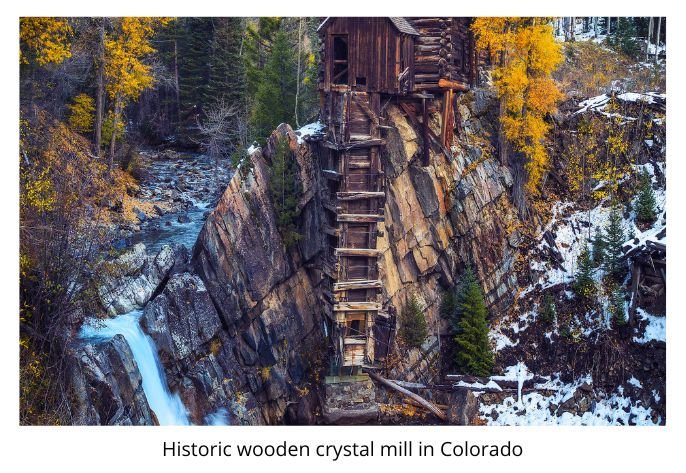
Colorado, located in the western United States, has a fascinating history that
encompasses Native American cultures, Spanish exploration, and the American
frontier. Here's an overview of the history of Colorado:
Native American Settlements: Colorado has a rich Native American history that
predates European arrival. The region was home to various Native American
tribes, including the Ute, Cheyenne, Arapaho, and Comanche. These tribes lived
off the land, hunting bison, cultivating crops, and establishing trade networks.
Spanish Exploration: Spanish explorers, including Francisco Vázquez de Coronado,
ventured into present-day Colorado in the 16th century. They sought to find
legendary cities of gold but ultimately encountered Native American tribes
instead. The Spanish presence was limited, and they did not establish permanent
settlements in the area.
Fur Trapping and Mountain Men: In the early 19th century, fur trappers, known as
mountain men, arrived in the Colorado region. These explorers and traders, such
as Kit Carson and Jim Bridger, ventured into the Rocky Mountains in search of
beaver pelts, establishing temporary trading posts and leaving a mark on the
area's history.
Pikes Peak Gold Rush: In 1858, gold was discovered in present-day Colorado, near
the base of Pikes Peak. The news of the gold rush spread, attracting thousands
of fortune seekers to the region in what became known as the Pikes Peak Gold
Rush. This influx of settlers and miners led to the establishment of mining
towns and the growth of the Colorado Territory.
Colorado Territory and Statehood: The Colorado Territory was created in 1861,
encompassing a vast area that extended into present-day Wyoming, Utah, and New
Mexico. In 1876, Colorado became the 38th state of the United States. The state
was named after the Colorado River, which runs through it.
Railroads and Development: The construction of railroads in Colorado played a
significant role in the state's development. Rail lines connected Colorado's
mining towns to the rest of the country, facilitating the transportation of
minerals, goods, and people. Cities like Denver and Colorado Springs thrived as
transportation hubs and centers of commerce.
Silver Boom and Bust: Alongside gold, silver mining also became a prominent
industry in Colorado. The discovery of silver deposits in towns such as
Leadville and Aspen led to another mining boom in the late 19th century.
However, economic fluctuations and declining silver prices eventually led to a
bust, impacting the state's economy.
Modern Colorado: Today, Colorado is known for its stunning natural beauty,
outdoor recreational opportunities, and a diverse economy. The state attracts
visitors with its national parks, such as Rocky Mountain National Park, and
offers activities like skiing, hiking, and whitewater rafting. Additionally,
Colorado has a thriving arts and cultural scene, and its major cities, including
Denver and Boulder, are centers of innovation and entrepreneurship.
Colorado's history is preserved and showcased in various museums, historic
sites, and landmarks throughout the state. Places like Mesa Verde National Park,
the Denver Art Museum, and the Colorado Railroad Museum offer insights into the
state's past.
Note: This overview provides a brief summary of Colorado's history, and there
are many more significant events and details that could be explored in further
depth.