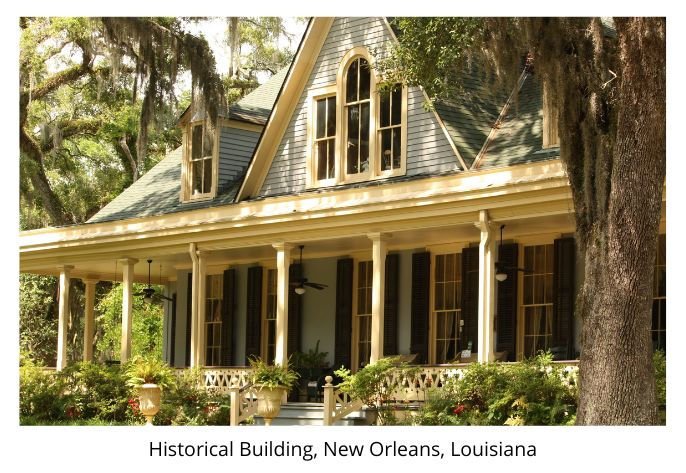
In the verdant embrace of the Mississippi Delta lies a land
of enchantment and cultural richness. Louisiana, a tapestry woven with diverse
influences, beckons us to explore its captivating history. As I assume the voice
of Alcée Fortier, an esteemed Louisiana folklorist and historian, I embark on an
essay that captures the essence of this extraordinary state.
Louisiana, with its blend of Native American, European, African, and Caribbean
traditions, stands as a testament to the vibrant tapestry of cultures that have
converged upon its soil. From its earliest beginnings, Louisiana's history has
been shaped by its geography and the relentless flow of the mighty Mississippi
River.
The Native American tribes, such as the Choctaw, Natchez, and Houma, thrived in
these lands long before European contact. Their rich heritage permeates
Louisiana's cultural fabric, from place names to the echoes of their languages.
It is through their enduring presence that we recognize the deep roots of this
land.
European exploration and colonization introduced Louisiana to the world. The
French, led by Sieur de La Salle, claimed the territory in the late 17th
century, opening the door to a grand saga of French influence in the New World.
New Orleans, the crown jewel of Louisiana, was established by the French in 1718
and would become a beacon of French culture, music, and cuisine.
The arrival of the Acadians, or Cajuns, in the mid-18th century further enriched
Louisiana's cultural mosaic. Expelled from their homeland in Nova Scotia,
Canada, the resilient Acadians found solace and a new home in the bayous and
prairies of Louisiana. Their distinct dialect, vibrant music, and mouthwatering
cuisine continue to shape Louisiana's cultural identity.
The Spanish flag flew over Louisiana briefly, from 1763 to 1800, before the
territory returned to French control. However, in a monumental event known as
the Louisiana Purchase, the United States acquired the vast lands of Louisiana
from Napoleon Bonaparte's France in 1803. This historic acquisition doubled the
size of the young nation, opening the door to American influence and migration.
The plantation economy, centered on the cultivation of cotton and sugar,
flourished in Louisiana during the antebellum era. The institution of slavery
cast a dark shadow over this period, as enslaved Africans and their descendants
toiled on plantations, leaving an indelible mark on Louisiana's history. The
echoes of their struggles and resilience can still be heard in the haunting
melodies of blues and jazz.
The Civil War brought great upheaval to Louisiana, as the state experienced both
Union and Confederate occupations. The scars of this conflict remain, but
Louisiana emerged from the ashes with a determination to rebuild and preserve
its unique cultural heritage.
The 20th century witnessed a renaissance of Louisiana's cultural expression.
From the Harlem Renaissance to the birth of jazz and the emergence of notable
literary figures such as Kate Chopin and Tennessee Williams, Louisiana's
artistic contributions reverberated throughout the world. New Orleans, with its
vibrant music scene and iconic festivals like Mardi Gras and Jazz Fest, became a
global symbol of cultural celebration.
Today, Louisiana stands as a testament to resilience and cultural fusion. Its
cities and towns, from Baton Rouge to Lafayette, from Shreveport to Lake
Charles, exude a vibrant energy, while its swamps and bayous offer glimpses into
a bygone era. The state's culinary delights, from gumbo and jambalaya to
crawfish etouffee and beignets, tantalize the taste buds and reflect the diverse
influences that have shaped its cuisine.
Louisiana is a land of stories, of vibrant characters and enchanting tales,
woven through time and preserved in its folklore. It is a place where music
flows like
a river, where cuisine is an art form, and where a joie de vivre permeates the
air. To fully comprehend Louisiana's history is to immerse oneself in its unique
cultural tapestry, to wander through its streets and bayous, and to listen
intently to the melodies that echo across its land.
As Alcée Fortier, I am humbled to have the opportunity to glimpse into the soul
of Louisiana, to honor its rich heritage, and to share its captivating history
with the world. Let us celebrate Louisiana's diversity, its resilience, and the
enduring spirit of its people as we journey through the vibrant tapestry of this
remarkable state.
Images: Two pelicans. A pelican also features on the state flag.
Text: "Sportsman's Paradise - Louisiana". The "U", "S" and first "A" are in upper case, blue and larger font so as to make them stand out, making "USA".
Home | States/Provinces | Subjects