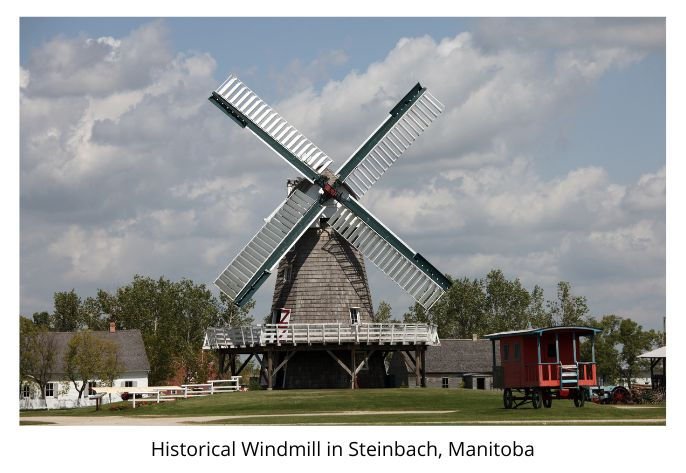
If we were to spin a yarn about the history of Manitoba, it
would not be a gentle story. It would not be a tale of calm waters and sunny
meadows, but rather one of fierce winters, sprawling landscapes, and a
relentless struggle for survival. It would be a tale steeped in the indomitable
spirit of the land and its people. The true, raw essence of the wild would be
its underpinning.
The story of Manitoba is one that echoes back over 6,000 years. The land, with
its sweeping plains, colossal skies, and dense forests, was first stewarded by
the Indigenous Peoples, including the Cree, Ojibwa, Dene, Dakota, and Inuit.
Theirs was a life lived in harmony with nature, but also a life shaped by the
arduous demands of survival.
Manitoba's name derives from the Cree or Ojibwa language, meaning "where the
spirit (manitou) speaks", or "the straits of Manitou, the Great Spirit". The
province’s spiritual connotations are as deep and profound as the clear, still
waters of its thousands of lakes.
With the arrival of the European fur traders in the 17th century, life took on a
new hue. The Hudson's Bay Company and the North West Company, both fierce
rivals, left indelible imprints on Manitoba's identity. These men lived a life
of rugged adventure and peril, echoing the wild spirit that has always been an
integral part of Manitoba's essence.
The Red River Rebellion of 1869 and 1870 marked a significant turning point in
Manitoba's history. Led by Louis Riel, a Metis leader, the rebellion sought to
preserve Metis rights and culture during the westward expansion of Canada. The
rebellion speaks of a people who refused to be silenced, who stood their ground
amidst the encroaching tide of change.
In 1870, Manitoba became the fifth province of Canada. Its growth was rapid,
with a surge of settlers enticed by the promise of rich farmlands and abundant
opportunities. From this point on, Manitoba grew and prospered, its industry and
agriculture nourishing the region.
Manitoba was not without its trials, however. The harsh winters, the Great
Depression, and world wars all left their marks. Yet, through all the
tribulations, the spirit of Manitoba remained unbroken.
Manitoba, today, stands proud and vibrant, an amalgamation of cultures and
histories. Its cities hum with the hustle of modern life, yet the call of the
wild is never too distant. The people of Manitoba carry the echo of their
history, of a land shaped by tenacity, survival, and the enduring call of the
wild.
One could argue that the story of Manitoba is one of resilience, of a spirit as
untamed and unyielding as the very wilderness itself. The province has changed,
of course, as all things do. But if you listen closely, you can still hear the
howl of the wild, the murmur of the spirits, resonating in the very soul of
Manitoba.
Image: None.
Text: "Friendly Manitoba".
A buffalo and the word "Manitoba" appear above the road number.
A buffalo and the word "Manitoba" appear above a black oval which contains the road number.
Home | States/Provinces | Subjects