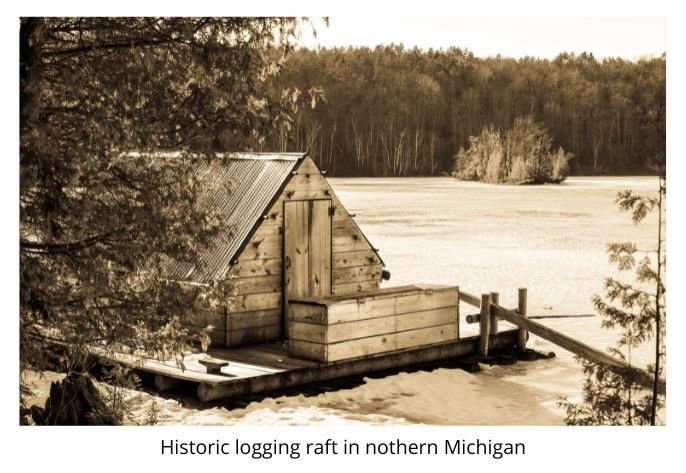
To appreciate the history of Michigan is to embark on a
journey, an odyssey through time that charts a path from the native tribes who
first nurtured the land, through the era of European colonization, and onto the
waves of change that would shape this place into the Michigan we know today.
Before Europeans set foot on what we now call Michigan, it was home to several
Native American tribes including the Potawatomi, Ojibwe, and Ottawa,
collectively known as the "Three Fires" of the Anishinaabe peoples. They
thrived, utilizing the resources offered by the Great Lakes and surrounding
forests, creating intricate societies deeply entwined with the rhythms of the
land.
The first Europeans to reach Michigan were French explorers in the early 17th
century, with Étienne Brûlé being widely considered the first in 1620. Jesuit
missionaries and fur traders soon followed, establishing Sault Ste. Marie, the
first European settlement in 1668, and later Detroit in 1701 by Antoine de la
Mothe Cadillac.
The territory changed hands between the French and British during the colonial
wars, and ultimately came under American control after the Revolutionary War,
despite continued British presence until 1796. Native American tribes resisted
the encroachment, leading to conflicts such as Pontiac's Rebellion and the
Northwest Indian War.
Michigan became part of the Indiana Territory in 1800, and later the Michigan
Territory in 1805. The War of 1812 again saw British forces occupy Detroit, but
American control was reestablished by the war's end.
Michigan's path to statehood was marred by the so-called "Toledo War", a dispute
over a narrow strip of land that both Michigan and Ohio claimed. The compromise
of 1836 resolved the dispute, with Michigan giving up the Toledo strip but
gaining the western part of the Upper Peninsula. Michigan was admitted as the
26th state in the Union on January 26, 1837.
The late 19th and early 20th centuries brought profound transformation as
Michigan became a major hub of industry. Lumbering paved the way for growth, but
it was the rise of the automobile industry, led by pioneers like Henry Ford,
that truly revolutionized the state's economy. Detroit earned the moniker "Motor
City" as it became synonymous with American auto manufacturing.
Despite the economic hardships of the Great Depression and the decline of the
auto industry in the late 20th century, Michigan has demonstrated resilience.
Diversification into sectors like technology and healthcare, along with a
renewed investment in Detroit, has marked the state's recent history.
Michigan’s story, however, is not solely of industry. Its cultural
contributions, from the Motown sound that revolutionized American music, to its
robust literary tradition with voices like Ernest Hemingway, enhance the state’s
rich tapestry.
From the Native Americans who first inhabited the region, to the industry
innovators who revolutionized American transportation, Michigan's history is a
narrative of transformation and resilience. As we move forward, we do so with a
keen understanding of this past, ready to face the challenges and opportunities
that await in the next chapter of Michigan's ongoing story.
Upper Peninsula 175 miles.
Upper Peninsula 325 miles.
Image: None.
Text: "Michigan - Great Lakes".
The diamond contains the letter "M" above the road number.
The Great Lake (or Lakes) State.
Marquette: January high 25F, July high 75F.
Sault Ste Marie: January high 22F, July high 75F.
The two peninsulas are connected by the Mackinaw Bridge.
The Upper Peninsula is connected to Ontario via the international bridge at Sault Ste Marie.
Home | States/Provinces | Subjects