Traversing Time: The History of Nebraska
The Cornhusker State, Nebraska, carries a rich and complex history that spans
thousands of years. It's a narrative woven from the vibrant tapestry of
indigenous cultures, the stirring saga of pioneers and homesteaders, and the
ceaseless march of progress and innovation.
Nebraska's earliest chapters are told through the lives of its indigenous
peoples, including the Pawnee, Otoe, and Omaha tribes, who thrived on the land
long before European contact. These societies developed complex cultures, deeply
intertwined with the rhythms of the earth and the bison herds they relied upon.
The first recorded European exploration came in 1804 with the Lewis and Clark
Expedition, which passed through the Nebraska Territory. Their reports of the
region's natural bounty paved the way for future explorers, traders, and
settlers.
In the mid-19th century, Nebraska became a crossroads for westward expansion.
The Oregon, California, and Mormon Trails traversed its terrain, bringing a
steady flow of pioneers. The establishment of Fort Kearny provided a vital
outpost for weary travelers and marked a significant increase in the U.S.
military presence in the region.
The passage of the Kansas-Nebraska Act in 1854 established Nebraska as a
territory and opened it up for settlement. This act, which left the decision of
slavery to popular sovereignty, also heightened national tensions in the prelude
to the American Civil War.
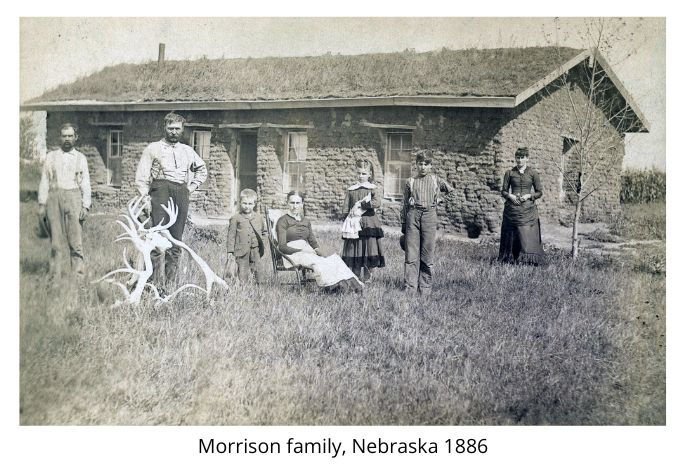
In 1867, Nebraska was admitted to the Union as the 37th state. The same year saw
the founding of the University of Nebraska, a significant milestone for
education in the state. With the completion of the First Transcontinental
Railroad in 1869, Nebraska's cities and farming communities flourished.
The 20th century brought significant changes. Agriculture continued to shape
Nebraska's identity, but there was growing diversification. The rise of
industries such as meatpacking and rail freight, and later the emergence of
financial services, technology, and telecommunications, transformed its economy.
Throughout its history, Nebraska has weathered its share of hardships, from the
Dust Bowl and Great Depression to economic downturns. Yet, with each challenge,
Nebraska and its people have demonstrated remarkable resilience, embodying their
state motto, "Equality Before the Law."
Today, Nebraska is known for its agricultural prowess, the vibrant cityscapes of
Omaha and Lincoln, and a quality of life often linked with the heartland of
America. It's a state where the echoes of Native American tribes, the footsteps
of pioneers, and the spirit of innovation merge to create a unique cultural and
historical landscape.
In the end, Nebraska's history is more than a series of events; it's a living
narrative that continues to shape the state's identity. As the sun sets over the
Sandhills, casting long shadows on the prairie, one cannot help but reflect on
the journey that has led here and the path still to be traveled.
Image: Golden coloured wheat fields and a wind pump.
Text: "Nebraska" (in a brush font).
Image: A covered wagon pulled by oxen. This is presumably a reference to the route through Nebraska forming a significant section of the Oregon Trail.
Text: "Nebraska".
Scottsbluff: January high 39F, July high 89F.
Home | States/Provinces | Subjects