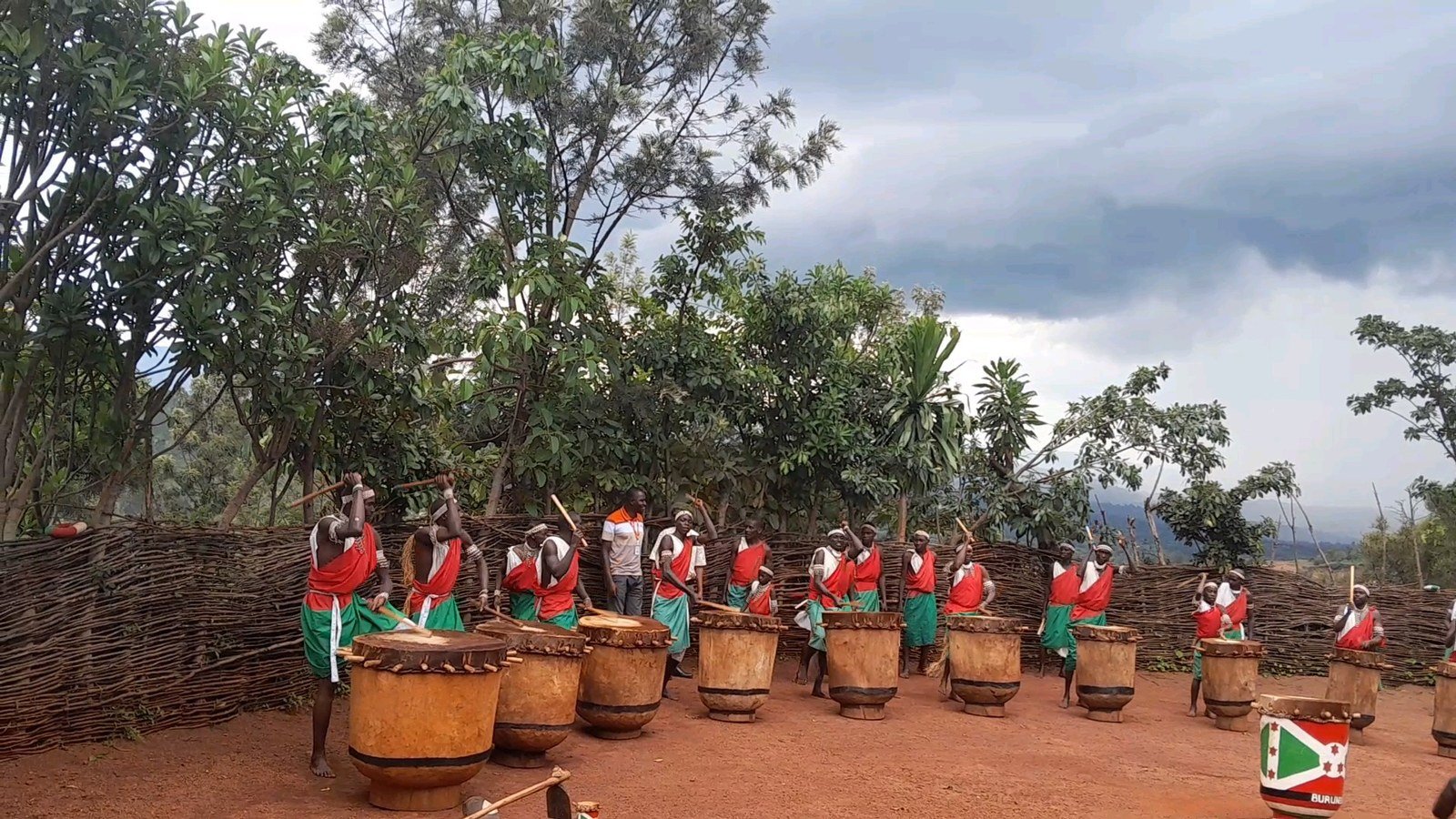
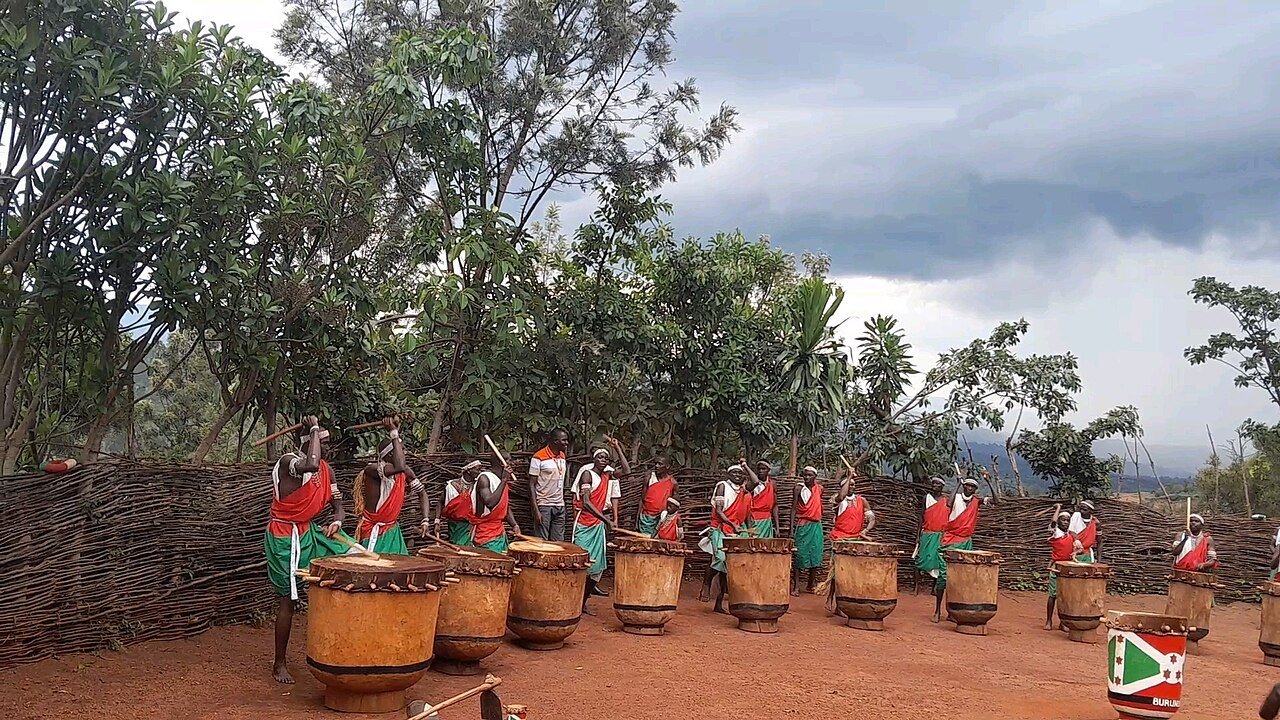
Sacred drums, performance and a tradition with royal roots.
Gishora is one of Burundi’s best-known drum sanctuaries, near Gitega. A visit is most rewarding when the meaning of the drums receives as much attention as the performance. This is a cultural tradition maintained by people, not an attraction that operates automatically whenever a visitor arrives.
Explore · at your own pacePlan · sights and local lifeCheck · access before arrival
The site recreates elements of a royal architectural complex. Ask for interpretation of its spaces and objects so that the visit becomes more than a brief photo stop.
Begin with the sanctuary’s explanation of the drums and their role. Understanding the setting gives a performance greater meaning than arriving only for its loudest or most photogenic moments.
Agree in advance whether a performance is taking place, what the visit includes and whether photography or video is permitted. Permission to attend does not necessarily include permission to publish a recording.
Agree on photography, filming and publication beforehand. Permission to take a personal photograph may differ from permission to upload a full performance or use it commercially.
Burundi’s ritual dance of the royal drum is recognised by UNESCO. Gishora offers one place to learn about that tradition, but no single performance represents every context in which it has meaning.
UNESCO recognition explains the wider cultural importance of royal drumming. It does not turn every demonstration into the same ritual, nor guarantee a public performance on a chosen day.
Arrange the visit through the sanctuary or an established local organiser, with timing and fees confirmed in writing. Follow current travel advice for both the site and the route from your base.
A day to make your own
Allow time for explanation before and after any agreed performance. Plan meals separately in Gitega unless hospitality is explicitly part of the arrangement, and avoid a tight onward connection.
Local life, one meal at a time
Eat & drink.
Plan meals separately in Gitega unless your organiser explicitly confirms an arrangement. Do not assume a cultural performance includes refreshments or a community meal.
Keep a meal break between your main sights rather than adding it after an already full day. Ask what is seasonal, what the portion includes and whether the kitchen is serving at the time you expect to arrive.
For a group or anyone with dietary requirements, confirm the menu and ingredients directly. Leave time for the conversation as well as the food.
The right base changes the visit
Where to stay.
CHOOSE YOUR SETTING
Location before labels.
Gitega is the practical reference point for accommodation enquiries. Confirm the actual transfer rather than assuming the sanctuary has an operating guesthouse or that a cultural visit includes lodging.
LOCAL ENQUIRIES
Confirm the exact place.
No currently operating accommodation is asserted for this destination. Use the official visitor source to identify the appropriate local contact, and check the exact address and travel conditions before making arrangements.
Arrange the outward and return journey from your base together, including waiting time. Confirm the person meeting you, the visit language and the programme before travelling; check the route against current advice.
Useful contacts
Go to the source.
Use current official information for access and conditions, and the destination or property itself for its own services. An old photograph or previously published itinerary does not establish today’s arrangements.
Photographs are credited beside each image and may show earlier conditions. The suggested pacing and base comparisons are ATA editorial planning ideas, not bookable itineraries or guaranteed operating information.