
Burundi · People & culture
Burundi: people, food & culture
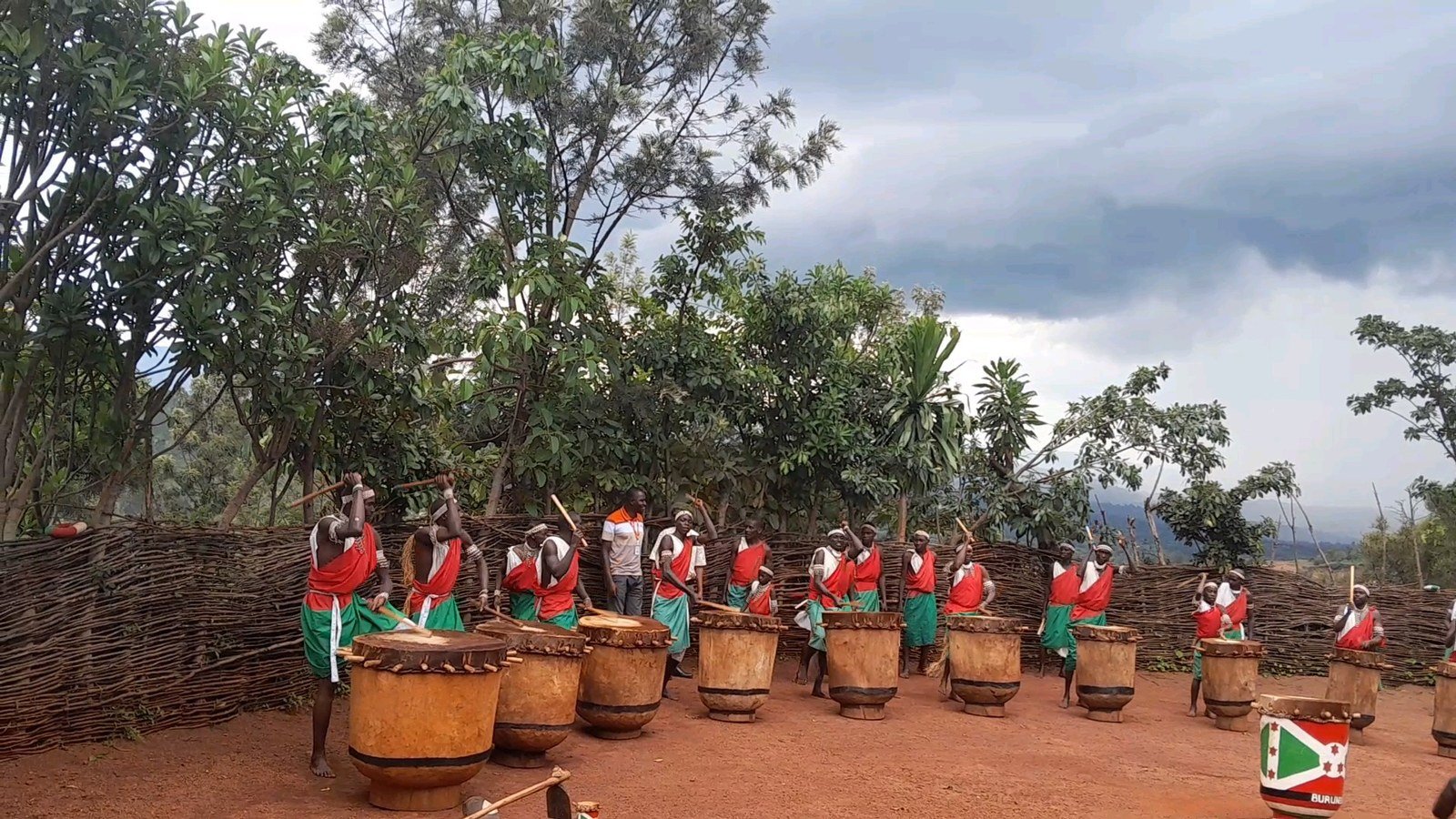
Listening to the drums—and to the people who keep the tradition.
A living tradition
Burundi’s ritual dance of the royal drum combines music, movement, poetry and song. UNESCO recognition draws attention to the skills and knowledge carried by its practitioners. An arranged performance should leave room for explanation as well as applause.
Ask before recording
A camera can change a meeting. Ask permission for portraits, performances and private spaces, and clarify whether you may publish the result. Agreement from one person does not automatically cover everyone present.
Food and conversation
Beans, vegetables and staple crops are part of many everyday meals, while fish connects lakeshore cooking with Tanganyika. Ask about the dish in front of you rather than expecting a single national menu. A respectful greeting is a better beginning than immediately producing a list of questions.
Language and interpretation
Kirundi is central to everyday life; French can be useful in travel arrangements. Confirm your guide’s language before booking. Interpretation should make the particular community and context clearer, not present all Burundians as sharing one personality.
Give the country more than a label
The lake, political capital, economic centre and different rural regions each have their own stories. Current travel difficulties should be described accurately, while cultural life should be presented with the same care and individuality afforded to any other country.
Sources & useful contacts
Editorial research checked 10 November 2026. Access, schedules and services can change; follow the linked primary sources for current arrangements.
← Return to the Burundi guide