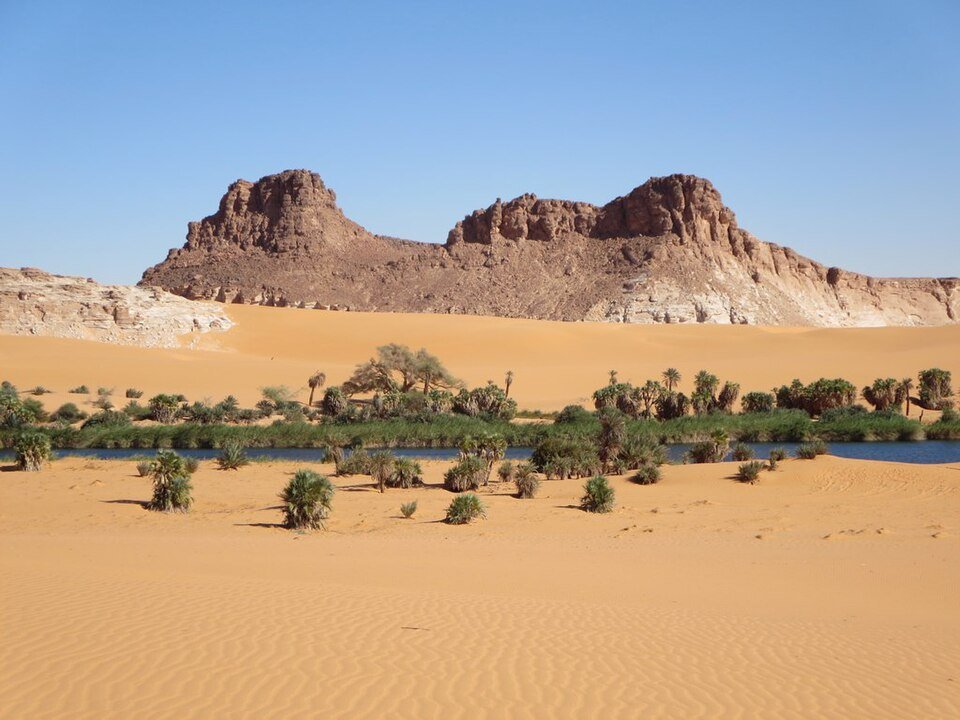
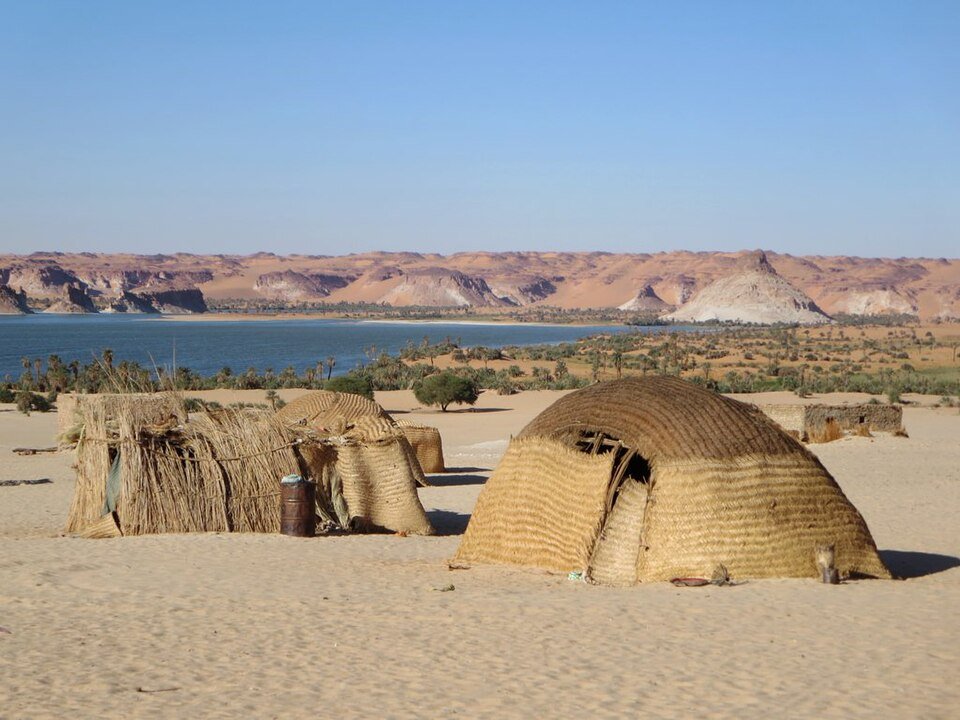
Water, reeds and dunes in an unexpected desert landscape.
The Ounianga lakes form a World Heritage landscape in which groundwater sustains a remarkable contrast to the surrounding desert. Different lakes have different characteristics, so this is not one uniform shore to visit. Its significance is best appreciated through the relationship between water, evaporation, vegetation and sand.
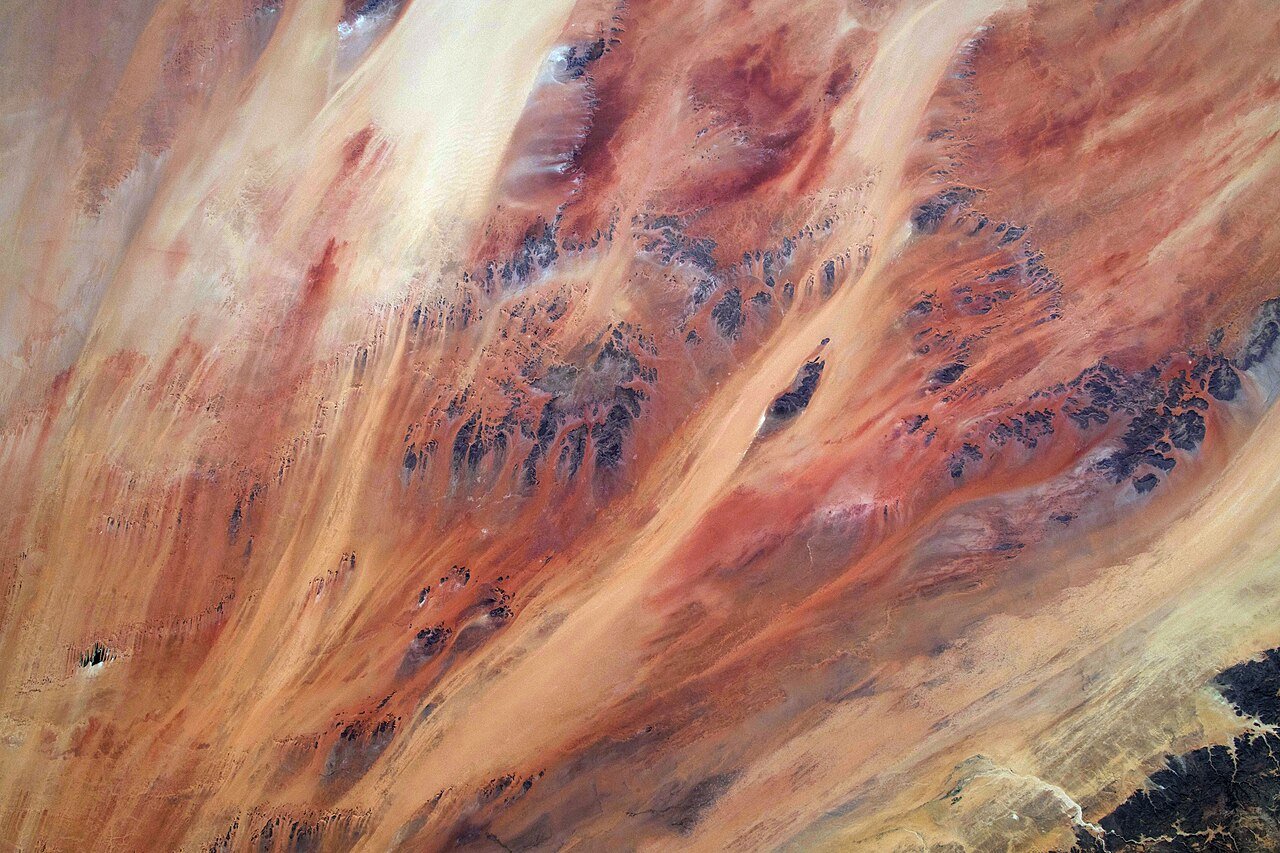
The Ounianga region viewed from the International Space StationNASA · Public domain · Display crop.
01
Lakes in a desert setting
Look at the whole scene: the edge of the water, the reeds and the dunes around it. The visual contrast is compelling, but the ecological story is equally important. A guide should distinguish the lake groups and explain what a particular viewpoint actually shows.
Do not assume that every lake has the same salinity, ecology or access. Choose viewpoints that can be reached appropriately, and avoid entering the water or trampling vegetation. A beautiful shore is not automatically a swimming place or a suitable campsite.
Give the place enough time
Plan a better visit.
Pace & priorities
Treat Ounianga as a substantial northern expedition, not a short extension to a city stay. Ask for actual travel days and camp locations, and compare that with how much time remains beside the lakes. Current advice against travel means this page is background rather than an invitation to depart.
Before you book
Ask for the exact program, included fees and cancellation terms. Confirm walking distances, steps, rest breaks and a shorter alternative for your group. Make the main arrangements before adding optional stops, and leave realistic transport margins.
Keep vehicle movement, camp placement and waste well away from vulnerable shores. Ask how an expedition minimizes its footprint and respects residents’ use of the area. The purpose of a visit should be to understand an exceptional landscape without leaving new tracks and disturbance behind.
Local life, one meal at a time
Eat & drink.
A remote itinerary needs its own catering and drinking-water arrangements. Confirm what is carried, how supplies are managed and how waste returns with the group. Do not assume local lake water can be used for drinking or cooking.
Give the meal its own time in the day. Ask what is seasonal and discuss ingredients directly with the kitchen for allergies or dietary requirements. A comfortable pause leaves more attention for the next part of the visit.
Choose a base that fits the visit
Where to stay.
Operator-arranged expedition camp
No independently verified conventional hotel is selected here. Contact the specialist operator about whether it can arrange an Ounianga expedition and ask for the exact camp, facilities and route in writing. This is an enquiry link, not a named hotel reservation.
An editorial enquiry choice, not an inspected property or a claim of ATA membership.
Ask the practical questions
Confirm the exact location, current operation, room access, meals and total price directly. Ask what is included in transfers and activities, and request written terms for a group booking. Choose the base for the visit you want to make, not only for a photograph of the property.
Remote transfers require an operator’s specific route and support plan. Do not use straight-line distances to estimate travel time. Permissions, conditions and the northern travel warning must be assessed before any booking.
Go to the source
Useful information.
Use the operator for its current services, the venue for access arrangements and official advice for travel conditions. Confirm details for your dates before paying.
Reviewed 11 November 2026. Pacing and base suggestions are ATA editorial choices. Accommodation links are direct enquiry points, not inspected-property endorsements or claims of ATA membership. Confirm current services, access and terms. Photographs are credited beside the images and may show earlier conditions.