Beyond the main route · Eastern Central Valley, Cartago
Turrialba
An ancient settlement, coffee slopes and the story beyond a volcano.
Turrialba makes room for another Costa Rica, one of archaeology, agricultural landscapes and small communities. The volcano provides the backdrop, but an interesting stay need not depend on a crater visit.
Build a varied stay from the archaeological site, a planned coffee visit and time in the valley. These provide different ways to understand a landscape shaped by settlement, agriculture and natural conditions. The volcano is a backdrop, with any closer excursion dependent on current authorised access. Choose fewer stops and give a guide time to explain what you are seeing, leaving space for a local meal and the journeys between the sites.
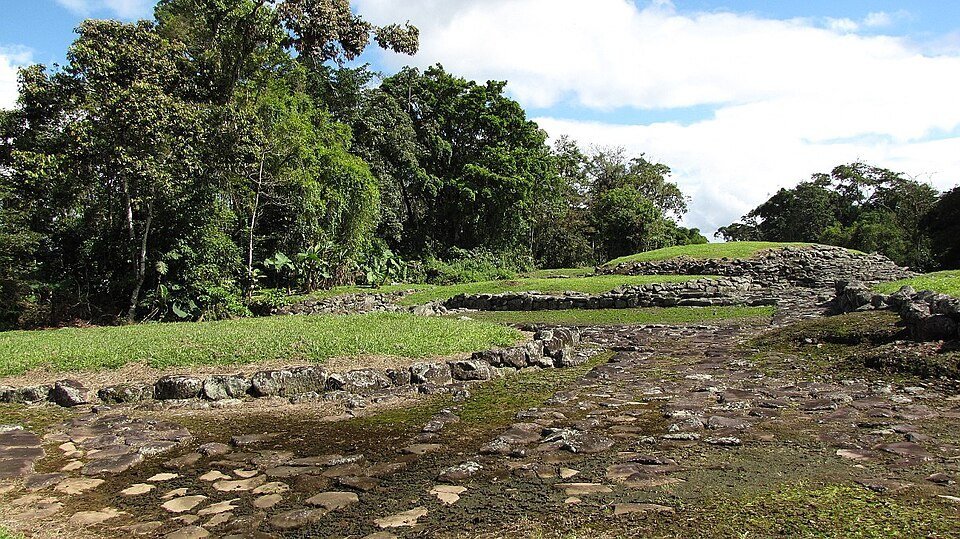
The archaeological landscape at Guayabo National Monument. Photo: Lutz Maertens, Wikimedia Commons ↗, CC BY-SA 3.0 ↗. Display cropped to fit; archival photographs do not establish current access.
Look a little closer
The story behind the place.
Guayabo’s surviving stonework gives the area an important historical chapter. Coffee at Aquiares and the wider valley make useful companions. These are separate outings, and the mountain roads deserve a realistic timetable.
The archaeological landscape at Guayabo National Monument. Photo: Lutz Maertens, Wikimedia Commons ↗, CC BY-SA 3.0 ↗. Display cropped to fit; archival photographs do not establish current access.
01
Guayabo National Monument
Begin with the overall layout of the protected settlement before concentrating on individual stone features. Foundations, routes and water-management remains become easier to understand when a guide explains their relationship to the surrounding landscape. Follow the authorised visitor route and allow time to look closely. The site is archaeological evidence to interpret carefully, rather than a collection of structures to climb.
Plan your visitUse current SINAC visitor guidance. A local guide can help explain what the stonework represents.
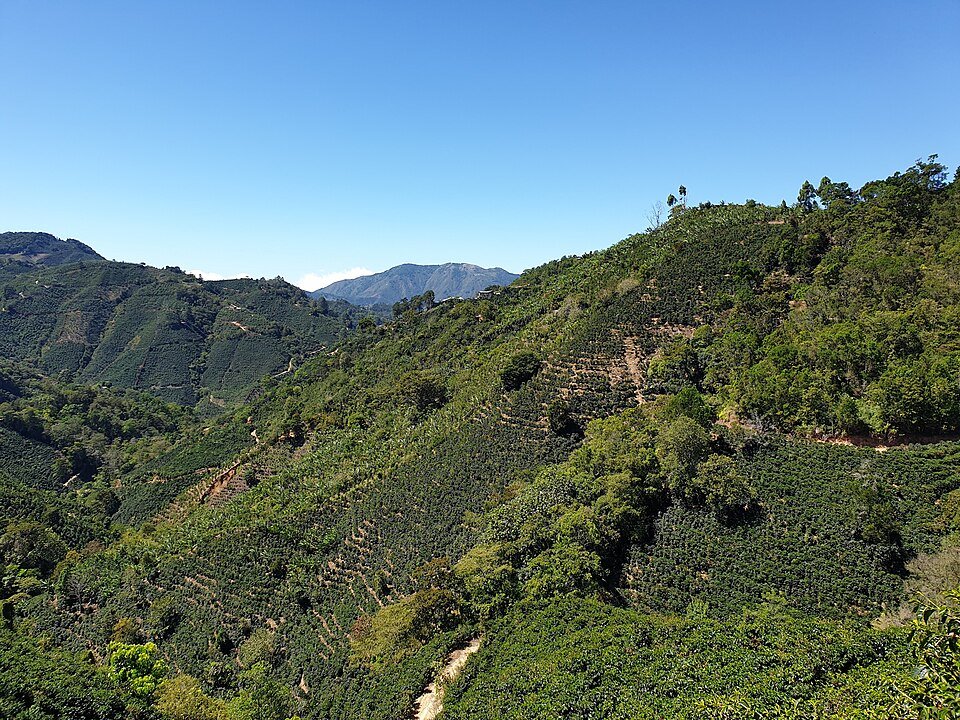
Coffee plantations on the Camino de Costa Rica, illustrating coffee cultivation. Photo: Pigment-Ink · Wikimedia Commons · CC BY-SA 4.0. Cropped for display.
02
Aquiares coffee community
An arranged estate visit links coffee to the agricultural landscape where it is grown. Ask which stages and parts of the property form the actual visitor experience, and how the season affects what can be seen. A guided explanation adds substance to the fields and buildings. Confirm walking requirements and access directly, since a working farm’s needs shape the visit.
Plan your visitBook the offered experience and ask how much walking and farm access it involves.
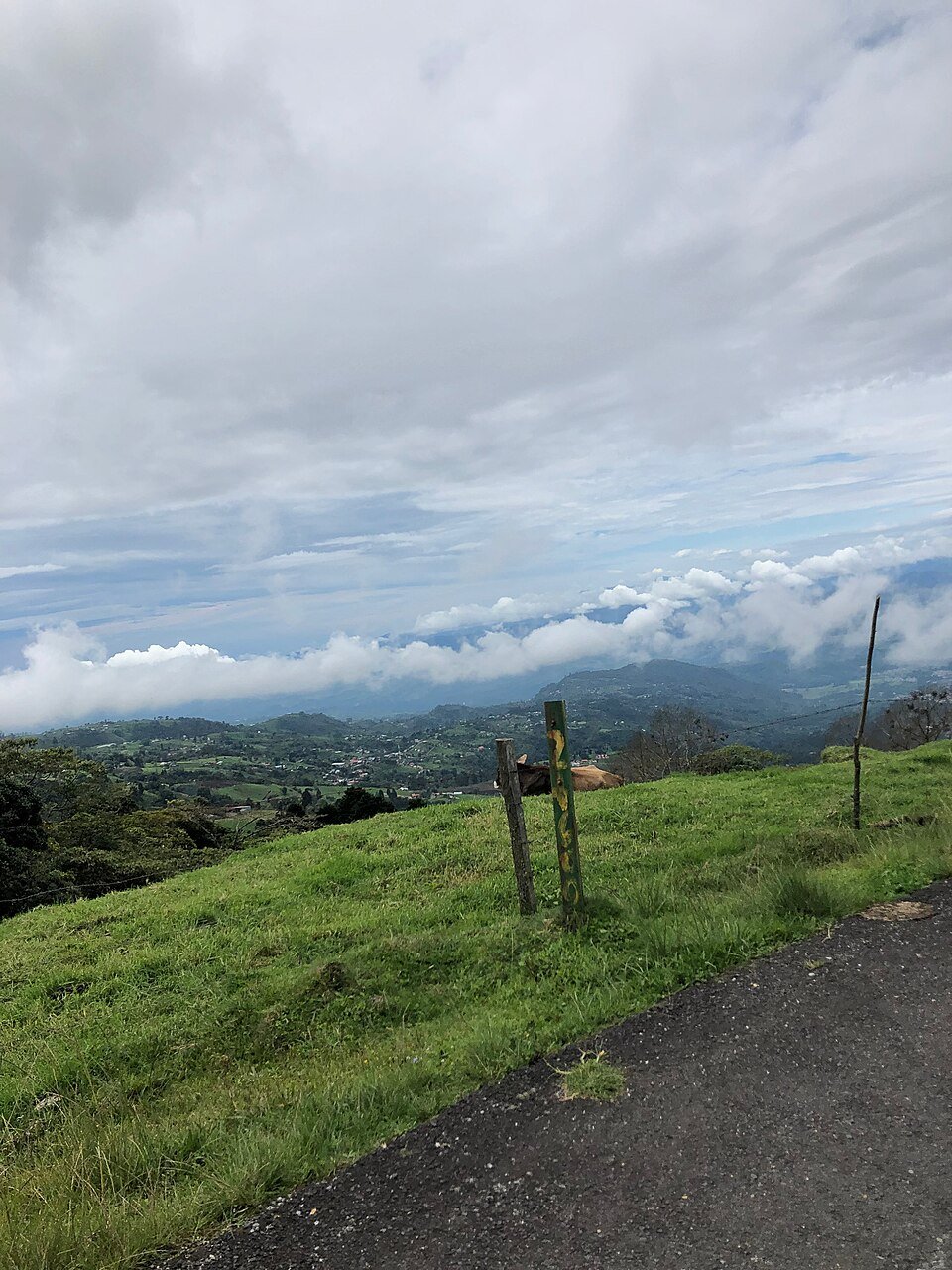
Farmland and forested valleys on the slopes of Turrialba. Photo: Z3lvs · Wikimedia Commons · CC0. Cropped for display.
03
The Turrialba valley
A rural outing, a local meal or a properly organised river experience gives the valley a visiting period of its own. Choose the kind of day that suits the group and the current conditions. Volcano access and rafting require separate checks with authorised operators; neither follows automatically from being in the region. Keep transport and the return journey part of the plan.
Plan your visitFor a volcano or rafting trip, check current authorised access and operating conditions first. Do not improvise a crater route.
Give Guayabo a morning with time to understand the site.
Choose a rural lunch and an arranged coffee visit on a separate outing.
Add a third day for a suitable guided activity or simply enjoy your highland base.
Independent planning ideas, subject to travel advice, local access and opening arrangements.
Make the visit work for you
Plan a comfortable outing.
Allow time
2–3 nights. This is our suggested planning allowance, not a published opening time.
Eat & drink
Look for local Turrialba cheese and ask about the area’s coffee. Rural restaurant opening can vary, so arrange meals when staying beyond town.
Families, groups & accessible visits
Ask the venue about shade, toilets, steps and suitable routes before travel. For an organised group, confirm arrival slots, guide languages and coach access. We have not independently audited accessibility.
Season & conditions
Volcanic conditions and heavy rain can change access. Check current advice before mountain excursions, and allow daylight for unfamiliar rural roads.
Fewer than 15 rooms? Contact the hotel directly. These published contacts are suggestions, not personal inspections, availability promises or confirmation of group capacity. Check operating arrangements before paying.
Large groups, 15 rooms or more
Ask ATA for low group hotel rates.
We use existing hotel agreements where available and negotiate for your group when needed, backed by over 35 years of group travel experience.
We respond within 48 hours, allowing for time zones worldwide. “Instant” rates do not always give you the lowest rates.
Arrive by road via Cartago or another planned connection. Guayabo, Santa Cruz and La Suiza are different locations, confirm your lodging and excursion transfers individually.