Arcaded streets, fountains and sandstone buildings on a bend of the Aare, with a city centre best enjoyed on foot.
Bern’s old city occupies a narrow peninsula within a great bend of the Aare. Founded in 1191 and recognised by UNESCO in 1983, it retains a remarkably coherent sequence of streets, arcades and sandstone fronts. Clock towers mark earlier stages of expansion, while the Minster and river terraces give the city a vertical dimension beyond its sheltered shopping streets.
Arcaded streets, fountains and sandstone buildings on a bend of the Aare, with a city centre best enjoyed on foot. Choose this as a base when you want time to explore on foot as well as visit a headline attraction. The pacing below is a suggestion, not a fixed tour.
Walk the covered streets and look into small shops and cellar entrances. They give shelter in changeable weather, but uneven surfaces and steps still need care.
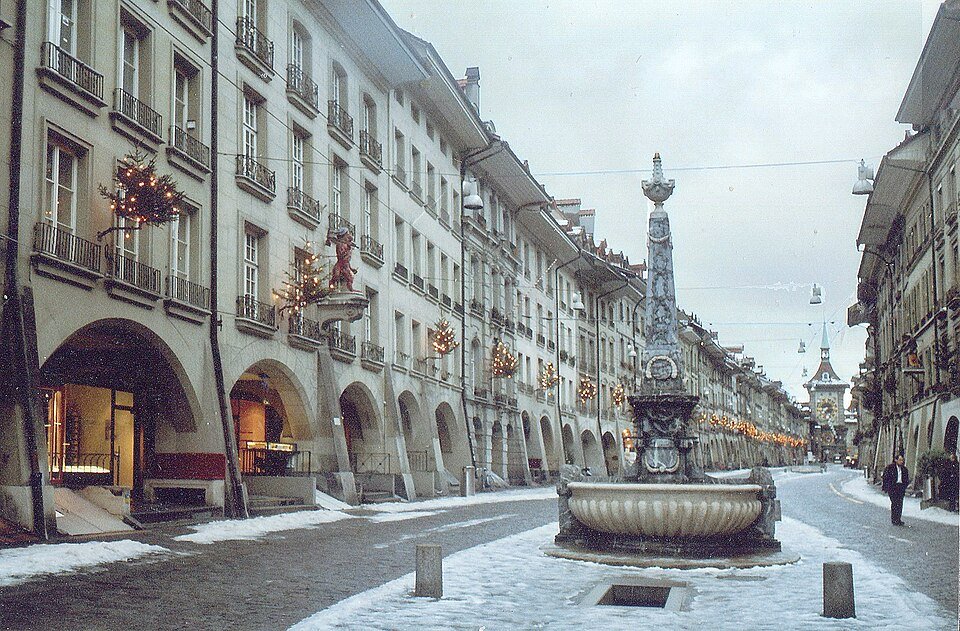
The sandstone cityscape took shape after the catastrophic fire of 1405 destroyed much of the wooden town. Rebuilding in stone helped create the arcaded streets that now link shops, workshops and characteristic cellar entrances. Along Kramgasse, the rhythm of arches and narrow plots makes the medieval street plan visible beneath later façades; the covered walkways remain part of daily city life.
Watch the exterior clock spectacle, then decide whether a booked interior tour is right for your party. An interior visit is separate from simply standing in the street.
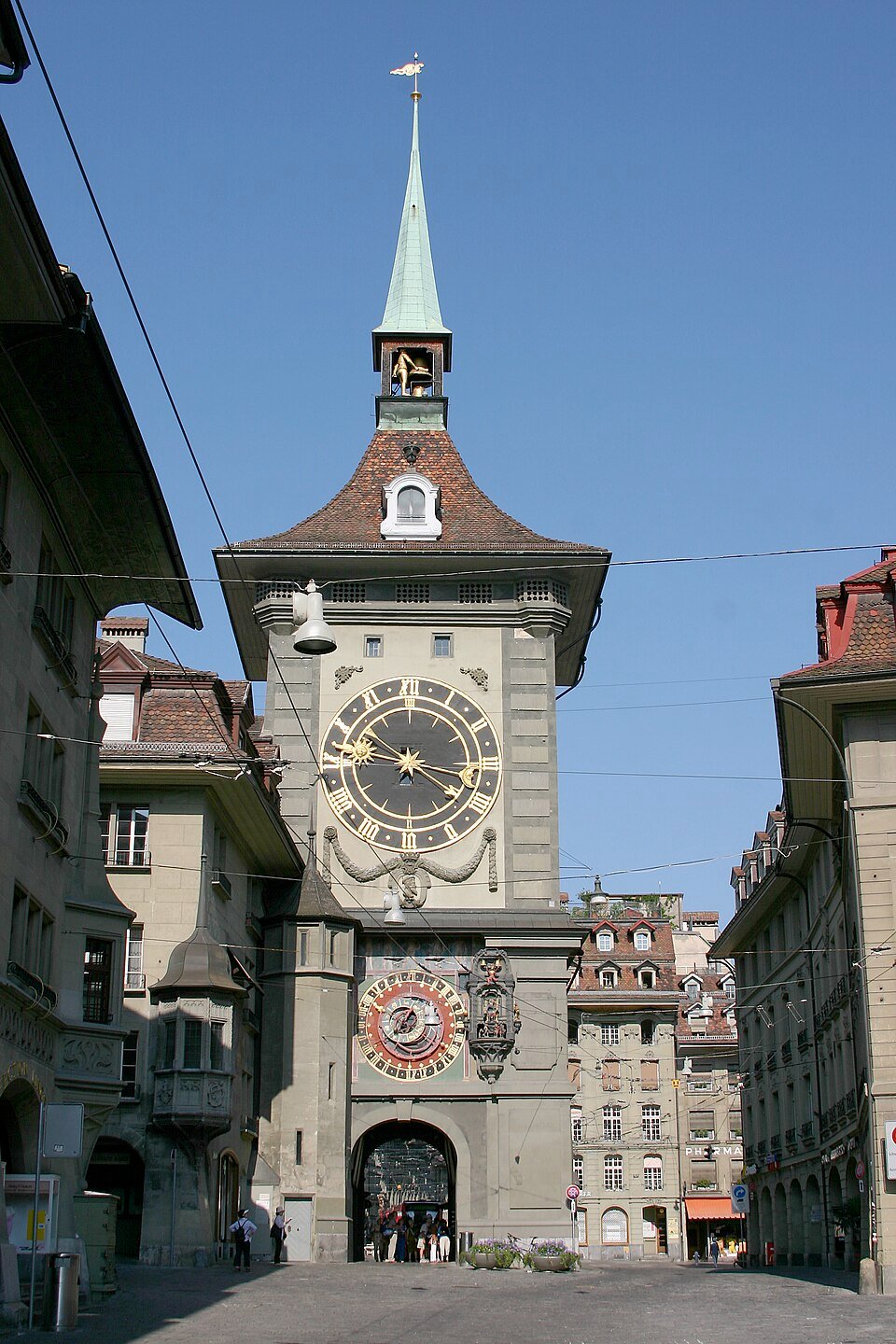
The Zytglogge began as a gate on the western edge of the town, then lost that frontier role as Bern expanded. After the 1405 fire it became a clock tower, regulating civic time rather than defending a boundary. Its astronomical display and animated figures bring together measurement, craftsmanship and theatre; the working mechanism inside explains the relationship between the large street-facing dials and the hourly show.
The cathedral and terrace make a useful pair of stops. A tower climb needs its own opening check and enough energy for stairs; the terrace is an alternative view.
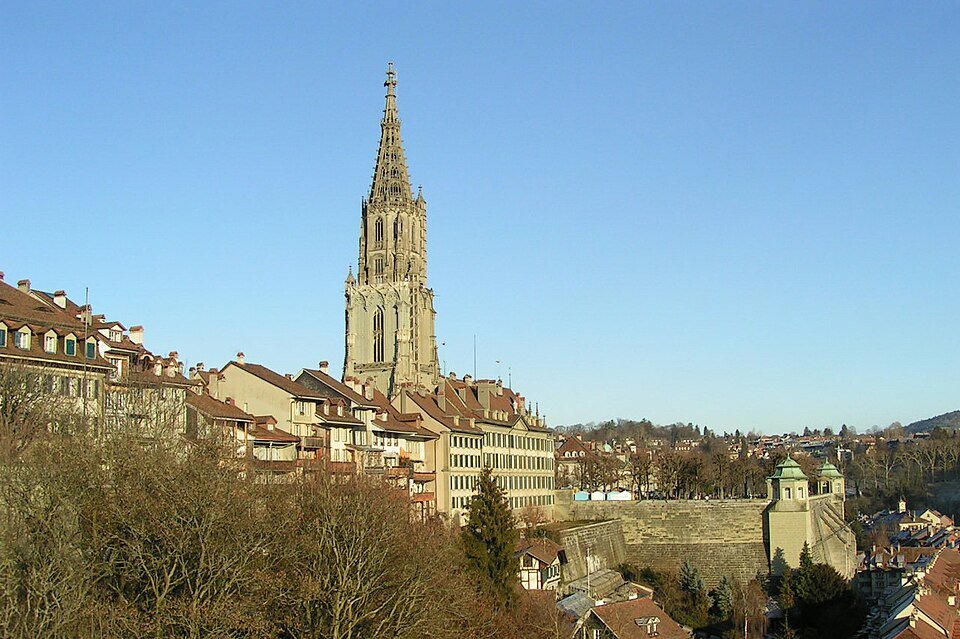
Construction began in 1421 under Matthäus Ensinger, but the tower’s upper section was only completed in neo-Gothic form between 1889 and 1893. The building therefore records centuries of work rather than one medieval campaign. Look for the deeply modelled entrance, the tall tracery windows and the changing stone profiles of the tower; these reward attention even without undertaking the climb.
Choose a riverside walk or a view back towards the old town. Do not turn a sightseeing stop into an unplanned river swim: the current and conditions require local knowledge.
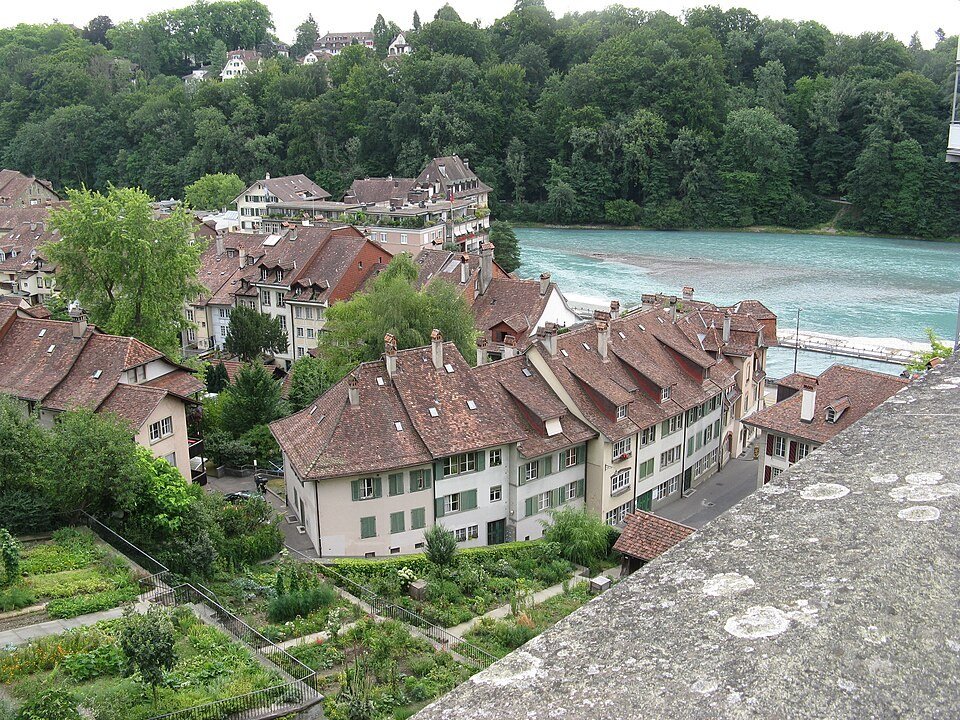
The Aare’s curve explains the defensive advantage of the original settlement and gives Bern its distinctive silhouette. Below the high sandstone streets, the Matte neighbourhood and river-level buildings reveal a different scale of city life. From the bridges and terraces, compare the clustered roofs with the wooded slopes across the water: the river is the framework of the old city, not merely a scenic border.
Something local for the table
Look for a local lunch under the arcades and leave time for a bakery or chocolate stop. Menus vary with the season; it is more useful to ask what is regional than to order by stereotype.
Getting around & arranging your visit
The station sits conveniently beside the centre. Walk the old town or use local transport for longer distances. For a guided clock-tower visit, book the time and language beforehand.
Allow two nights, or a full unhurried day between bases. Start with the arcades, fit the clock into the walk, then visit the cathedral and pause at a viewpoint before dinner.
Sources reviewed 28 October 2026. Opening, access, availability and services can change.
A place to put down your bags
Where to stay
Public business contacts are provided for your convenience. Ask the property about current availability, rates, access and arrangements for your party. Inclusion does not establish ATA membership.
DIRECT ACCOMMODATION CONTACT
NH Bern The Bristol
A central old-town hotel. Confirm current room arrangements through its published contact.