Covered wooden bridges, painted façades and lake journeys, with the mountains close enough to tempt an extra day.
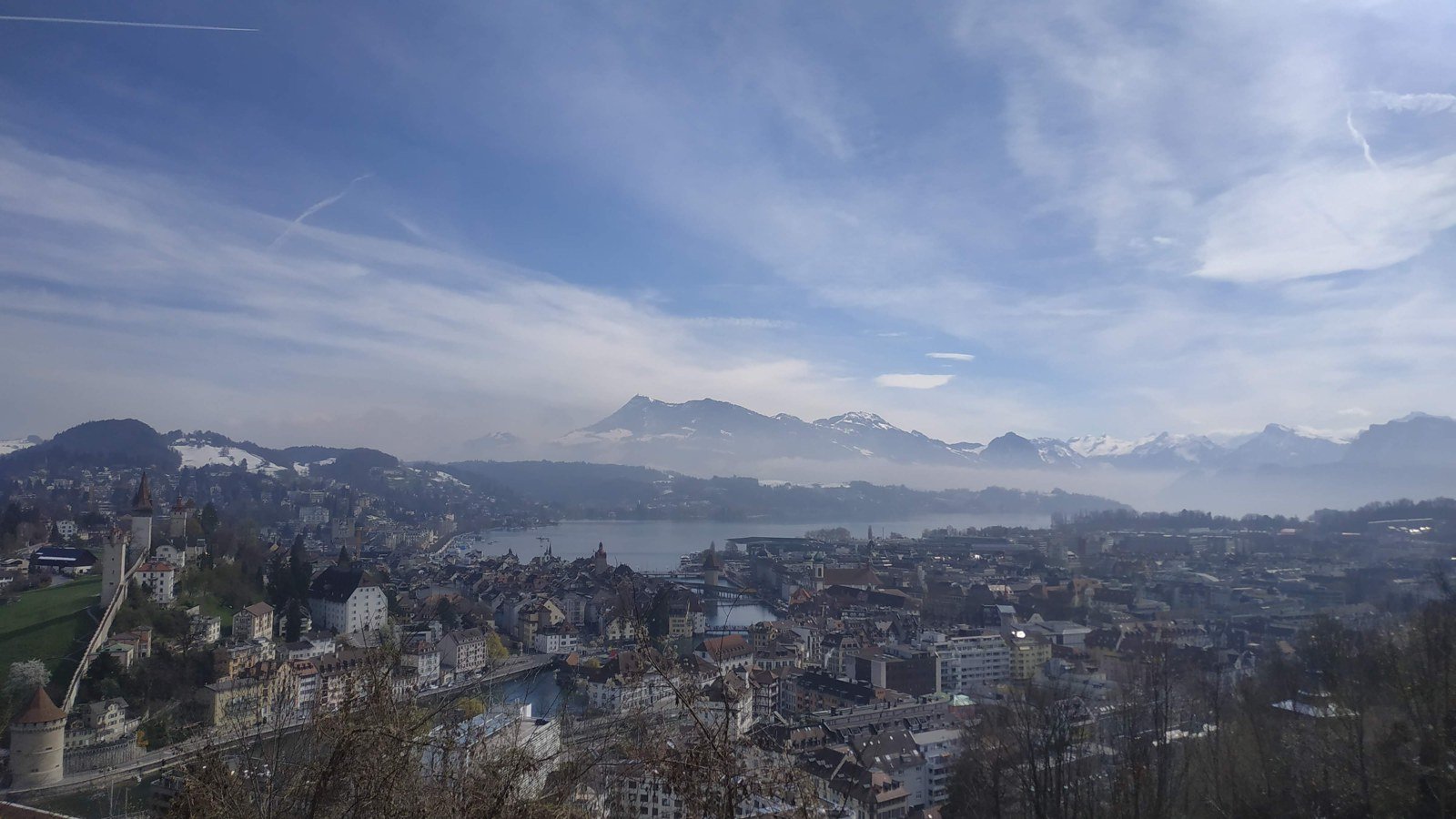
Lucerne’s historic centre sits where the Reuss leaves the lake, bringing bridges, trade and fortifications into one compact landscape. Its famous covered crossing is only the beginning: market squares preserve the city’s commercial history, the Musegg towers trace its defensive edge, and the Lion Monument introduces a much later story of Swiss service abroad and public remembrance.
Covered wooden bridges, painted façades and lake journeys, with the mountains close enough to tempt an extra day. Choose this as a base when you want time to explore on foot as well as visit a headline attraction. The pacing below is a suggestion, not a fixed tour.
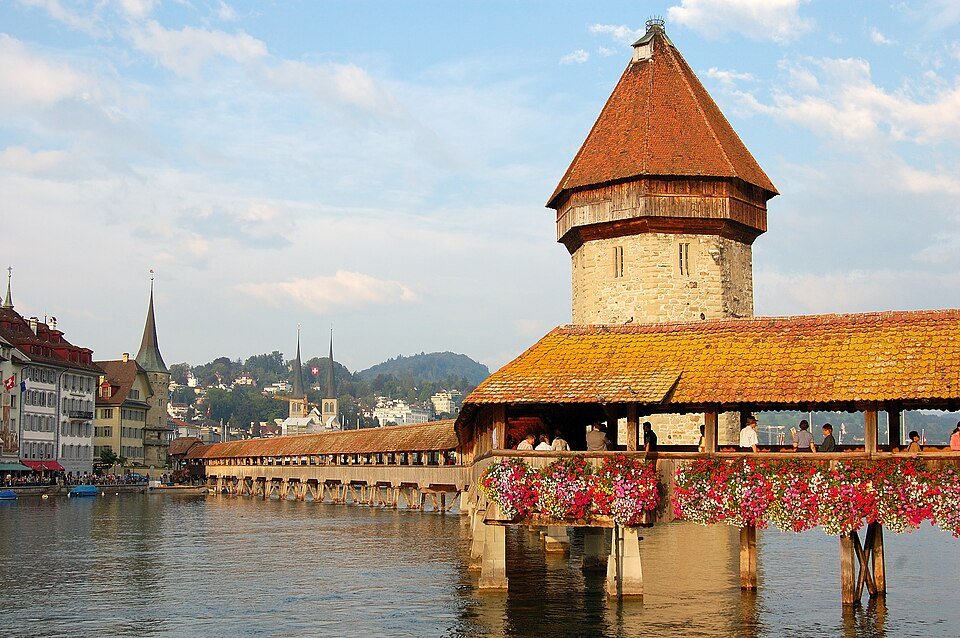
Cross the covered bridge and look at the Water Tower from the riverbank as well. It is part of a working city: leave room for others and avoid gathering a whole group in one narrow section.
The bridge served both pedestrians and the town’s defences in the fourteenth century, which helps explain its angled course and the higher parapet facing the lake. The triangular roof paintings were added from 1614 onwards to tell episodes of Swiss history and the lives of local patron saints. Much of the structure and many paintings were lost in the 1993 fire, so today’s crossing also tells a story of conservation and rebuilding.
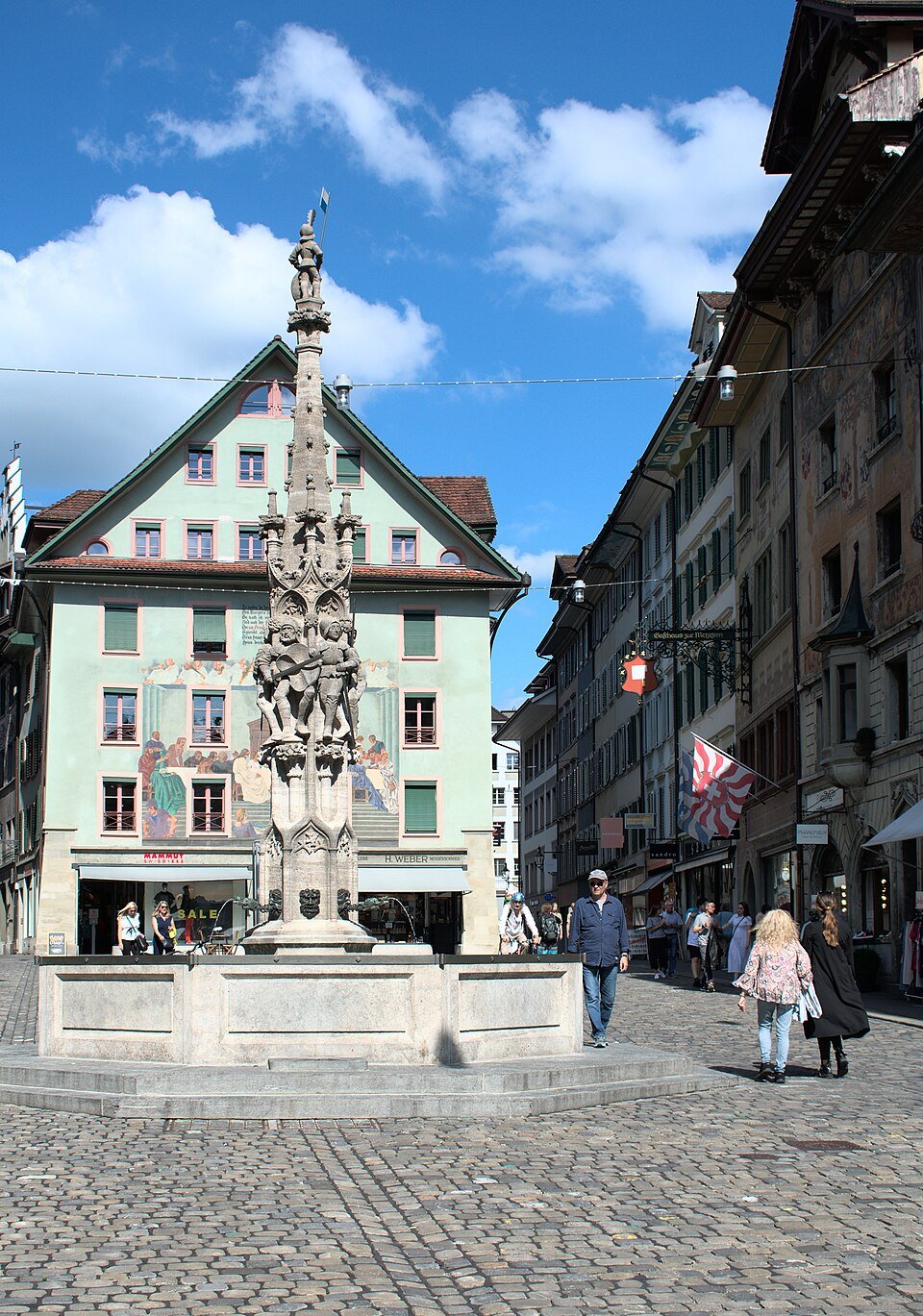
Enlarge photoWeinmarkt fountain and historic houses in Lucerne; present fountain column by Leopold Häfliger. Photo: Ymblanter · Wikimedia Commons · CC BY-SA 4.0. Cropped for display.
Old Town squares
Walk between Weinmarkt and Kornmarkt, noticing the façades, fountains and small streets. A riverside café provides a natural pause rather than another item on a checklist.
The squares retain names and shapes connected with their former trades. Weinmarkt once held a fish market; its present open form followed the demolition of a wooden trading hall in 1841. The fountain has been repeatedly renewed, with the historic original column preserved in the city’s museum collection. On nearby Kornmarkt, the Renaissance town hall of 1602–1606 gives civic authority an imposing face above the river.
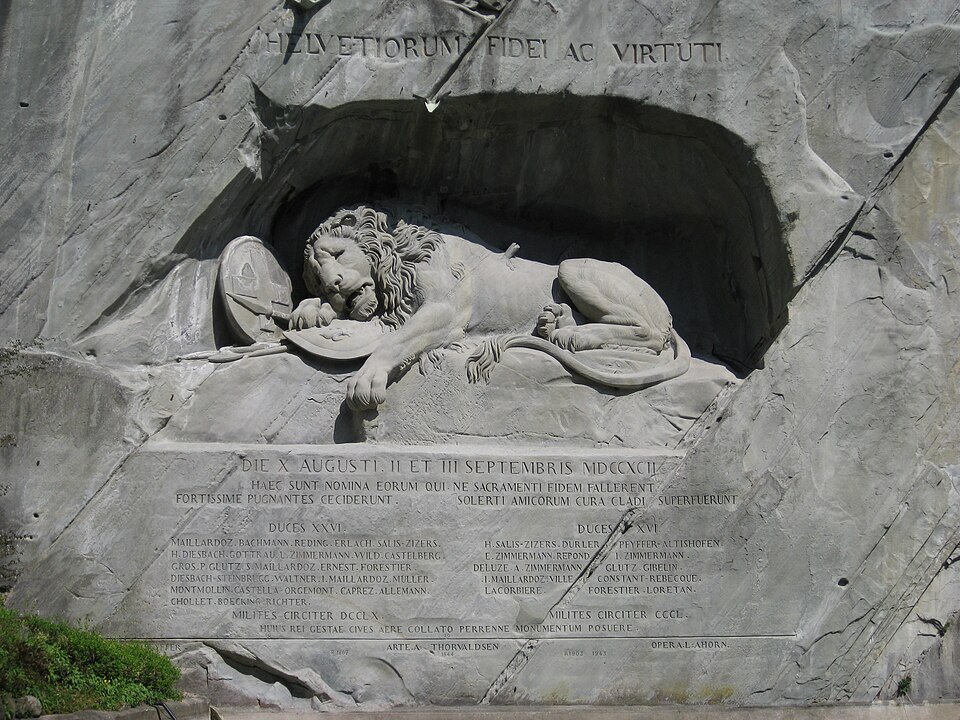
Enlarge photoLion Monument in Lucerne, designed by Bertel Thorvaldsen and inaugurated in 1821. Photo: Gürkan Sengün · Wikimedia Commons · Public domain. Cropped for display.
Lion Monument
Give the memorial its historical context and a few quiet minutes. Pair it with the nearby old-town walk rather than treating it as a coach-window sight.
The dying lion commemorates the Swiss Guards killed during the storming of the Tuileries in Paris on 10 August 1792. Designed by Bertel Thorvaldsen and inaugurated in 1821, it was carved into a former sandstone quarry rather than set here as a freestanding statue. The broken spear, lowered head and sheltered rock recess turn a political and military episode into an unusually intimate memorial.
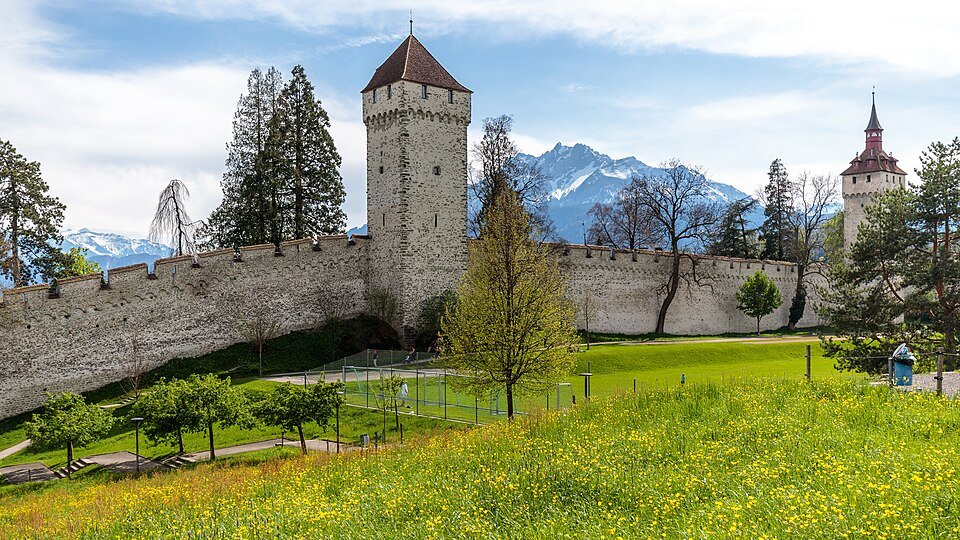
The wall and towers add views above the old town. Access is seasonal and involves steps; check the current calendar and select a lower-level alternative for anyone who cannot manage a climb.
The surviving chain of nine towers formed part of the outer defences above the Reuss. Their different shapes reflect different functions: watchtowers, gates, a clock tower and stores for gunpowder. The Zyt Tower’s large clock face could be read from the lake, and its bell is allowed to sound one minute before the other city clocks. The wall is also a habitat for swifts, bats and specialist plants.
Something local for the table
Make time for a lake-region lunch or a pastry stop in the old centre. A mountain excursion is more pleasant with a planned lunch than a rushed return for a reservation.
Getting around & arranging your visit
The railway station is beside the lake. Check boat timetables and mountain-railway maintenance separately; a clear city morning does not guarantee visibility or operations at altitude.
Allow two or three nights. Give the bridges, old town and memorial one day; use another for a lake cruise or a single mountain excursion. Keep a museum alternative for poor weather.
Sources reviewed 28 October 2026. Opening, access, availability and services can change.
A place to put down your bags
Where to stay
Public business contacts are provided for your convenience. Ask the property about current availability, rates, access and arrangements for your party. Inclusion does not establish ATA membership.
DIRECT ACCOMMODATION CONTACT
Art Deco Hotel Montana
A hillside hotel above the lake. Confirm arrival via its funicular and any access needs directly.