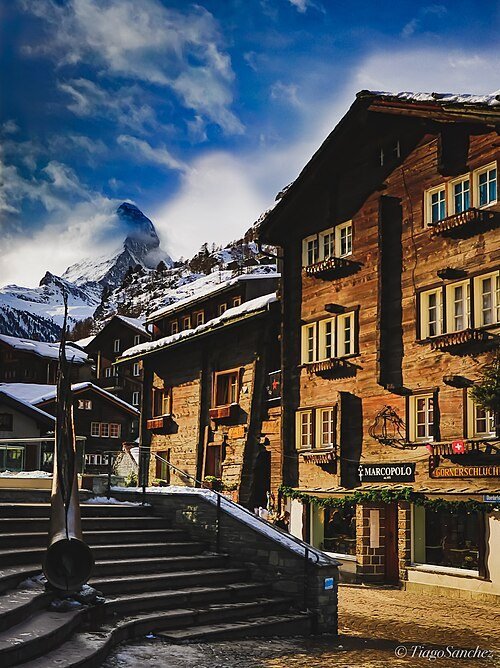
A car-free mountain village, historic timber buildings and excursions made unforgettable by a clear view of the Matterhorn.
Zermatt’s mountain fame grew around the Matterhorn, but the older village tells a story of farming, storage and survival before international mountaineering transformed the valley. Dark larch buildings stand close to modern hotels and railway infrastructure. The museum and mountain lines make it possible to follow both histories: the local community beneath the peaks and the visitors drawn upward by them.
A car-free mountain village, historic timber buildings and excursions made unforgettable by a clear view of the Matterhorn. Choose this as a base when you want time to explore on foot as well as visit a headline attraction. The pacing below is a suggestion, not a fixed tour.
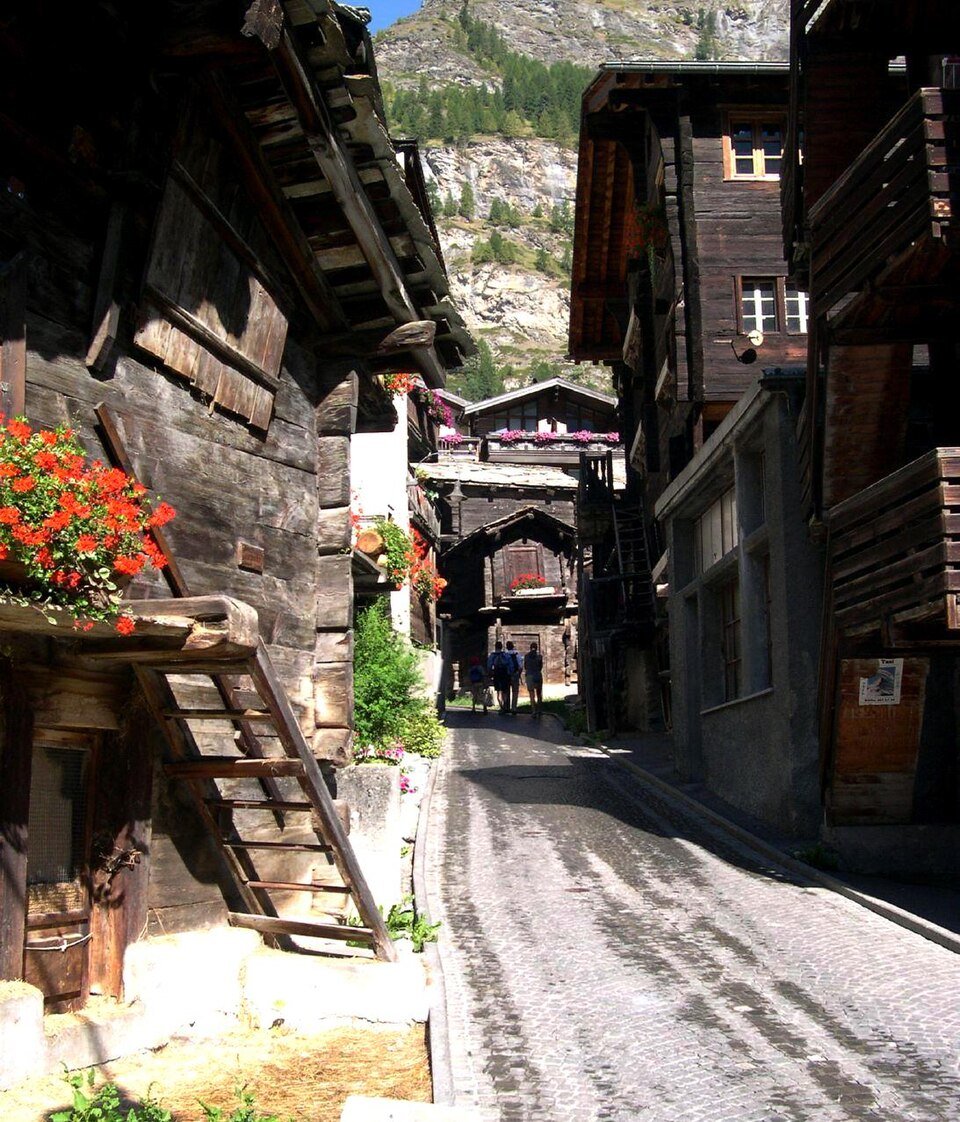
Walk through the historic timber quarter and learn how mountain households used the buildings. These are not climbing frames; respect private entrances and narrow lanes.
The Hinterdorf preserves barns, stores, stables and houses dating from the sixteenth to eighteenth centuries. Larch timber, darkened by age and weather, dominates the small buildings. Some stores stand on posts capped by broad stone slabs, a practical defence against mice. Looking at doors, supports and building sizes reveals the separate needs of hay storage, grain keeping and domestic life.
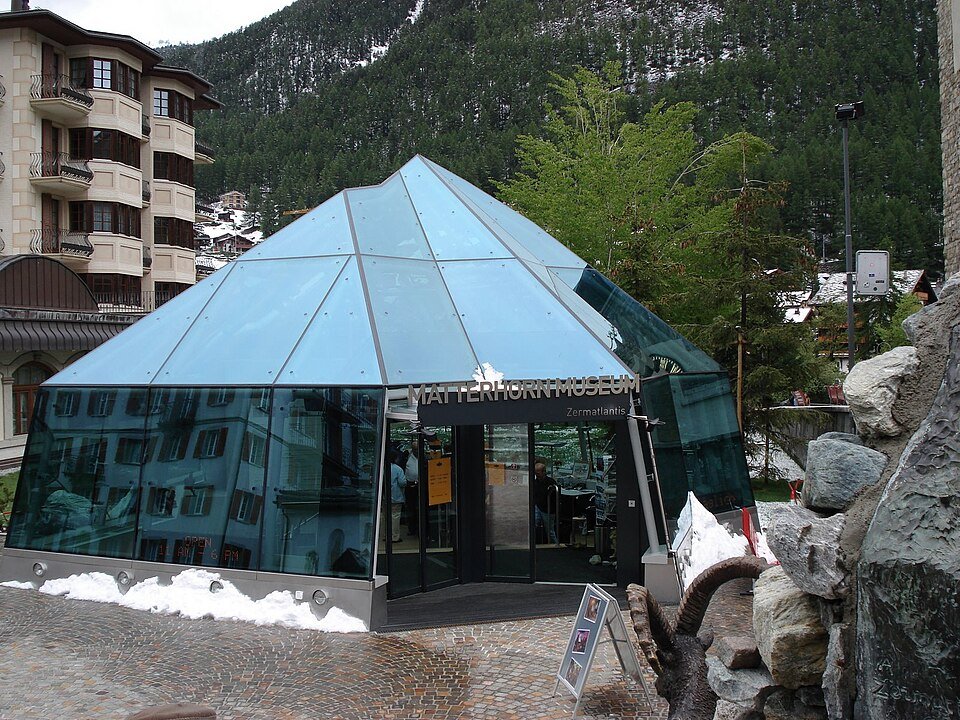
An indoor visit gives context to the village and mountaineering story, useful when clouds hide the peak. Check the day’s opening window rather than assuming all-day access.
The museum’s underground setting recreates aspects of the nineteenth-century village while presenting original objects from the history of mountaineering. The broken rope associated with the first ascent of the Matterhorn in 1865 makes the story especially immediate: four members of the seven-person climbing party died on the descent. The displays connect that famous event with the lives of the people who lived and worked in Zermatt.
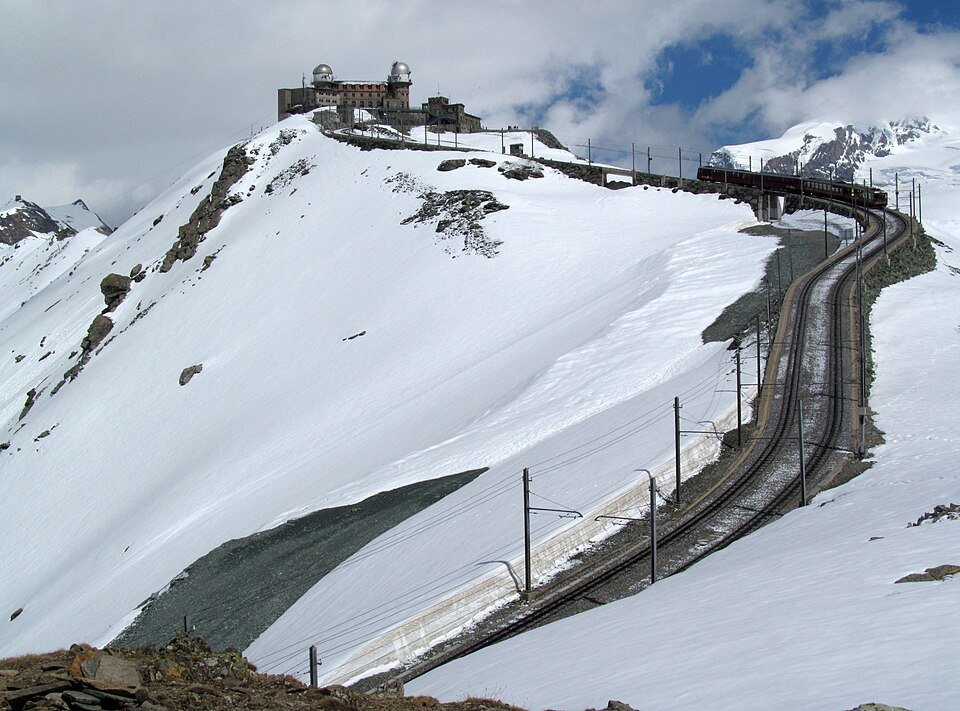
Enlarge photoGornergrat Railway near its upper station in a snowy mountain landscape. Photo: My another account at English Wikipedia · Wikimedia Commons · CC0. Cropped for display.
Gornergrat Railway
The cog railway climbs to a high viewpoint above Zermatt. Check weather, ticket validity and the current timetable; allow time to enjoy the landscape without adding a strenuous hike.
Opened in 1898, the Gornergrat Railway was Switzerland’s first electric rack railway. Its construction turned a viewpoint previously reached on foot into a major mountain destination and extended the valley’s growing rail connection upward. The journey itself shows the transition from village and pasture to open high-mountain terrain; near the top, trains and tracks sit against a broad panorama of rock, snow and ice.
This mountain area offers another perspective, with summer lake and walking possibilities when open. Pick a route for the actual conditions and ability of the party, not for the photograph on a brochure.
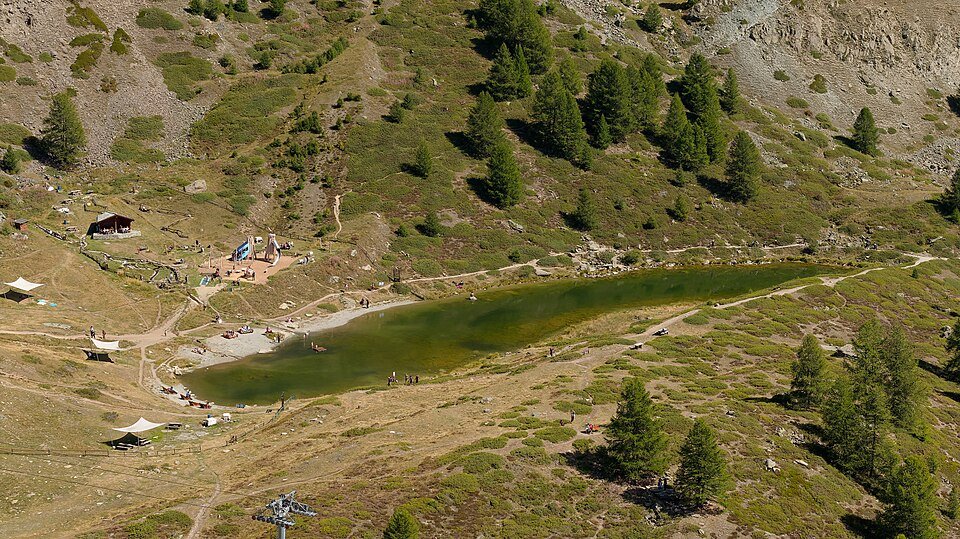
Sunnegga lies at 2,288 metres and is reached by an underground funicular. Its appeal differs from a summit excursion: the terrace and nearby Leisee combine a clear Matterhorn outlook with a more intimate landscape of slopes and a small mountain lake. In summer the lake and family facilities give this area a different character from the exposed ridges above, while the hamlet of Findeln lies below.
Something local for the table
Try a Valais cheese dish or a local seasonal menu after the day outside. Reserve mountain restaurants where appropriate and keep enough time for the last transport down.
Getting around & arranging your visit
Arrive by rail; private cars normally stay in Täsch. Ask the hotel about luggage collection. Mountain railways and lifts have their own operating calendars and fares.
Allow three nights for a better chance of a clear-weather excursion. Begin with the village and museum, then choose Gornergrat or Sunnegga on the best day. High viewpoints deserve a gentle pace.
Sources reviewed 28 October 2026. Opening, access, availability and services can change.
A place to put down your bags
Where to stay
Public business contacts are provided for your convenience. Ask the property about current availability, rates, access and arrangements for your party. Inclusion does not establish ATA membership.
DIRECT ACCOMMODATION CONTACT
Hotel Alpenblick
A village hotel in Oberdorf. Confirm luggage transfer and room access before arrival.