The Trail of tears
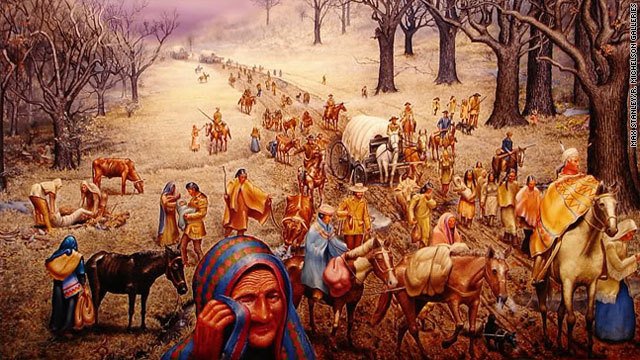
The "Trail of Tears" stands as a somber chapter in American history, marking a period of forced displacement and ethnic purging by the U.S. government that affected approximately 60,000 individuals from the "Five Civilized Tribes" between 1830 and 1850. This forced exodus, part of a policy known as the Indian Removal, tragically uprooted the Cherokee, Muscogee (Creek), Seminole, Chickasaw, and Choctaw nations from their ancestral homes in the Southeastern United States.
The displacement was enacted following the Indian Removal Act of 1830, which directed these communities to relocate west of the Mississippi River to designated Indian Territory. The discovery of gold near Dahlonega, Georgia, in 1828, which sparked the Georgia Gold Rush, served as a catalyst for the final displacement of the Cherokee in 1838.

The journey was fraught with hardship as the displaced people suffered from exposure, disease, and starvation while en route to their new designated lands. Many lost their lives to disease either during the journey or shortly after their arrival. This event has left a deep scar on our nation's history, with some historians referring to it as a genocide. The use of this term, however, remains a topic of ongoing debate. As we reflect on this history, we do so with an understanding of the immense suffering and injustice experienced by these Native American communities. It serves as a sobering reminder of the need for empathy, understanding, and respect for all cultures and their histories. Signed: M.K. Wallner