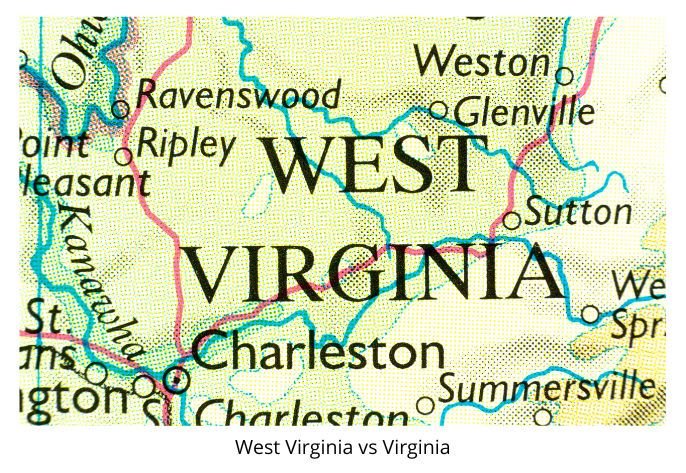
West Virginia and Virginia:
1. Historical Context: During the American Civil War (1861-1865), the issue of
secession and loyalty to the Union or the Confederacy divided the United States.
Virginia initially seceded from the Union and joined the Confederacy in 1861.
2. Creation of West Virginia: The western counties of Virginia, which had a
significant pro-Union sentiment, did not support secession. Discontent with the
decision to secede, these counties sought to form a separate state. In 1863,
with the approval of the U.S. government, the state of West Virginia was
established.
3. Differences in Loyalty: West Virginia's formation marked the division between
those in the western part of Virginia who remained loyal to the Union and those
in the eastern part who joined the Confederacy. The separation was a result of
differing loyalties and sentiments towards the war.
4. Admission to the Union: West Virginia was admitted to the Union as the 35th
state on June 20, 1863. It became a separate entity from Virginia and developed
its own state government, capital, and institutions.
5. Geographical Boundary: The boundary between West Virginia and Virginia was
determined by the course of the rivers in the region, including the Ohio River
and the Potomac River. The separation resulted in two distinct states with
separate governments and administrations.
6. Unique Identity: West Virginia developed its own distinct identity and
culture, shaped by its Appalachian heritage, coal mining history, and rugged
landscapes.
This separation during the Civil War was a unique historical event, with West
Virginia emerging as a separate state due to the differing loyalties of its
western counties. It highlights the complexities of the American Civil War and
its impact on the nation's political and geographic landscape.
Home | States/Provinces | Subjects