Painted façades, craft traditions and a compact village at the edge of the Alpstein, with much to enjoy before heading uphill.
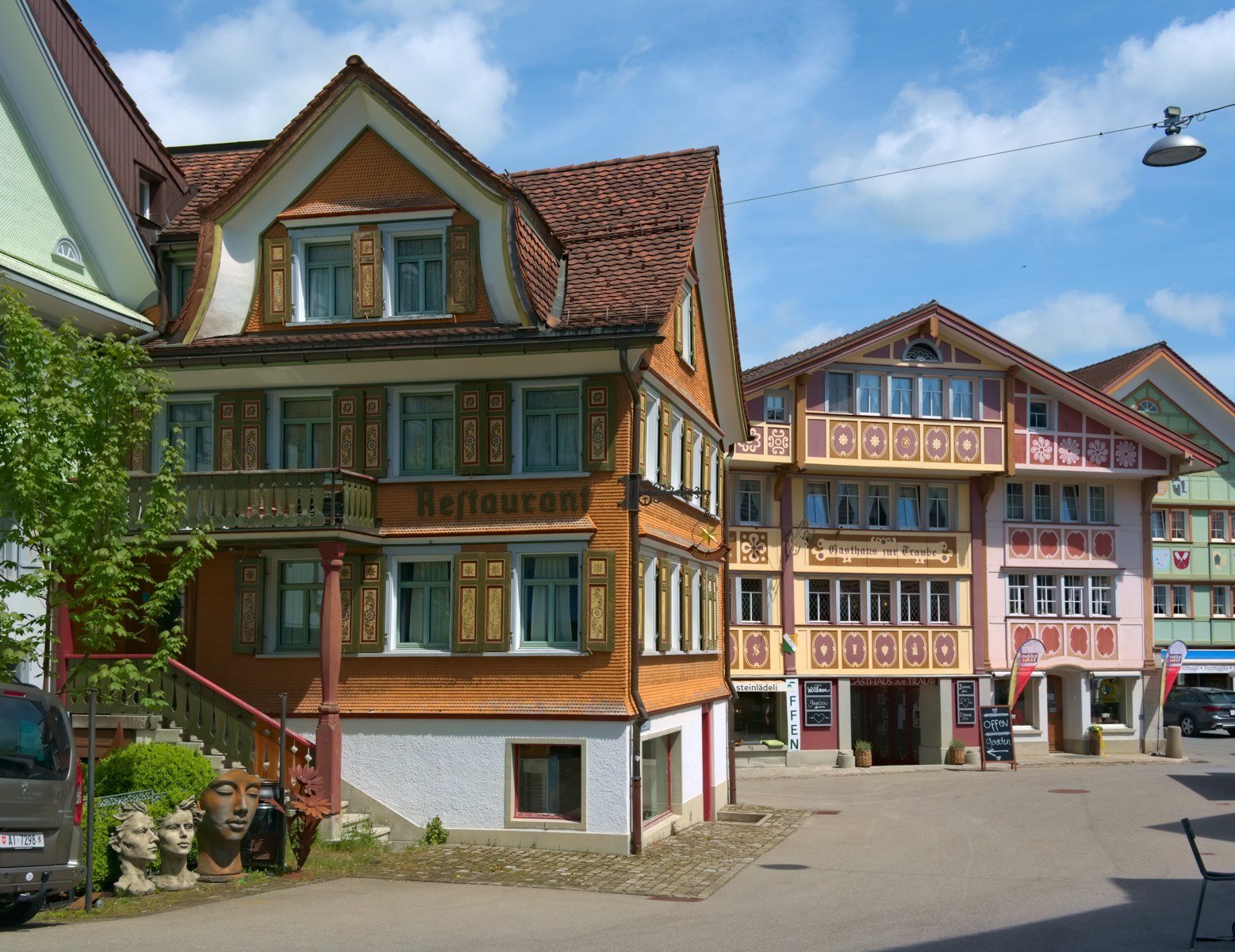
Appenzell rewards close looking: a painted shutter, an elaborate shop sign and a timber gable can tell as much as the wider mountain view. The village is also the cantonal centre of Appenzell Innerrhoden, where civic life, Catholic traditions and rural craftsmanship remain closely connected. Its museum supplies the social history behind the colourful streets, while the Alpstein rises beyond the settled valley.
Painted façades, craft traditions and a compact village at the edge of the Alpstein, with much to enjoy before heading uphill. Choose this as a base when you want time to explore on foot as well as visit a headline attraction. The pacing below is a suggestion, not a fixed tour.
Start with a village walk and look closely at the façades. The appeal is in the detail, not the distance covered; leave time for a small shop or bakery.
Hauptgasse’s colour is a record of individual buildings and crafts rather than a single historical style. The hanging signs known as Tafeen identify inns and businesses; at the Löwen pharmacy, Johannes Hugentobler’s painted medicinal plants refer to the building’s trade. Nearby, the Landsgemeindeplatz still provides the setting for the cantonal assembly, where voting takes place by a public show of hands.
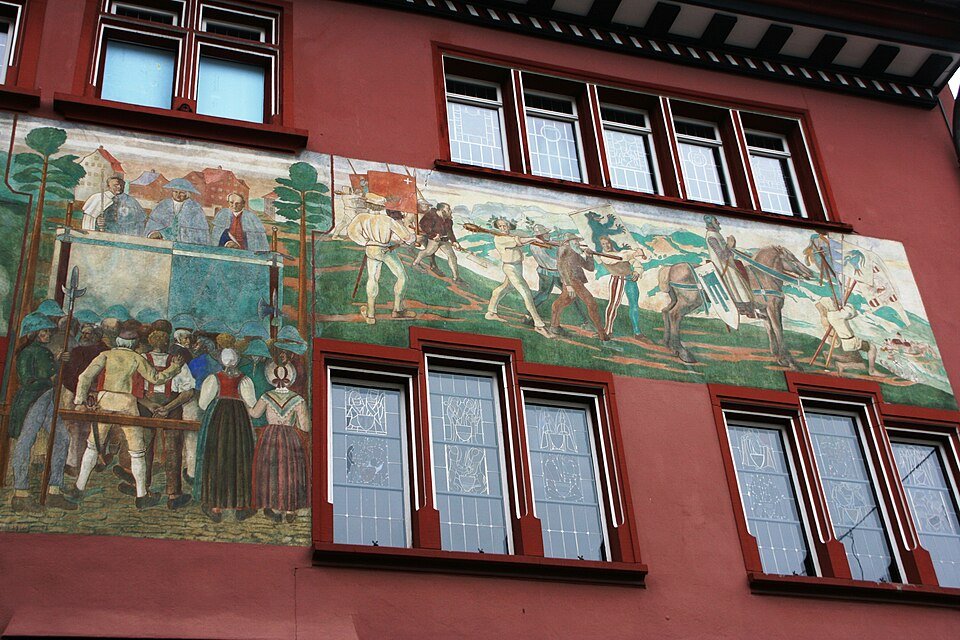
Enlarge photoDetail of Appenzell’s Rathaus façade with August Schmid’s 1928 murals; the building houses part of Museum Appenzell. Photo: HaSt · Wikimedia Commons · CC BY-SA 4.0. Cropped for display.
Museum Appenzell
The museum gives local traditions and crafts a setting beyond the souvenir window. Check the current programme and seasonal opening hours before making it the day’s indoor anchor.
The collection occupies the Rathaus and the adjoining Buherre Hanisefs house, both rebuilt after the village fire of 1560. Its focus is the everyday culture of Innerrhoden: hand embroidery, painted furniture, rural painting, popular religion and the development of tourism. This makes the museum especially useful for understanding the skilled work and social traditions that the village’s decorated façades only hint at.
The church and riverside area add another layer to the village walk. Observe services and photography restrictions inside religious buildings.
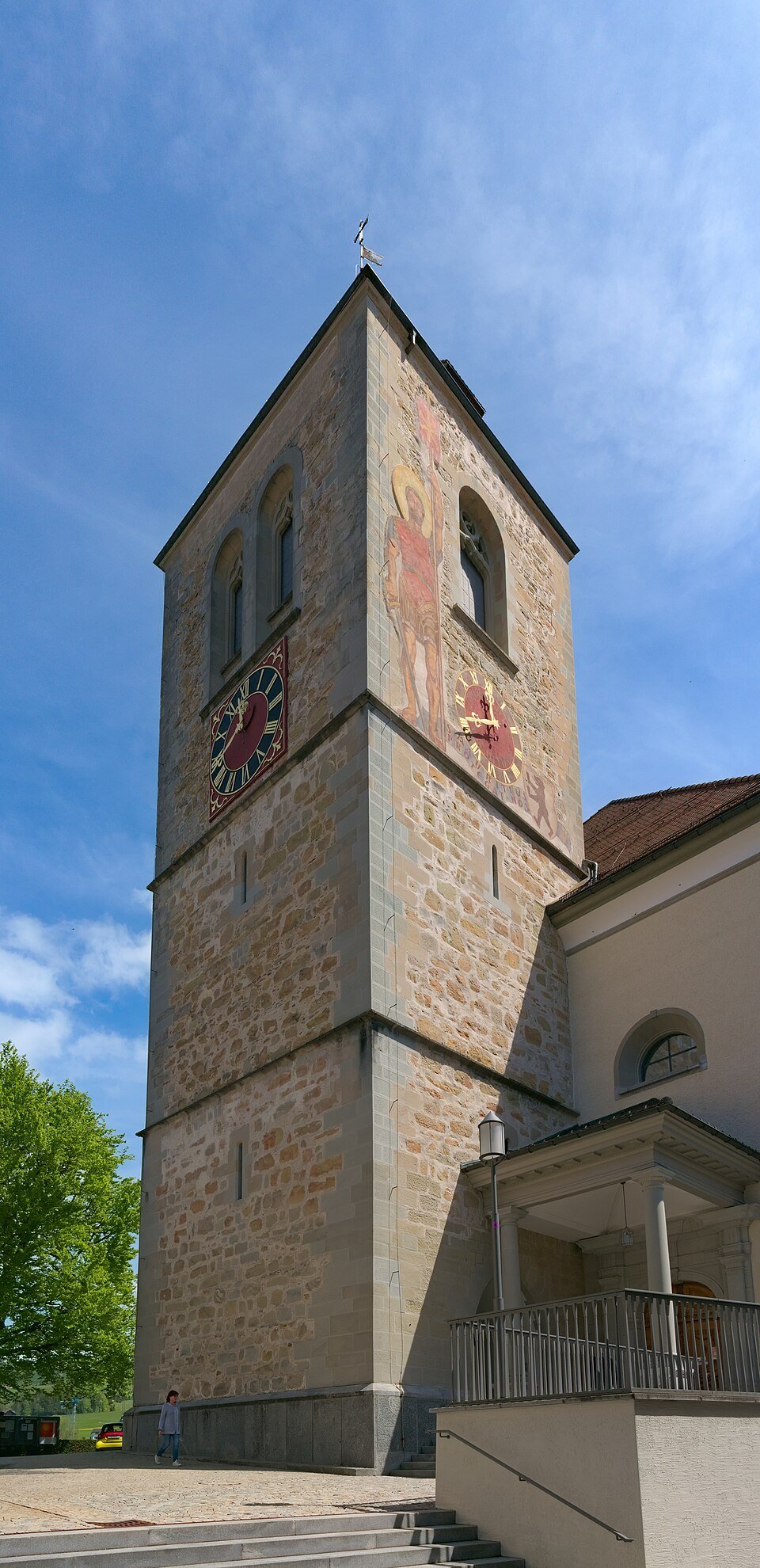
The parish was established in 1071, and the church dedicated to St Maurice has been altered and rebuilt through successive periods. Its prominent position above the Sitter makes it a useful landmark for reading the village’s layout. The contrast between the church, the river crossings and the densely packed houses reveals a settlement shaped by both parish life and the valley landscape.
Make mountain access a separate decision. A cable car does not make every path easy: the route to Wildkirchli and Aescher is a mountain walk with steps and exposed sections.
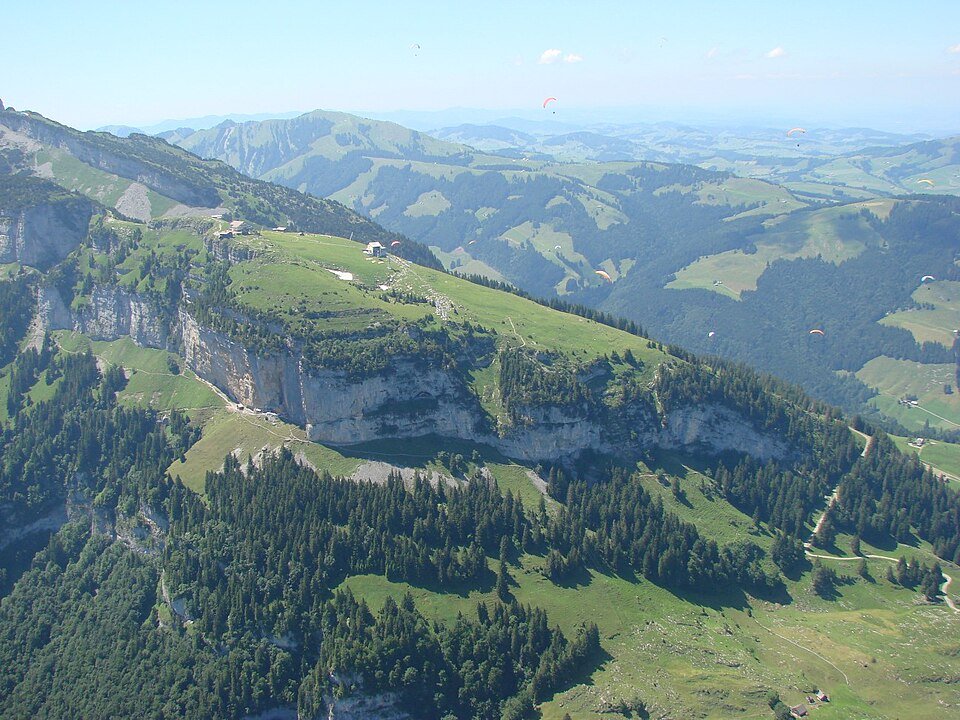
Ebenalp is a limestone mountain landscape, with the Wildkirchli caves and the inn tucked beneath its rock face. Archaeological finds include stone tools and cave-bear bones; later, hermits lived here, with Priest Ulmann taking up residence in 1658. These overlapping natural and human histories explain why the area is more than a viewpoint above Appenzell.
Something local for the table
Try Appenzeller cheese and a local bakery speciality. For a dairy visit outside the village, confirm the location, transport and programme instead of assuming it is on Hauptgasse.
Getting around & arranging your visit
Appenzeller Bahnen serves the village and Wasserauen. Check connections and the Ebenalp lift calendar for your date. Keep a village-and-museum day ready if mountain weather is unsuitable.
Allow two nights. Spend the first day in the village, museum and cafés. Reserve the second for an appropriate mountain outing only if the lift, paths and weather permit it.
Sources reviewed 28 October 2026. Opening, access, availability and services can change.
A place to put down your bags
Where to stay
Public business contacts are provided for your convenience. Ask the property about current availability, rates, access and arrangements for your party. Inclusion does not establish ATA membership.
DIRECT ACCOMMODATION CONTACT
Romantik Hotel Säntis
A village-centre hotel on Landsgemeindeplatz. Ask about rooms and any station transfer.