Arrive with a clear plan
From Haneda, compare Keikyu trains towards Shinagawa with the Tokyo Monorail towards Hamamatsucho, then continue to your hotel’s nearest station. From Narita, compare the Narita Express with Keisei services towards Nippori or Ueno. Your hotel district matters more than a headline airport journey time. Allow roughly 1–2 hours from the terminal to a central hotel after arrivals formalities, sometimes longer from Narita or late at night. Check the final train and a bus or taxi fallback before booking a late arrival.
Where to stay for this journey
Tokyo Station or nearby Ginza suits a simple mainline departure and relatively straightforward onward travel. Ueno is useful for museums and east-side neighbourhoods. Shinjuku offers evening life and direct Odakyu departures towards Hakone, but its station is large: save the hotel’s recommended exit and allow time to find it. Choose one base for all four nights. Check the walk from the station, lifts, room size and whether luggage storage is available before check-in.
Accommodation contacts in the destination guide →What to see, and how to get there
01 · Tokyo
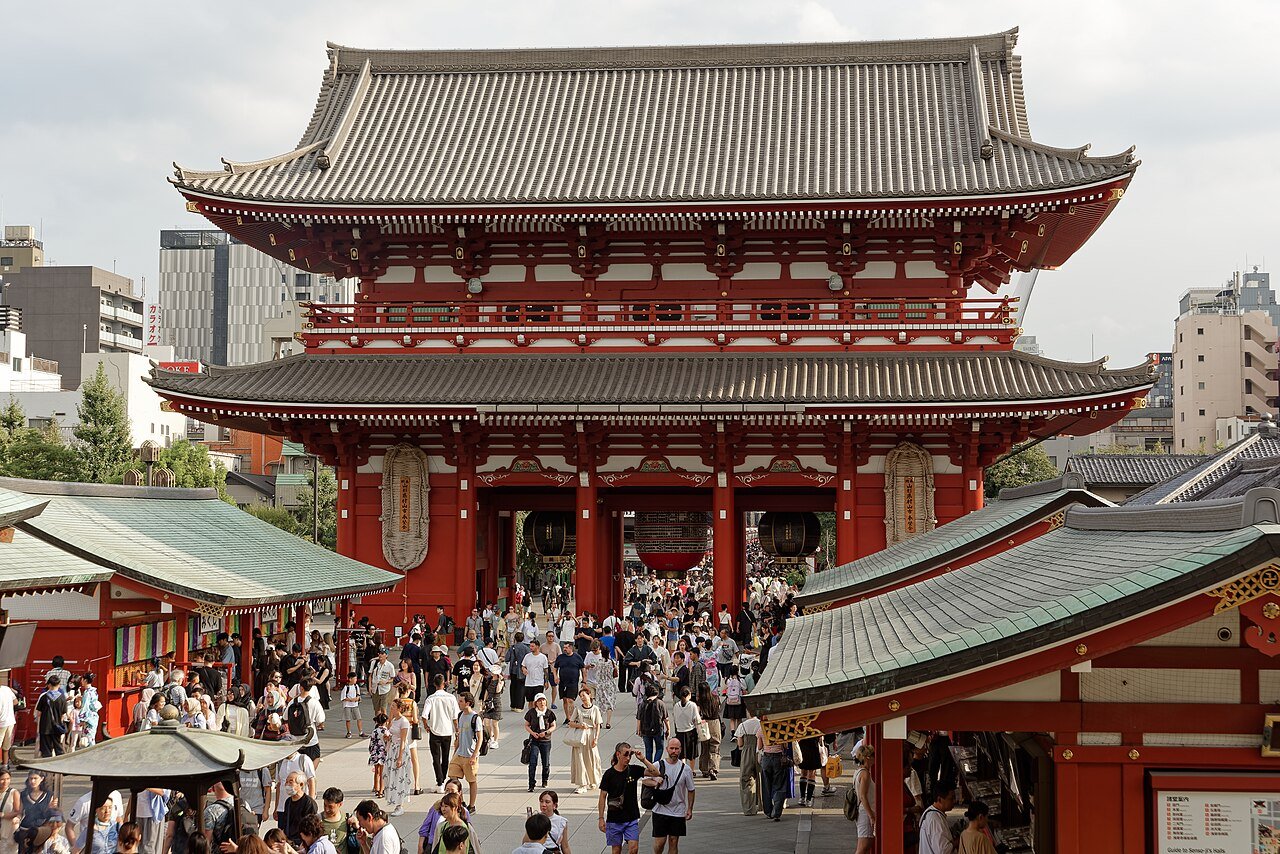
Asakusa and Senso-ji
Begin at Kaminarimon, follow Nakamise towards the temple, then step into the surrounding streets rather than immediately crossing the city. The gateways, shops and riverfront give this first morning a clear shape. Visit respectfully: the temple is an active religious place, and shopping hours differ from access to the grounds.
Getting here
Walk from the Ginza or Toei Asakusa line stations towards Kaminarimon, then continue through Nakamise. The Tsukuba Express station is a separate location. Allow extra time for the riverfront and side streets.
Location map, not a promised itinerary. Check the suggested route, date and operating times before travelling; local walking directions may be more useful for the final approach.
02 · Tokyo
Ueno and a museum afternoon
Pair Ueno Park with one museum whose collection interests you, then leave time for tea or the Ameyoko area. One focused museum visit is usually more rewarding than collecting three admission tickets. Check the museum’s closing day and special-exhibition reservation requirements before deciding which day to come.
Getting here
Use the park-side station exit and follow signs to your chosen museum. This is a separate outing from the west-side Shibuya and Harajuku district.
Location map, not a promised itinerary. Check the suggested route, date and operating times before travelling; local walking directions may be more useful for the final approach.
03 · Tokyo
Meiji Jingu, Harajuku and Shibuya
Walk the wooded shrine approach before exchanging it for the busier streets around Harajuku. Continue towards Shibuya for the crossing and an evening meal. The contrast is the point of this day: forest, neighbourhood and city lights, with a long break somewhere in between.
Getting here
Start at Harajuku or Meiji-jingumae station. Check shrine access hours, then continue on foot or by train to Shibuya rather than retracing every step.
Location map, not a promised itinerary. Check the suggested route, date and operating times before travelling; local walking directions may be more useful for the final approach.
Leave room for a good meal
Try an unhurried noodle lunch, a department-store food floor and an evening meal near your hotel. A short menu can be easier than a famous restaurant with a long queue. Carry dietary requirements in Japanese and ask about broth and sauces as well as the main ingredient; a dish that looks vegetable-based may use fish stock.
The next railway stage
On day 5, travel to Hakone. From Shinjuku, a reserved Odakyu Romancecar to Hakone-Yumoto is convenient when the selected departure runs through. Alternatively, use a Tokaido Shinkansen that stops at Odawara, then the local train to Hakone-Yumoto. Confirm the train’s stops: “Shinkansen” alone does not mean it serves Odawara.
Check tickets, luggage and reservations →