Pamukkale’s white travertines may be the famous photograph, but Hierapolis deserves just as much attention. Pair the striking natural setting with ancient streets and a theatre visit, then stay nearby to explore another side of Denizli’s landscape.
Pamukkale and Hierapolis form a single cultural landscape shaped by thermal water. Mineral deposits created the pale terraces, while an ancient spa city developed immediately above them. Nearby Kaklık Cave and Laodicea broaden the picture, pairing another remarkable water-formed environment with the streets and public buildings of a separate major ancient settlement.
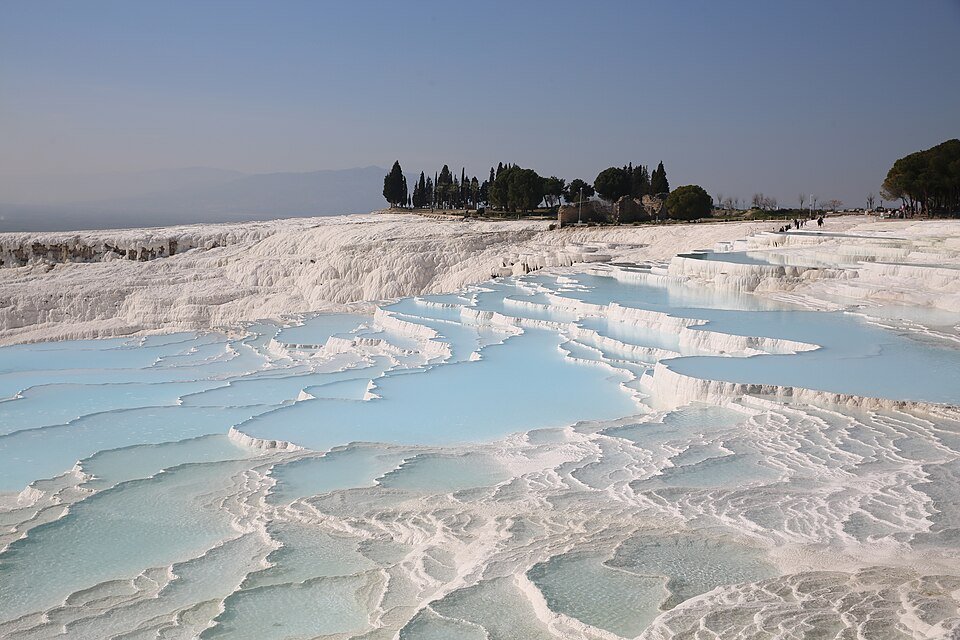
Mineral-rich water has shaped Pamukkale’s unmistakable white landscape. Visitor routes are managed to help protect it, so the photograph you can take depends on the areas open at the time.
The white terraces are formed by calcium-rich thermal water depositing travertine as it moves across the slope. Curving basins and mineral edges give the hillside its stepped appearance. This is an active geological landscape rather than a constructed series of pools, and its water also explains the ancient settlement of Hierapolis above the terraces.
Plan your visit Use authorised routes and follow footwear instructions. Do not expect every terrace to be filled with water.
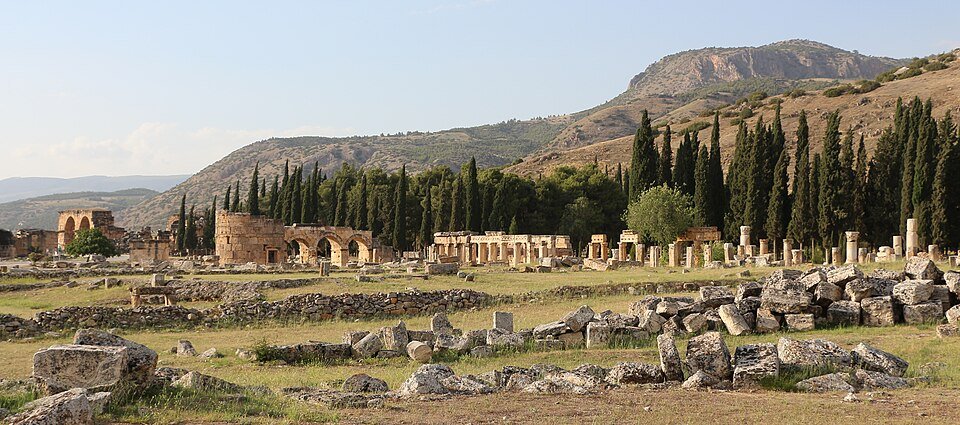
The ancient city gives the terraces historical context. Walk its archaeological landscape with enough time to appreciate the theatre and the scale of the settlement.
Hierapolis developed as a thermal spa city from the Hellenistic period and expanded under Roman rule. Its ruins include monumental public buildings, a theatre, baths and extensive cemeteries, showing how bathing, urban life and commemoration shared the same setting. The ancient city is an essential part of the UNESCO property, alongside Pamukkale’s better-known natural formations.
Plan your visit Check access and current tickets. Do not assume the ancient pool is open or included without confirming.
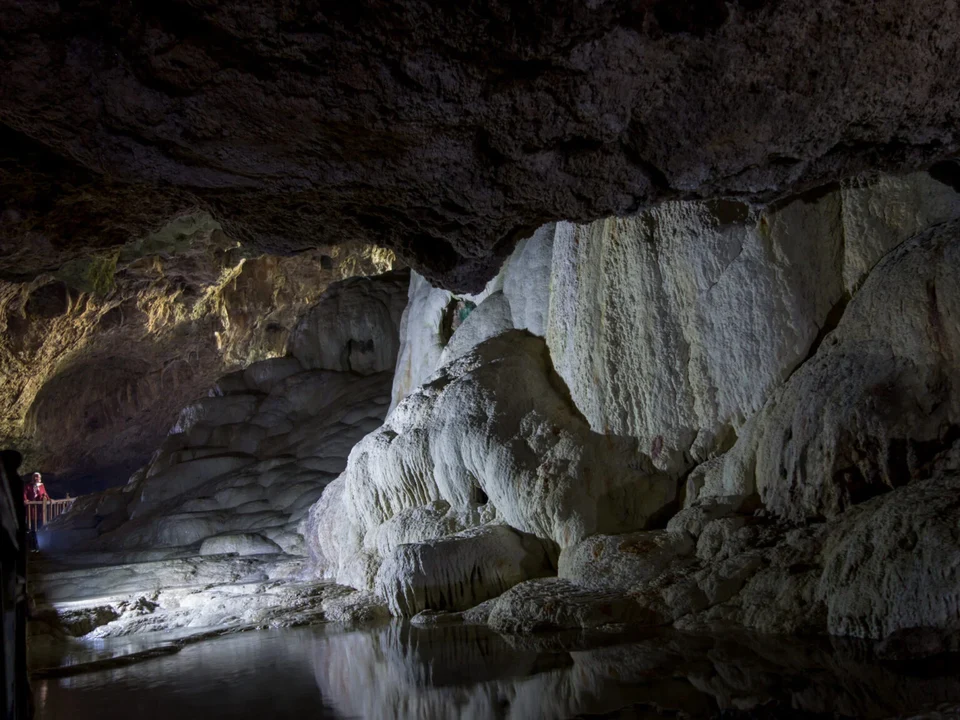
Travertine formations inside a cave offer an unusual companion to the outdoor terraces. This is a separate excursion in the wider Denizli area.
Kaklık contains pale travertine formations within a cave, offering a useful comparison with the open hillside at Pamukkale. Water and mineral deposits shape ledges and surfaces beneath the rock opening. Light entering from above creates a different visual setting, with the surrounding cave making the scale and texture of the deposits especially noticeable.
Plan your visit Arrange transport and check current opening arrangements, walking surfaces and suitability before setting out.
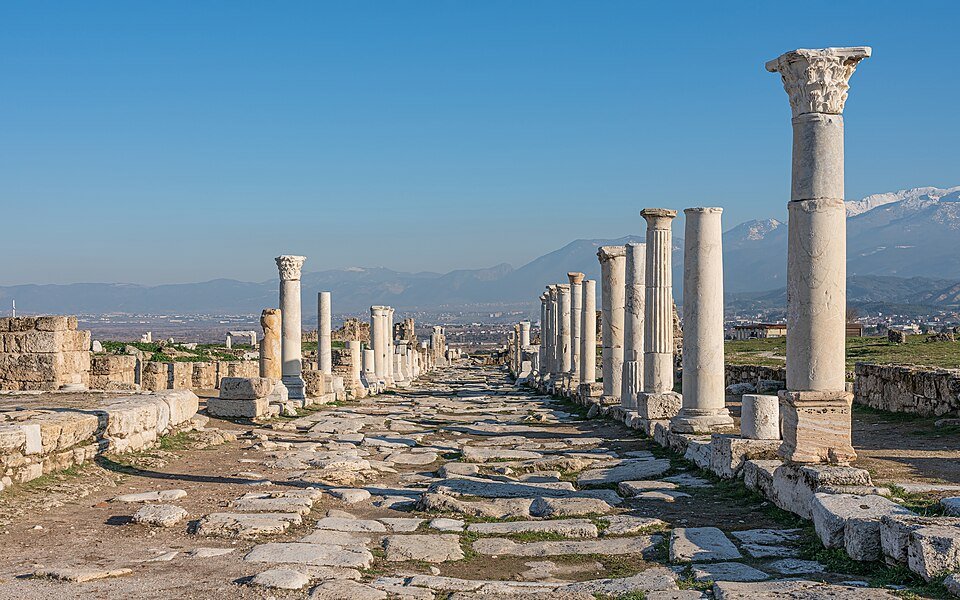
A second ancient-city visit can broaden the story of the region, with streets and buildings that invite comparison with Hierapolis.
Laodicea preserves the planned streets and monumental buildings of an important ancient commercial centre. The colonnaded Syria Street gives a clear sense of the city’s urban scale, while theatres, baths and church remains reveal different phases of its history. Restored and re-erected elements help make the street legible without implying that every standing feature survived intact.
Plan your visit Give this its own time slot rather than adding it to an already crowded terrace visit.
Morning: follow the authorised terrace route and explore part of Hierapolis.
Afternoon: allow time for the theatre and archaeological setting, with breaks from the sun.
With an extra day: arrange an outing to Laodicea or Kaklık Cave.
A suggested outline, adjust it to opening days, bookings and your pace.
Enjoy the place, not just the sights
Pause. Taste. Stay a little.
Use a village stay for a relaxed evening meal, or explore Denizli’s regional cooking if your route takes you through the city. Carry drinking water for the exposed archaeological visit.
How long to stay
Allow one or two nights. A village hotel lets you plan the main visit around your preferred time of day instead of making it a rushed long-distance stop.
Nearby bases, direct contact
Where to stay in Pamukkale.
Two suggestions to start your search. Speak to the hotel directly.
WHERE TO STAY
Venus Suite Hotel
In Pamukkale village, a convenient base for planning your terrace and Hierapolis visit.
Pamuk Mah., Sümbül Sok. No:7, Pamukkale, Denizli Türkiye
Suggestions are based on location and the hotels’ published information, not personal inspections. Confirm room types, accessibility, parking and current rates directly. Need help with a group hotel request?
Getting here & around
Arrive with a plan.
Denizli is the main regional transport hub, with local transfers towards Pamukkale. Denizli Çardak Airport, DNZ, is outside the city, so arrange the onward journey rather than assuming a short walk from arrival.
Information reviewed October 24, 2026. Confirm changing details with the attraction or hotel before travelling.
Sources & photograph credit
Every photograph is credited beside the image and in its enlargement. Historical and contextual views are labelled in their captions. The five photographs retained from the earlier guide were checked against their Commons originals.
Visitor information is linked beside each attraction. Hotel contact details come from the official hotel websites linked above.
Additional historical and architectural research reviewed 31 October 2026: