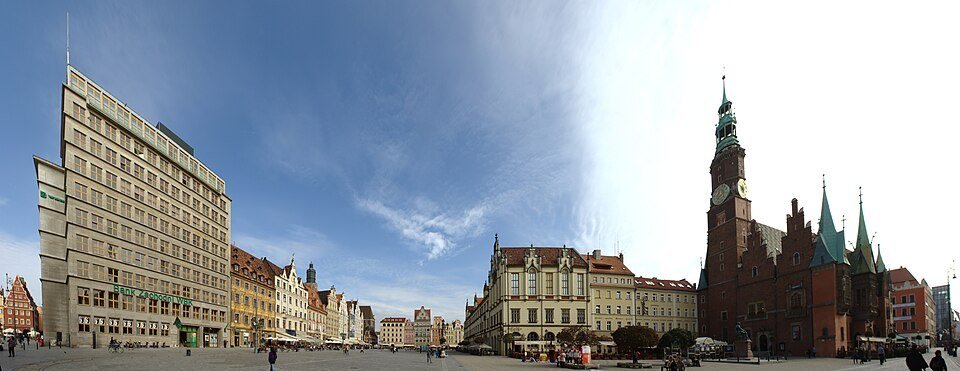
Wrocław is a city to explore with your eyes open. Bronze dwarfs hide at street level, colourful façades frame the market square, and bridges lead towards islands and cathedral views. Its layered Central European history gives even a simple walk plenty to uncover.
The Oder’s channels and islands give Wrocław a geography as distinctive as its streets. The cathedral district and market square preserve contrasting architectural settings, while the tiny public-street dwarfs bring contemporary humour into those older spaces. Hydropolis reuses water infrastructure for science interpretation, and the Centennial Hall demonstrates an early twentieth-century approach to monumental construction. Together they connect the city’s historic fabric with later invention.
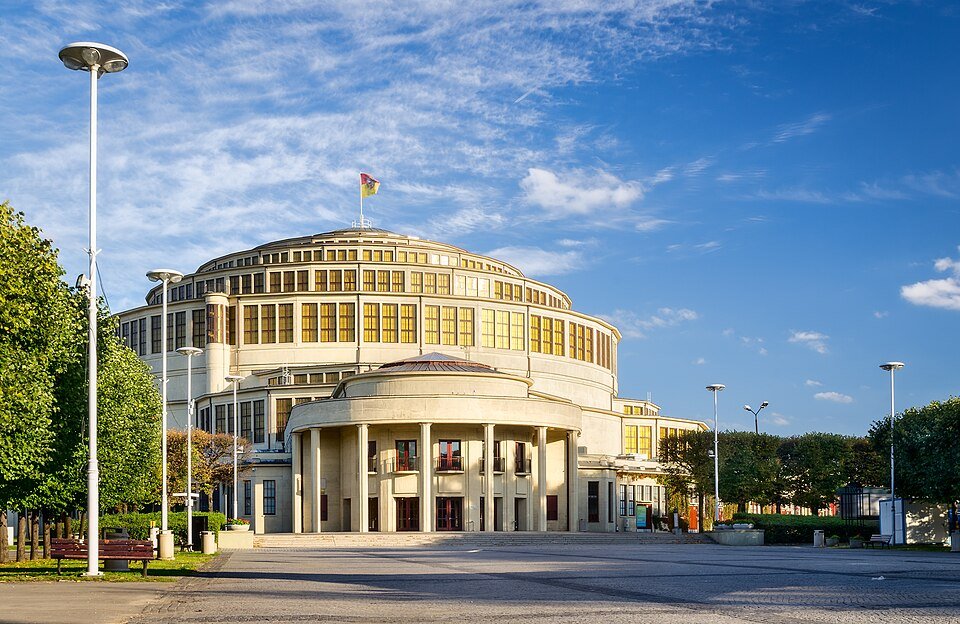
A dwarf hunt reveals small street details, while Centennial Hall introduces a much larger architectural ambition. The hall is recognised by UNESCO for its pioneering reinforced-concrete design. Use the contrast to give the visit variety, rather than treating the city as a single checklist.
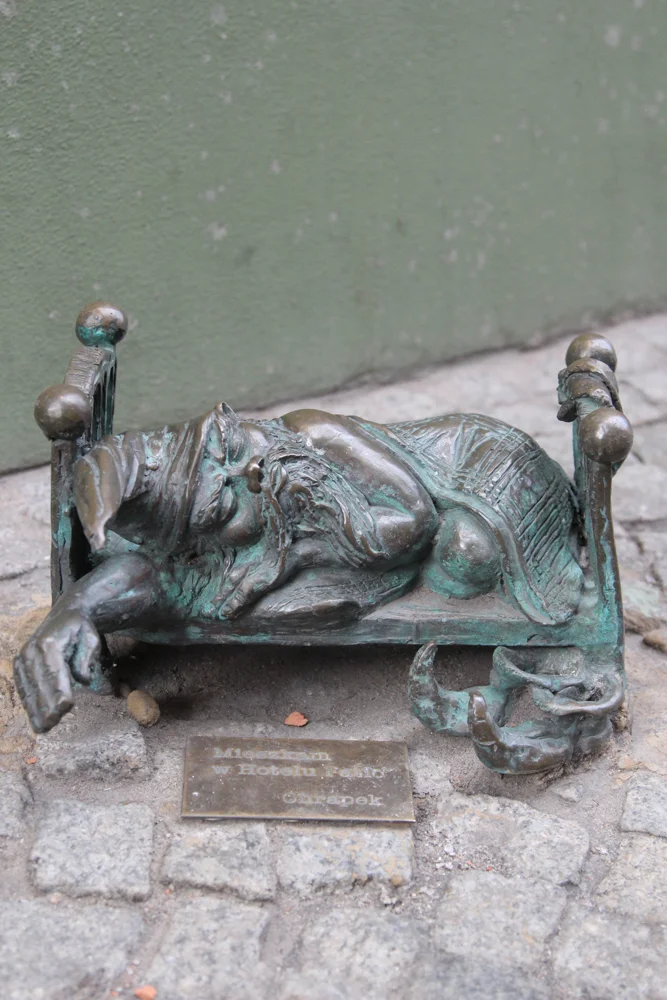
Enlarge photoChrapek (Snorer); sculpture designed by Beata Zwolańska-Hołod, casting by Wytwórnia. Photo: Pnapora · Wikimedia Commons · CC BY-SA 3.0. Cropped for display.
01
Follow the dwarfs
The city’s small bronze figures turn sightseeing into a family treasure hunt. Look closely at doorways and pavements, then discover the stories behind individual characters.
The figures give specific occupations, gestures and local stories a miniature form. Chrapek, pictured here, is a sleeping dwarf outside the Patio Hotel: his tiny bed and relaxed pose turn a doorway into a comic scene. The sculpture was designed by Beata Zwolańska-Hołod, with the casting credited to Wytwórnia, illustrating how individual artists have developed the city’s public-street characters.
Plan your visit Use the official dwarf information to plan a manageable route.
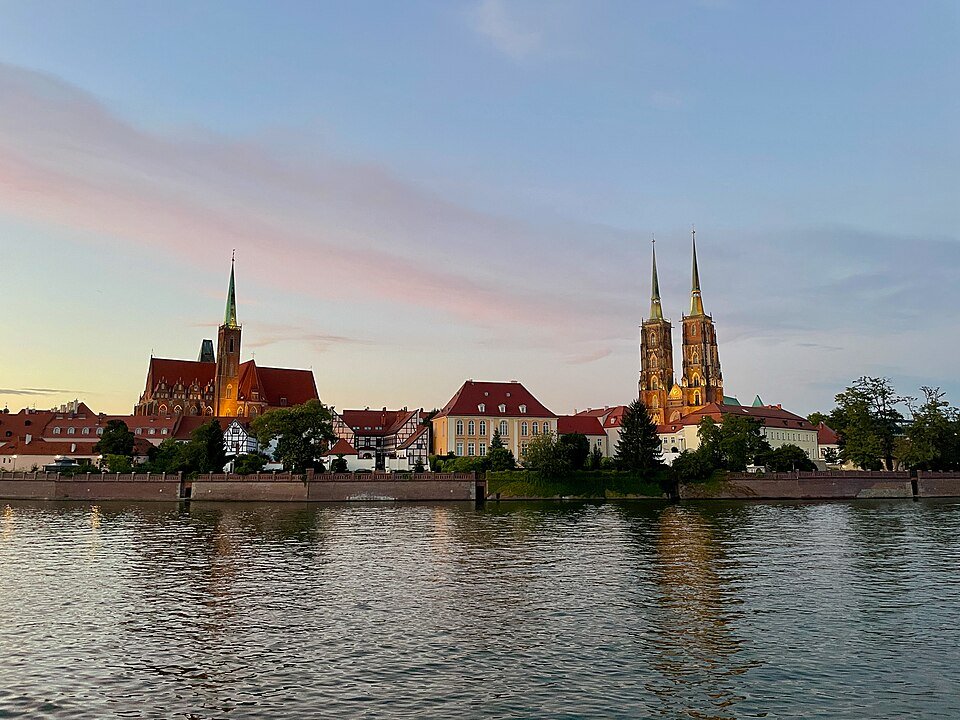
Cross towards the cathedral district for a quieter architectural walk and river views. The changes in light around evening make it worth returning after a first daytime visit.
The cathedral district’s churches and towers rise above an environment shaped by the Oder’s channels and crossing points. From across the water, the skyline makes the concentration of religious buildings clear; within it, smaller streets and changes in paving reveal a different scale. The district’s relationship with the river is as characteristic as any one façade.
Plan your visit Many paths are cobbled. Choose a shorter riverside loop if travelling with tired children.
An old water reservoir has become a multimedia exploration of water, from the deep ocean to the systems that sustain a city. It adds an imaginative indoor stop to the familiar city sights.
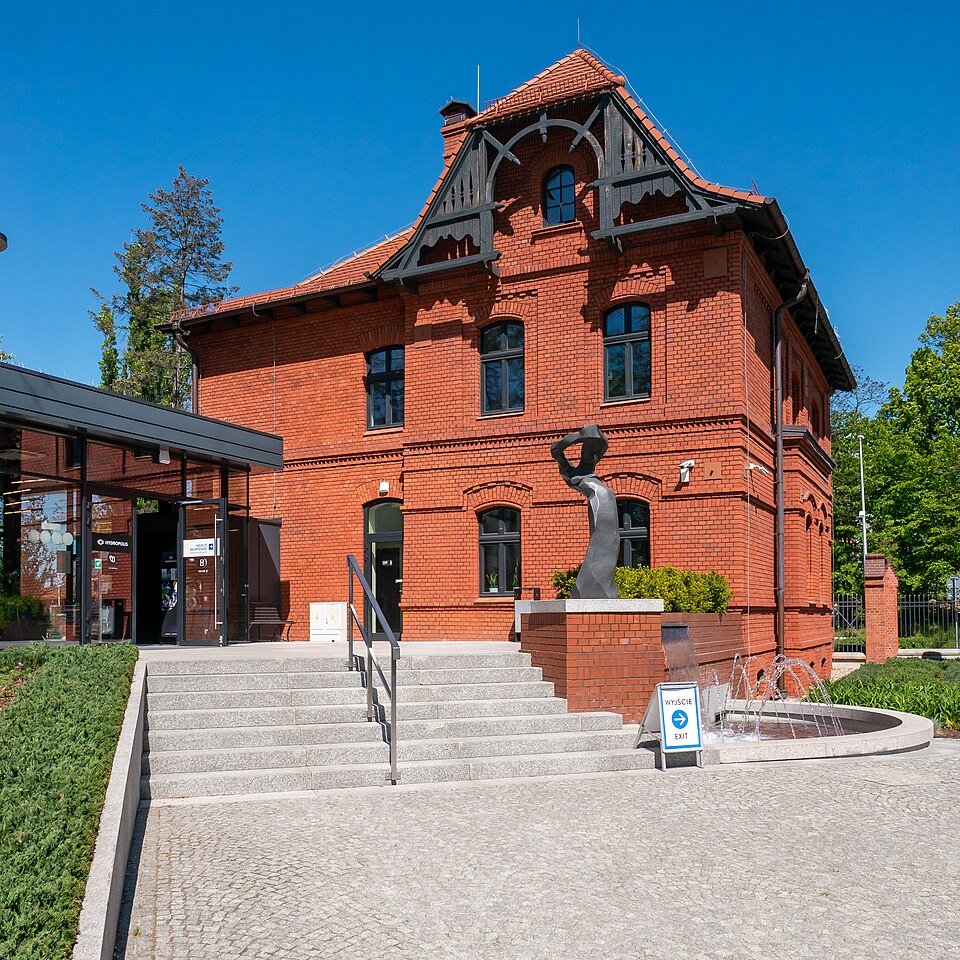
The exhibition uses water to connect natural processes with exploration and urban life. Its interpretation includes a replica of the Trieste bathyscaphe, recalling the 1960 descent by Jacques Piccard and Don Walsh to the Challenger Deep. The entrance building shown here introduces the adapted waterworks setting; it is not a photograph of the underwater scenes or exhibition installations.
Plan your visit Book a timed visit through the official site.
The UNESCO-listed hall, neighbouring green spaces and garden visits make a worthwhile outing beyond the Old Town. Architecture lovers and families can each find a different reason to go.
Max Berg’s hall, built in 1911–1913, used reinforced concrete to create a large central gathering space beneath a monumental dome. Its structural approach was a major departure from conventional monumental masonry. The surrounding exhibition grounds, pergola and green spaces place that engineering achievement within a wider designed district rather than an isolated building.
Plan your visit Check which interiors, gardens and seasonal features are open before travelling.
Check the official attraction links for dates, tour languages and entry arrangements. Book the visits that matter most first, then fit transport and hotel plans around them. Confirm accessibility directly with the venue.
Let children choose a short dwarf route with a defined finish, then add one museum or riverside pause. Ostrów Tumski and the Centennial Hall district are separate outings. Check surfaces, crossings and the chosen attraction’s accessible route.
Confirm the current Hydropolis entry arrangements and the hall’s exhibition or event calendar. Access to a building during a private event can differ from ordinary visitor access. Outdoor shows and gardens have their own seasons.
Morning: explore the Market Square and start a dwarf spotting walk.
Afternoon: head towards the river islands and Ostrów Tumski.
Another half day: choose Hydropolis or Centennial Hall and the surrounding gardens.
A suggested outline, adjust it to opening days, bookings and your pace.
Enjoy the place, not just the sights
Pause. Taste. Stay a little.
Combine a Market Square café with a walk into nearby streets for dinner. Ask the tourist office for current local food suggestions beyond the most visible terraces.
How long to stay
Two or three nights allow a city walk, one major attraction and unhurried evenings. Stay near the Market Square for the most walkable introduction.
A meal belongs in the plan
Eat & drink.
Art Restauracja at Art Hotel
An old-town dining option. Ask the restaurant about the current menu, dietary choices and table reservations.
Suggestions are based on location and the hotels’ published information, not personal inspections. Confirm room types, accessibility, parking and current rates directly. Need help with a group hotel request?
Fewer than 15 rooms? Contact the hotel directly. 15 rooms or more?Ask ATA for low group rates → We use existing agreements where available and negotiate when needed.
Getting here & around
Arrive with a plan.
Wrocław Główny is outside the Market Square. Use a tram or bus for the final connection and plan the Centennial Hall district separately. Check where your return service leaves instead of assuming it uses the same stop in the opposite direction.