Poznań brings together the beginnings of the Polish state and the energy of a modern university city. Start with the market square, but do not stop there. Cathedral Island, inventive museums and a very particular pastry tradition give the city its own personality.
The city’s stories occupy several distinct spaces. The market square presents a Renaissance civic centre, Cathedral Island preserves the setting of early Polish statehood, and the Enigma Cipher Centre connects local mathematical education with an international history of codebreaking. The Croissant Museum adds a living tradition of making and speaking: its demonstrations combine pastry craft with Poznań’s own dialect and customs.
Poznań’s Cathedral Island connects the city with the beginnings of the Polish state. The Enigma Cipher Centre and croissant traditions open very different chapters. Choosing one of these themes in depth gives a more memorable visit than moving quickly between all three.
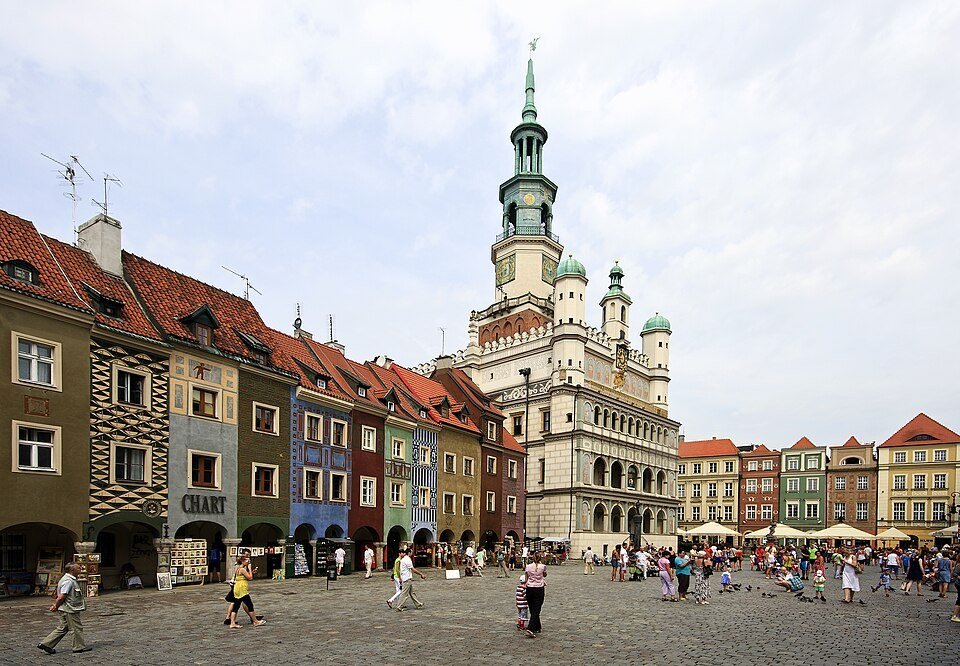
Colourful merchant houses and the Renaissance town hall introduce Poznań’s civic heart. The mechanical goats are a popular ritual, check the current viewing arrangements.
The town hall’s Renaissance appearance results from the sixteenth-century rebuilding directed by Giovanni Battista di Quadro. Its arcaded façade and decorative upper stage create a focal point above the smaller market buildings. The square places civic architecture and the scale of the merchant houses together, making their different roles visible within one urban space.
Plan your visit Enjoy the details of the smaller houses rather than rushing straight to the next stop.
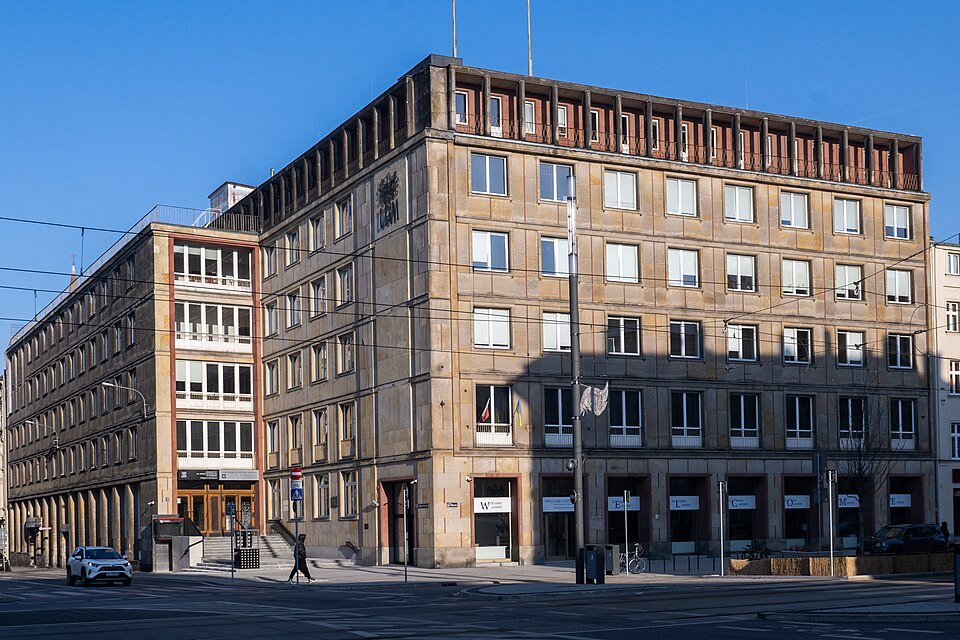
Enlarge photoCollegium Martineum, home of the Enigma Cipher Centre. Photo: Łukasz Gdak · Wikimedia Commons · CC0. Cropped for display.
02
Enigma Cipher Centre
Interactive displays tell how Polish mathematicians helped break the Enigma cipher. Try the puzzles and connect a world-changing story with the city where key work began.
The exhibition gives particular attention to Marian Rejewski, Henryk Zygalski and Jerzy Różycki, whose mathematical work contributed to breaking Enigma. It also places their achievement within a longer history of keeping and decoding information. The centre occupies Collegium Martineum on Święty Marcin, connecting the story with an identifiable building in the modern city.
Plan your visit Check language options and allow time for the interactive exhibition.
A live presentation turns a pastry into a shared experience. It is a fun way for families to learn a little local history while seeing the craft behind the city’s famous treat.
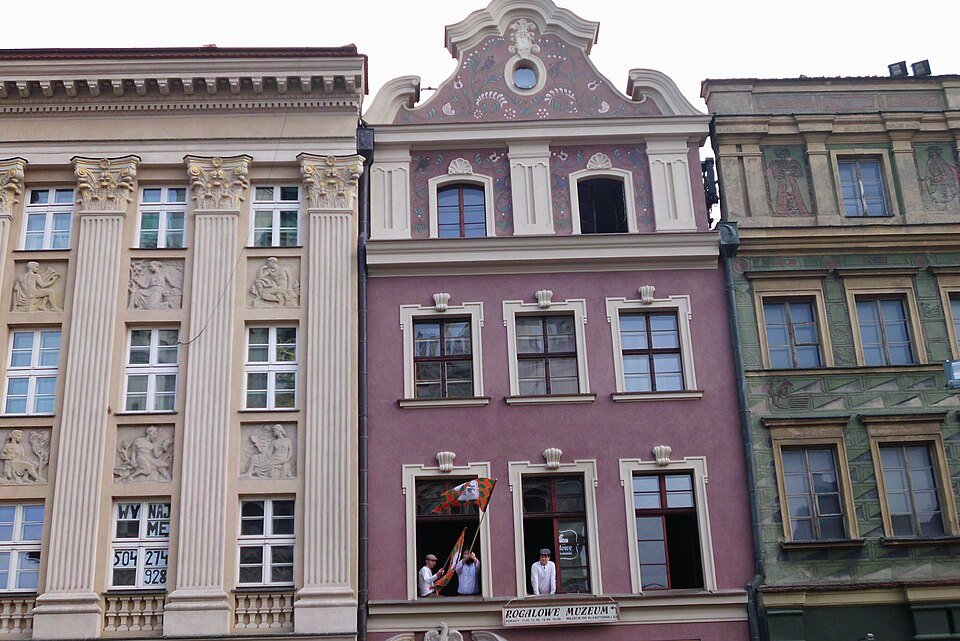
The museum is housed in a Renaissance market-square building at Stary Rynek 41. Its live presentations combine the shaping and preparation of St Martin’s croissants with stories, dialect and local custom. This is a craft performed in front of visitors, rather than a display of finished pastries alone; the historic building in the photograph is its present setting.
Plan your visit Reserve a demonstration in a language your group understands.
Move beyond the market square to explore the landscape of early Polish statehood. The heritage centre helps make sense of the island before or after an outdoor walk.
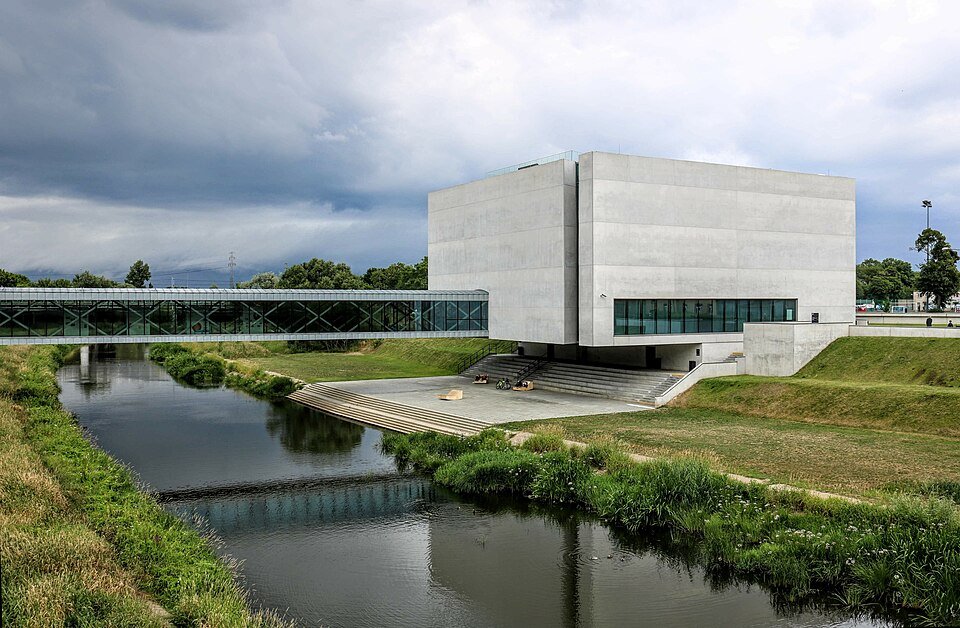
Brama Poznania interprets the history of the cathedral island through a multimedia exhibition. Its contemporary building and riverside position create a deliberate contrast with the island’s older religious architecture. That relationship between modern interpretation, water and historic settlement helps explain the landscape in which the early statehood story is set.
Plan your visit The centre offers context for the island’s early statehood story. Check current exhibitions and visiting arrangements.
Check the official attraction links for dates, tour languages and entry arrangements. Book the visits that matter most first, then fit transport and hotel plans around them. Confirm accessibility directly with the venue.
Choose a workshop language and session that suit your family before reserving. Cathedral Island and the Market Square are different areas. Ask Porta Posnania and historic interiors about their specific access arrangements rather than assuming one route covers them all.
Book workshops for a particular date and language, and check museums separately. Religious interiors may restrict visits during services. Major fairs and events can affect hotel demand even when your own itinerary is a quiet cultural one.
Morning: explore the Old Market Square and check the current town hall goat display schedule.
Afternoon: visit Cathedral Island and Porta Posnania.
Add a museum session: choose croissant making or the Enigma codebreaking story.
A suggested outline, adjust it to opening days, bookings and your pace.
Enjoy the place, not just the sights
Pause. Taste. Stay a little.
Try a St Martin’s croissant, a regional speciality, and look for a workshop that explains the tradition. Book a suitable language session for children or an international group.
How long to stay
Allow two nights for the historic centre and Cathedral Island, with another half day for museums or a slower neighbourhood walk.
A meal belongs in the plan
Eat & drink.
Cucina at City Park
A dining option in the City Park complex, outside the Old Market Square. Include the transfer in your plan and reserve a table directly.
Suggestions are based on location and the hotels’ published information, not personal inspections. Confirm room types, accessibility, parking and current rates directly. Need help with a group hotel request?
Fewer than 15 rooms? Contact the hotel directly. 15 rooms or more?Ask ATA for low group rates → We use existing agreements where available and negotiate when needed.
Getting here & around
Arrive with a plan.
Poznań Główny, the old centre and Cathedral Island need distinct local connections. Plan the tram or bus to your actual entrance. Leave a travel block between an island visit and a timed workshop in the centre.