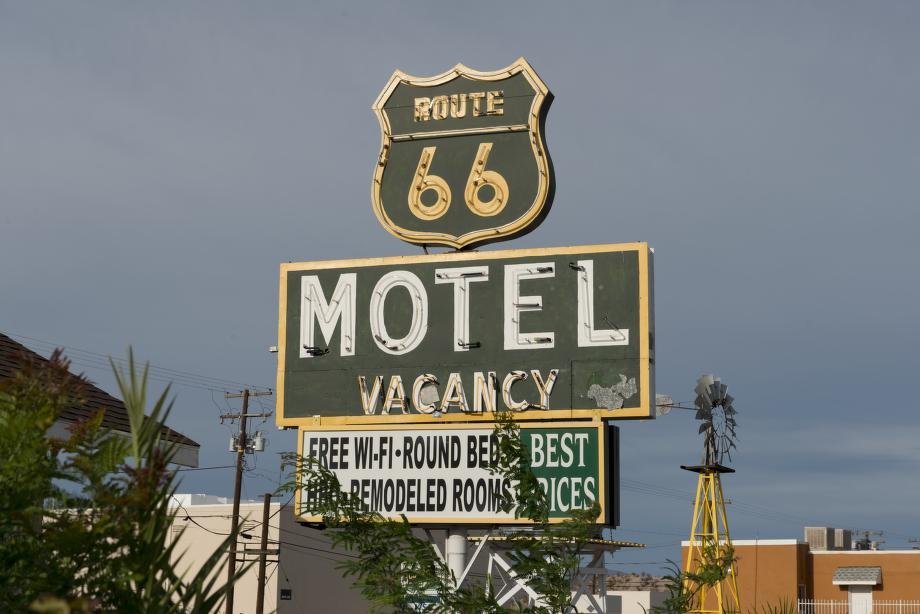
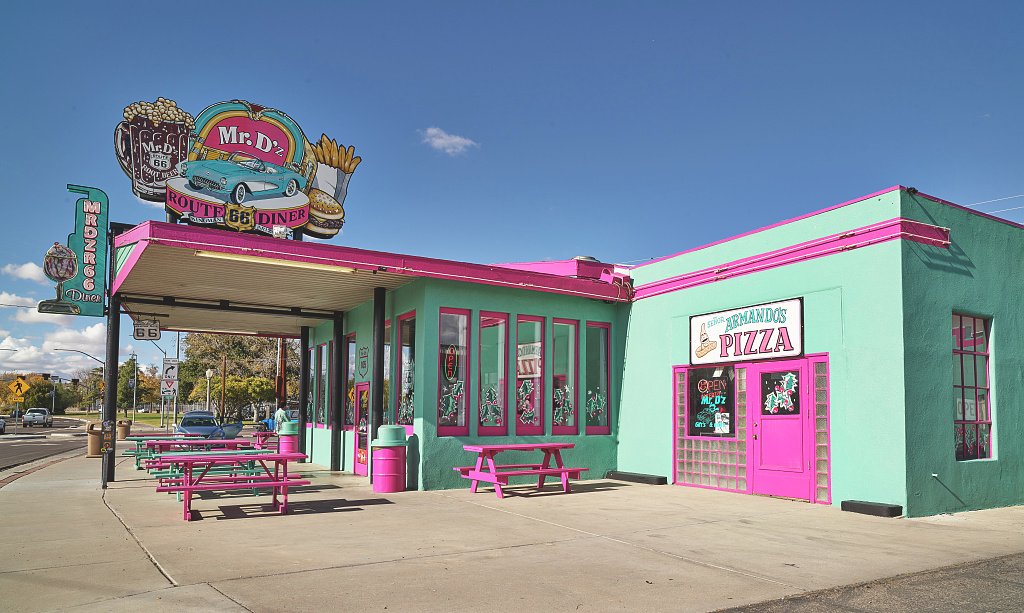
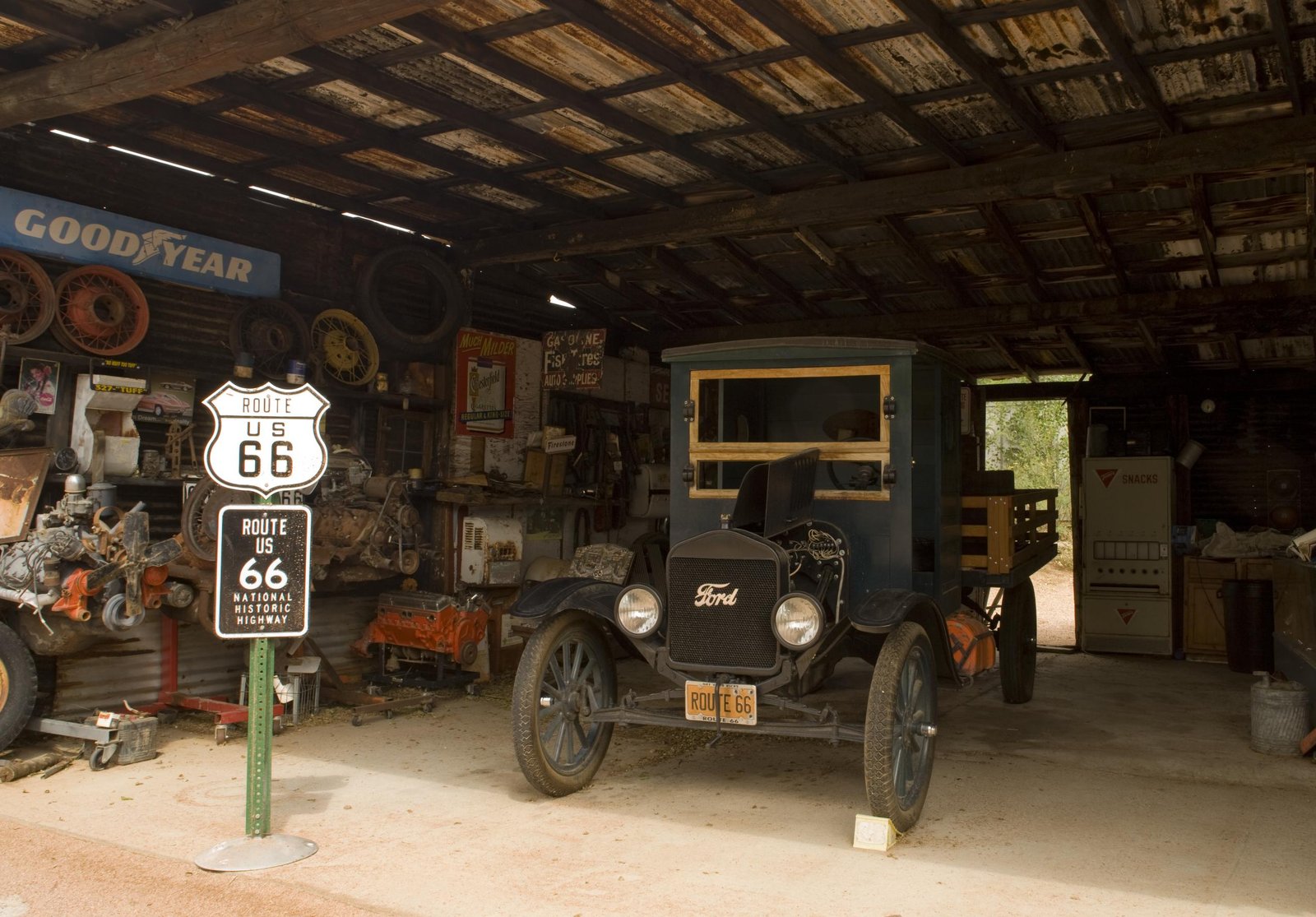
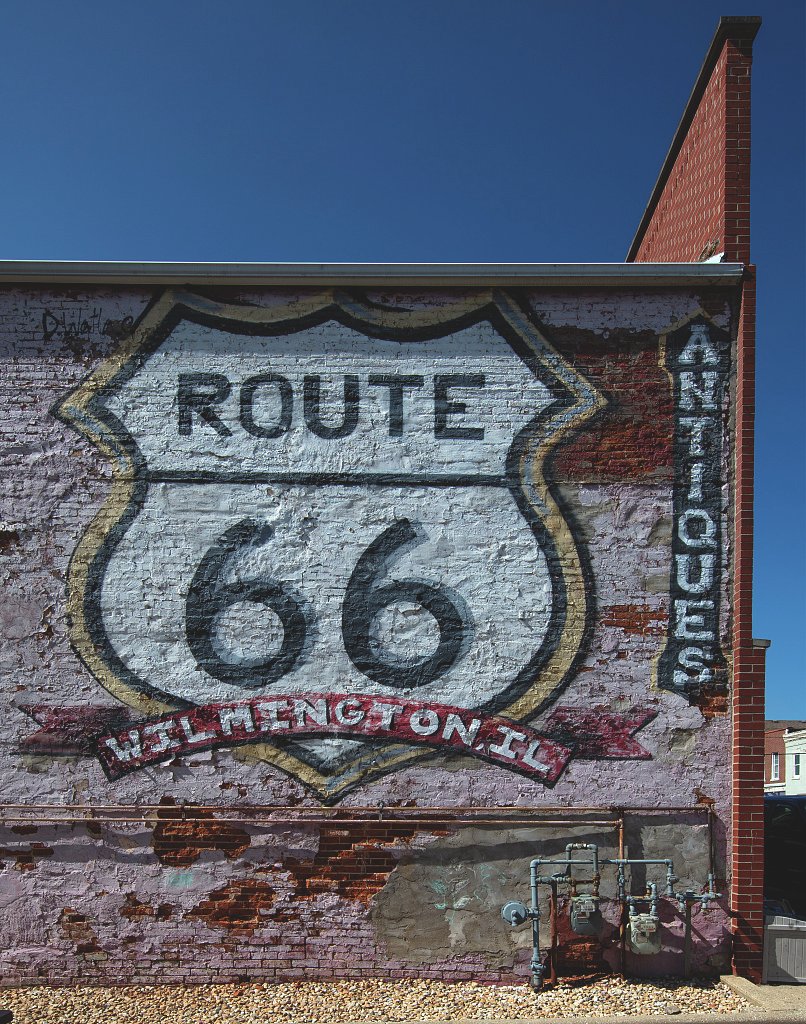
From Santa Monica to Chicago, with time to enjoy the journey.
A suggested journey for travelers who want the drive, the stops and the evenings. Start with an arrival night in Los Angeles, then follow these stages east. Add nights wherever a place catches your imagination.
Mileage and driving times are editorial planning ranges, not measured navigation instructions. They exclude sightseeing and breaks. Recalculate for your exact open alignment, hotel and date; traffic and detours can take you outside these ranges. Read the planning notes before booking.
Approx. 160–190 milesDriving: 4–6 hoursSleep: Barstow, California
Begin with an ocean-side photograph at Santa Monica Pier, then give the Los Angeles streets your full attention. This is a city-driving day, with signals, traffic and several historical alignments—not a quick escape along one signed highway. Follow your chosen surface-road route through the metropolitan area, then use a legal modern connection over Cajon Pass to Victorville and Barstow.
Make time for this
Allow the morning for Santa Monica and the afternoon for one museum or roadside stop. Trying to tour Pasadena, San Bernardino and Victorville in depth on the same day leaves little time to enjoy any of them.
Your overnight
Barstow makes a useful first overnight because it puts the urban crossing behind you before the desert stage. Arrive with daylight remaining to find dinner and fuel. Add a Los Angeles night before departure if you are arriving on a long flight.
Town-center orientation. Directions may take modern highways and do not reproduce the historic alignment.
Day 2 · california
Barstow → Needles
Approx. 170–210 milesDriving: 3½–5 hoursSleep: Needles, California
Leave Barstow with a full tank and water. Newberry Springs and Amboy can turn this into a memorable desert day, but the old road is not a guaranteed through-route. Check the current county closures before setting off and use I-40 connections where required. A mapping app that draws a continuous historic road does not establish that its bridges are open.
Make time for this
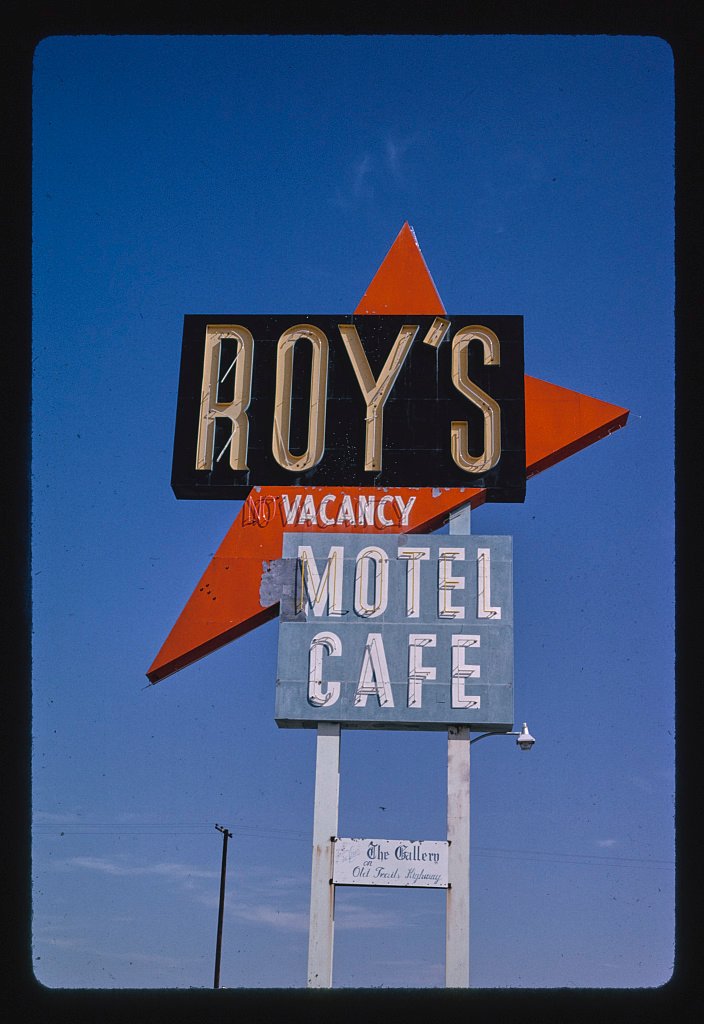
Roy’s sign in Amboy is the classic architecture stop. Make it an out-and-back visit from an open approach if necessary; do not continue past a closure. Keep desert walks short in heat and leave the volcanic crater hike for suitable weather and extra time.
Your overnight
Overnight in Needles near the Colorado River. This breaks up the desert and leaves tomorrow’s mountain-road section for daylight. Choose an operating hotel with confirmed check-in and cooling rather than assuming a historic motel sign means rooms are available.
Cross into Arizona and choose between the slower historic Oatman road and the easier modern highway connection. The Oatman option climbs through the Black Mountains over Sitgreaves Pass, with bends and narrow sections that demand attention. BLM lists a 40-foot vehicle limit on the pass; check the posted restrictions and your rental conditions.
Make time for this
Walk Oatman’s main street, give burros space and keep food away from them. Stop only in established pullouts on the climb. A short distance on the map can still fill a satisfying morning when you leave time for the town and landscape.
Your overnight
Stay in Kingman, where a museum visit and a diner meal bring the route’s story into focus. If mountain roads do not suit your vehicle or confidence, take the modern connection and enjoy Kingman without treating the bypass as a failed Route 66 experience.
Follow the established AZ-66 corridor northeast from Kingman, with Hackberry and Seligman giving the day its personality. This is one of the most rewarding stages for motorists who want small businesses, old signs and open-road scenery rather than continuous freeway driving.
Make time for this
Make Hackberry a proper browsing stop, then pause in Seligman for its preservation story and an unhurried meal. Leave space between the stops: the view through the windscreen is part of this day, not merely a gap between photographs.
Your overnight
Williams is a convenient overnight before continuing east. A Grand Canyon excursion is a separate side trip: add at least a full day and another night rather than squeezing it into this driving stage.
The landscape changes from the high-country setting around Flagstaff toward more open country near Winslow and Holbrook. Use local historic streets where they are accessible and modern links between them. Do not expect every remnant of pavement beside the interstate to be a public road.
Make time for this
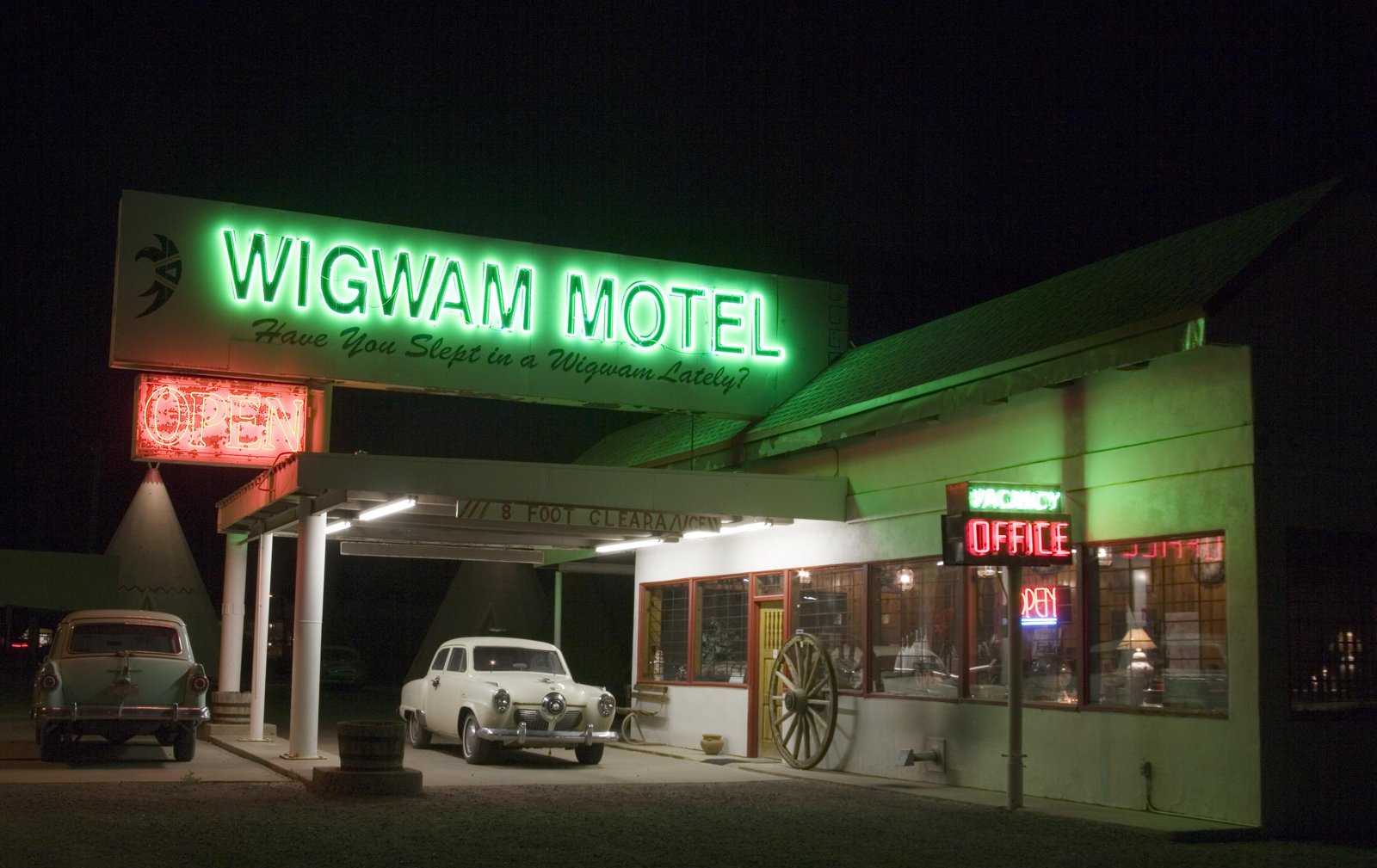
Choose a substantial Flagstaff stop or a relaxed Winslow lunch. The famous corner in Winslow is a town-center photo opportunity; nearby historic railway architecture adds another layer to the journey. Holbrook’s Wigwam Motel provides a different example of roadside advertising through architecture.
Your overnight
Overnight in Holbrook. If you want a room at the Wigwam Motel, reserve the actual property directly and check practical room requirements. A photograph of its exterior does not require presenting it as a universal accommodation recommendation.
Town-center orientation. Directions may take modern highways and do not reproduce the historic alignment.
Day 6 · arizona
Holbrook → Petrified Forest → Gallup
Approx. 125–165 milesDriving: 3–4½ hoursSleep: Gallup, New Mexico
Give Petrified Forest National Park its own daylight window rather than treating it as a fuel stop. The park contains traces of historic Route 66, but the old alignment through the park is a historical feature, not a modern through-road to drive. Continue toward Gallup after the park visit.
Make time for this
Check the park’s current operating hours and entrance arrangements. Choose a manageable set of viewpoints and short walks; the park deserves more than a hurried picture at the old roadbed. Stay on permitted paths and leave petrified wood where it lies.
Your overnight
Gallup is the overnight base. Allow a quiet evening after the park and look ahead to tomorrow’s New Mexico stage. The mileage range includes the park-road visit; skipping the park produces a much shorter driving day.
Town-center orientation. Directions may take modern highways and do not reproduce the historic alignment.
Day 7 · new mexico
Gallup → Grants → Albuquerque
Approx. 145–180 milesDriving: 3–4 hoursSleep: Albuquerque, New Mexico
Travel east through the corridor around Grants, using verified historic town streets and modern connecting roads. There are Indigenous communities and lands along this part of the journey; visitor access, photography and tours are governed locally and should never be assumed from a highway map.
Make time for this
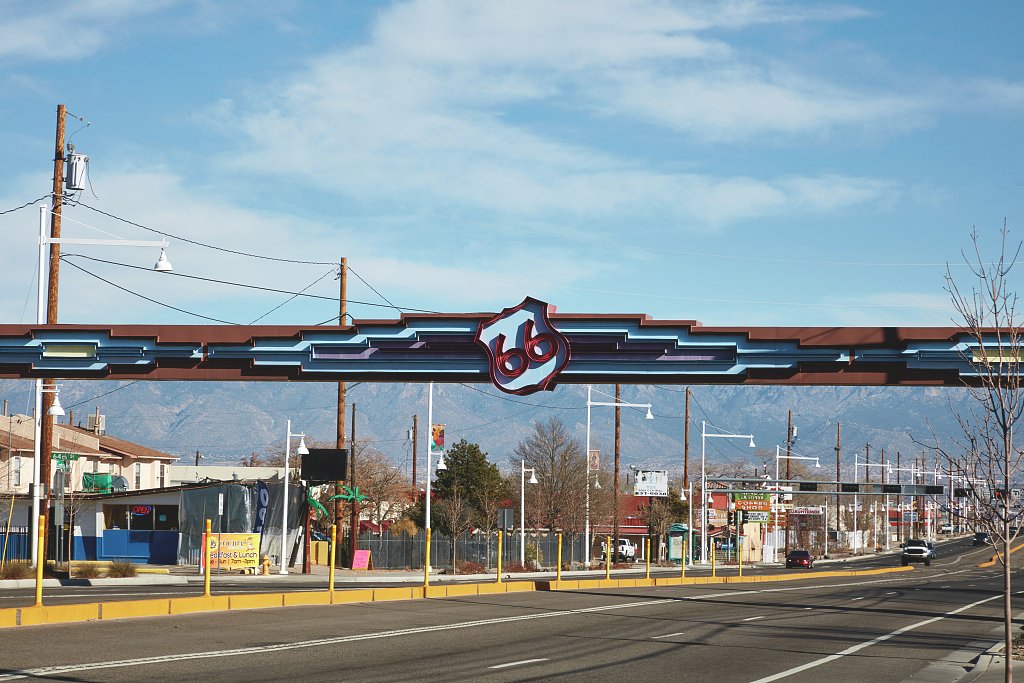
Make time for Albuquerque’s Central Avenue rather than arriving only to sleep. The city’s intersecting old alignments explain why a single “original Route 66” line can be misleading. Evening neon rewards a slow walk in an appropriate district after parking legally.
Your overnight
Stay in Albuquerque for two nights if you want a city break. An optional Santa Fe loop follows a different chapter of the route’s history and should add time; it is not included in the direct eastbound itinerary.
Town-center orientation. Directions may take modern highways and do not reproduce the historic alignment.
Day 8 · new mexico
Albuquerque → Santa Rosa → Tucumcari
Approx. 175–205 milesDriving: 3½–4½ hoursSleep: Tucumcari, New Mexico
The later alignment heads east from Albuquerque toward Santa Rosa and Tucumcari. The change from city streets to high plains is part of the pleasure. Use historic business districts for stops and the appropriate open connecting roads between them.
Make time for this
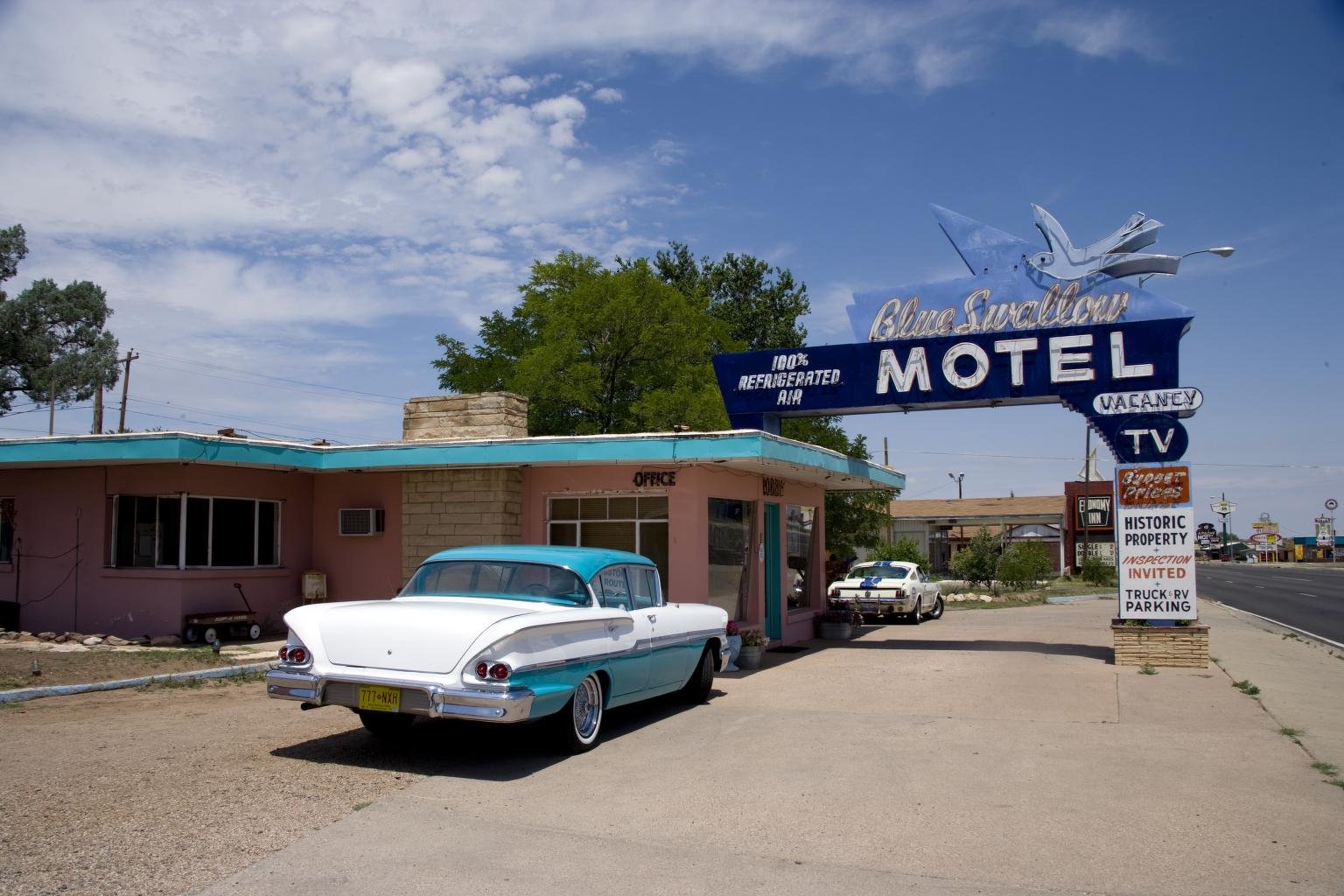
Leave enough time in Tucumcari to see its murals and motel signs before and after dusk. Comparing the lettering, canopy shapes and individual motel layouts tells a richer story than collecting identical shield photographs.
Your overnight
Tucumcari is worth an overnight because its neon is an evening experience. The Blue Swallow is a heritage lodging option; confirm availability and facilities directly. Do not enter occupied motel courts or photograph guests as though they were a museum exhibit.
Cross into the Texas Panhandle and allow the landscape to open out. Adrian’s midpoint tradition makes a pleasant pause, but the exact halfway mileage depends on which historical alignments a traveler follows. Continue toward Amarillo with time for a walk away from the car.
Make time for this
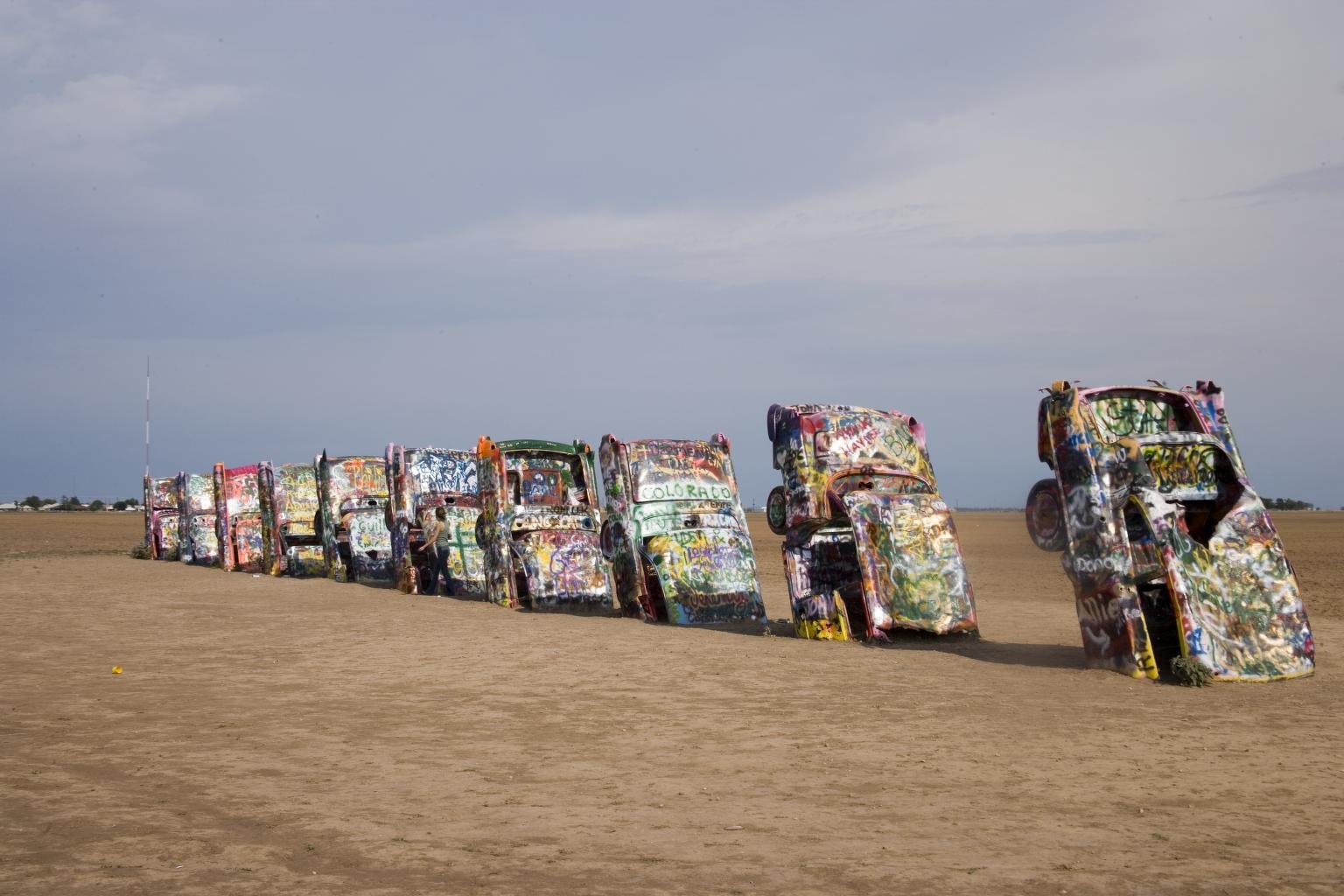
Cadillac Ranch lies west of Amarillo; the Sixth Street Historic District offers a town-based contrast. Separate the outdoor artwork from a meal and browsing stop so the afternoon does not become a series of hurried freeway exits.
Your overnight
Stay in Amarillo. This shorter stage allows recovery time after the desert and gives you a choice of dinner locations rather than forcing a late arrival.
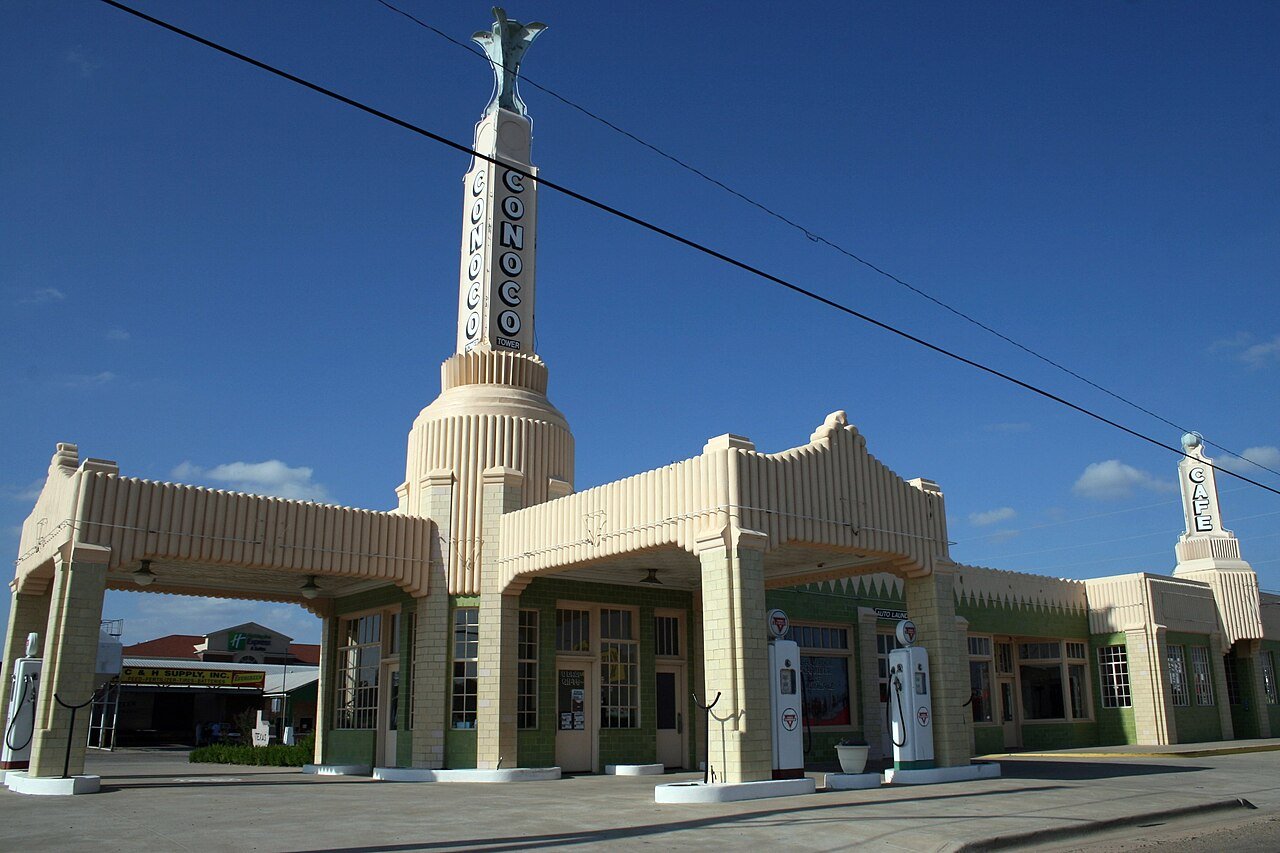
McLean and Shamrock keep the road’s commercial history visible. At McLean, a restored cottage-like filling station shows how early businesses tried to feel familiar and welcoming. Shamrock’s Tower Station makes a much bolder architectural statement.
Make time for this
Allow time for the Tower Station and U-Drop Inn exterior and current visitor facilities. Despite its name, the U-Drop Inn was a café, not a hotel. Continue into Oklahoma and avoid arriving after every museum you hoped to see has closed.
Your overnight
Overnight in Clinton, with its Route 66 museum an option for late afternoon or the following morning according to opening hours. If you linger in Texas, split this stage with a Shamrock night.
Town-center orientation. Directions may take modern highways and do not reproduce the historic alignment.
Day 11 · oklahoma
Clinton → Weatherford → Oklahoma City
Approx. 90–120 milesDriving: 2–3 hoursSleep: Oklahoma City, Oklahoma
This deliberately shorter stage gives room for a museum visit and time in Oklahoma City. Look for the difference between historic roadside buildings and later recreations: both can be enjoyable, but they tell different stories.
Make time for this
Select a local stop around Weatherford, then settle into Oklahoma City rather than racing straight through. If you want to visit a major city attraction, book or check it independently of the road itinerary.
Your overnight
Stay in Oklahoma City. Choose lodging based on parking, your evening plans and the next morning’s departure, not just whether a booking site puts Route 66 in its description.
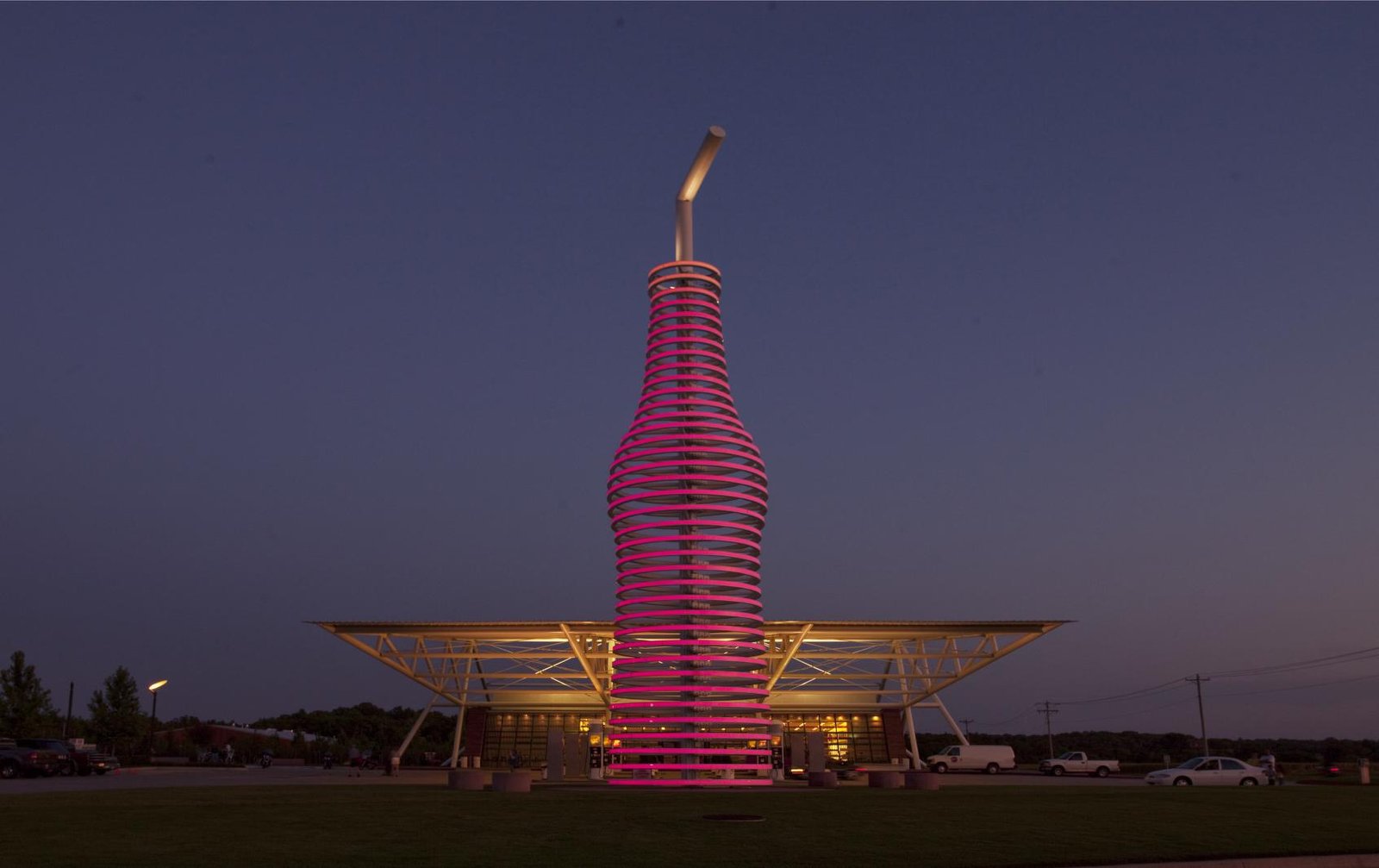
Arcadia provides two contrasting roadside stops: the restored Round Barn and the much newer POPS attraction. Continue east toward Tulsa, where old commercial corridors, architecture and neon show Route 66 as an urban street as well as an open road.
Make time for this
Go inside the Round Barn when open to understand its structure. At POPS, the bottle-shaped landmark is as much part of the experience as choosing a drink. In Tulsa, stop at a visitor resource or museum to add context to the buildings you pass.
Your overnight
Overnight in Tulsa. An evening here gives you time to enjoy the city rather than treating it as an obstacle between smaller towns.
Leave time for Catoosa’s Blue Whale, then follow your chosen historic-road connections toward the brief Kansas stretch. Baxter Springs, Riverton and Galena deserve separate pauses despite their close spacing. Cross into Missouri through Joplin and continue to Carthage.
Make time for this
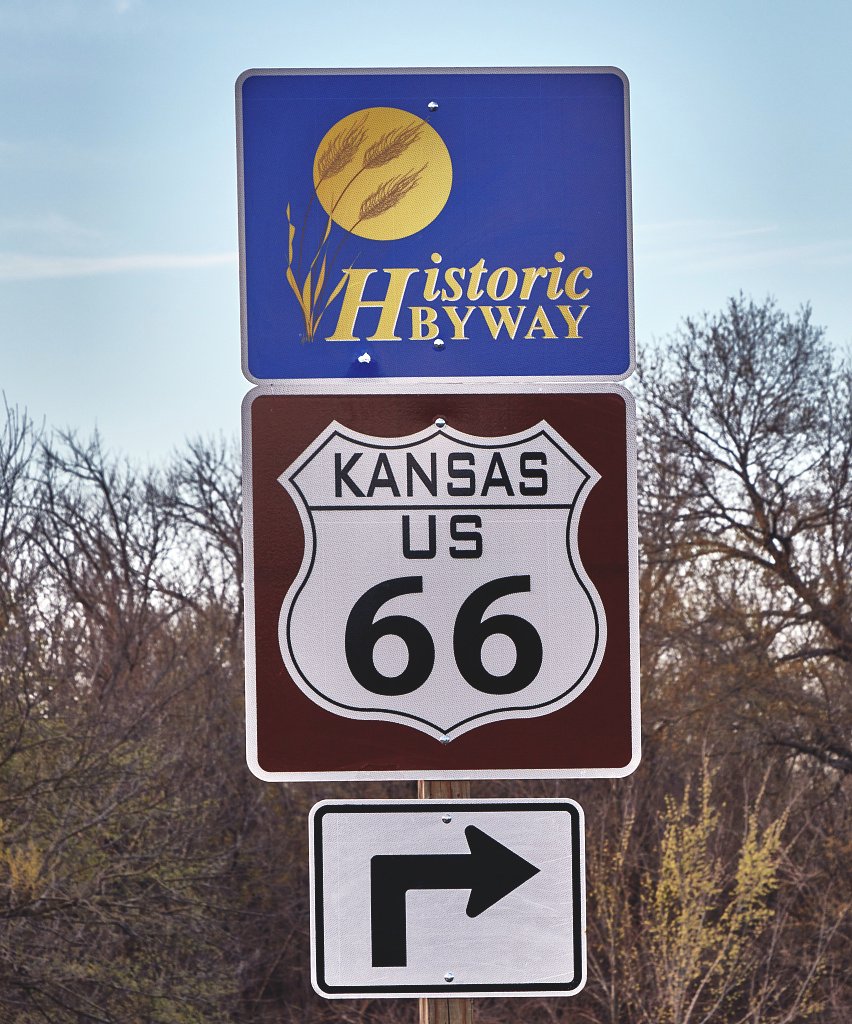
In Kansas, use the official byway map to find the Rainbow Bridge and towns without accidentally skipping the state on a faster road. The Blue Whale is a waterside landmark, not a swimming invitation.
Your overnight
Stay in Carthage. Boots Court offers a restored motor-court experience, while other hotels suit travelers wanting different facilities. If a drive-in screening fits the operating calendar, make that the evening’s main event.
The Ozarks replace the open plains with wooded slopes and river country. Pause in Springfield, Missouri—not Springfield, Illinois, which comes later. Its Route 66 associations make it a useful place to connect the journey’s local stories with the national road.
Make time for this
Choose a museum or downtown walk in Springfield, then continue to Lebanon. A slower afternoon is an opportunity to do laundry, organize photographs and make the next reservations rather than filling every available hour with attractions.
Your overnight
Stay in Lebanon. Pick an operating motel or hotel to suit your needs and check arrival arrangements. Keep the following day’s Ozark stops flexible around weather and opening hours.
Town-center orientation. Directions may take modern highways and do not reproduce the historic alignment.
Day 15 · missouri
Lebanon → Cuba → St. Louis
Approx. 175–205 milesDriving: 3½–5 hoursSleep: St. Louis, Missouri
Cuba’s murals and roadside architecture make a rewarding break on the way toward St. Louis. Optional older alignments around Devil’s Elbow require checking current local access and add time; do not treat a historic bridge photograph as proof of a drivable crossing.
Make time for this
Choose either a longer Ozark stop or extra city time. Near St. Louis, the Old Chain of Rocks Bridge is a walking/cycling heritage attraction, not the road crossing for your car. Plan parking and the modern river crossing separately.
Your overnight
Stay in St. Louis, ideally for an extra night if you want its museums, neighborhoods or riverfront. The city should not be reduced to a photograph taken while searching for the freeway.
Cross the Mississippi on a current vehicle route and head north into Illinois. Agricultural landscapes, small-town main streets and roadside service buildings give this stage a different rhythm from the Southwest.
Make time for this
Use the Illinois byway map to choose among old alignments. In Springfield, combine Route 66 food and memorabilia with a separately planned Lincoln-history visit if that interests you; do not assume both fit into a single short stop.
Your overnight
Stay in Springfield, Illinois. This is a good night for a relaxed diner-style meal and a look through the next day’s small-town stops.
Work north through the Illinois corridor, taking the smaller-road options that suit your day. Pontiac is more than a final fuel stop before Chicago: its museums and murals make it a natural overnight for travelers who enjoy the road’s visual culture.
Make time for this
Give the Route 66 Hall of Fame and Museum a daylight visit, subject to opening hours, then walk the town’s murals. Check the collection’s current access before making it the one essential stop of your day.
Your overnight
Stay in Pontiac or nearby. Keeping Chicago for tomorrow lets you approach the final city with energy and avoids finishing the entire journey in evening commuter traffic.
The final stage returns to urban traffic. Wilmington’s Gemini Giant is now at its relocated South Island Park setting; older guidebooks may send you to its previous diner site. Continue via Joliet and your selected historic urban alignment into Chicago.
Make time for this
Celebrate at the historic downtown Route 66 markers, then visit Navy Pier if you want the 2026 centennial bookend. Distinguish that commemorative extension from the road’s earlier Chicago alignments. Park once and explore on foot or transit where practical.
Your overnight
Stay in Chicago after the finish. Do not schedule a tight flight connection on the same day: traffic, the rental return and the desire to enjoy your arrival all deserve breathing room.
Town-center orientation. Directions may take modern highways and do not reproduce the historic alignment.
Make it your own
Add a Grand Canyon side trip from Williams, a Santa Fe loop in New Mexico, or extra nights in Albuquerque, St. Louis and Chicago. These are additions, not hidden inside the daily mileage. For a shorter trip, choose a section or combine selected short stages after recalculating the driving.