Whitewashed streets, a handsome church and the hills beyond the rooftops. Start in Moral, then follow the road to castles and a famous literary mystery.
Some places invite a checklist. Moral de Calatrava invites a second coffee. In the heart of the Campo de Calatrava, this is a town to explore on foot, with time to look up at a doorway, find a shady corner and let the square set the pace.
Its historic centre was declared a historic-artistic ensemble in 1982. The appeal lies in the whole setting: the monumental church, low white houses and streets that rise toward the sierra. Bring curiosity rather than an ambitious timetable.
The square brings together San Andrés Apóstol, the town hall and the old grain store. The town hall occupies the former Casa de la Encomienda of the Order of Calatrava—a reminder that the name on the map carries a history of military orders as well as an everyday town.
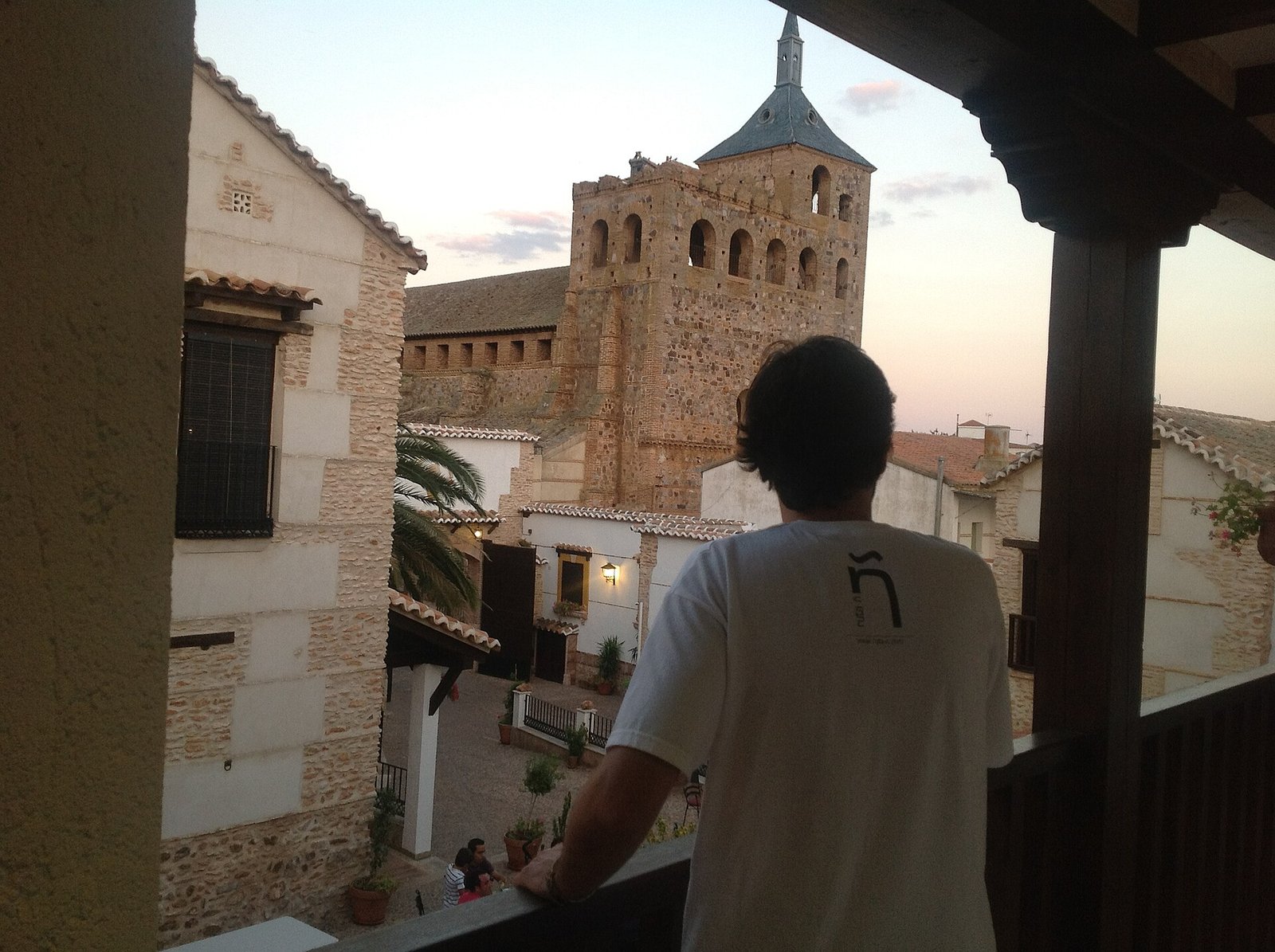
San Andrés rewards a closer look: Gothic forms, a Renaissance doorway and, inside, work by Luis Tristán, a pupil of El Greco. Look at the building from the square before going in; its scale makes more sense beside the surrounding houses.
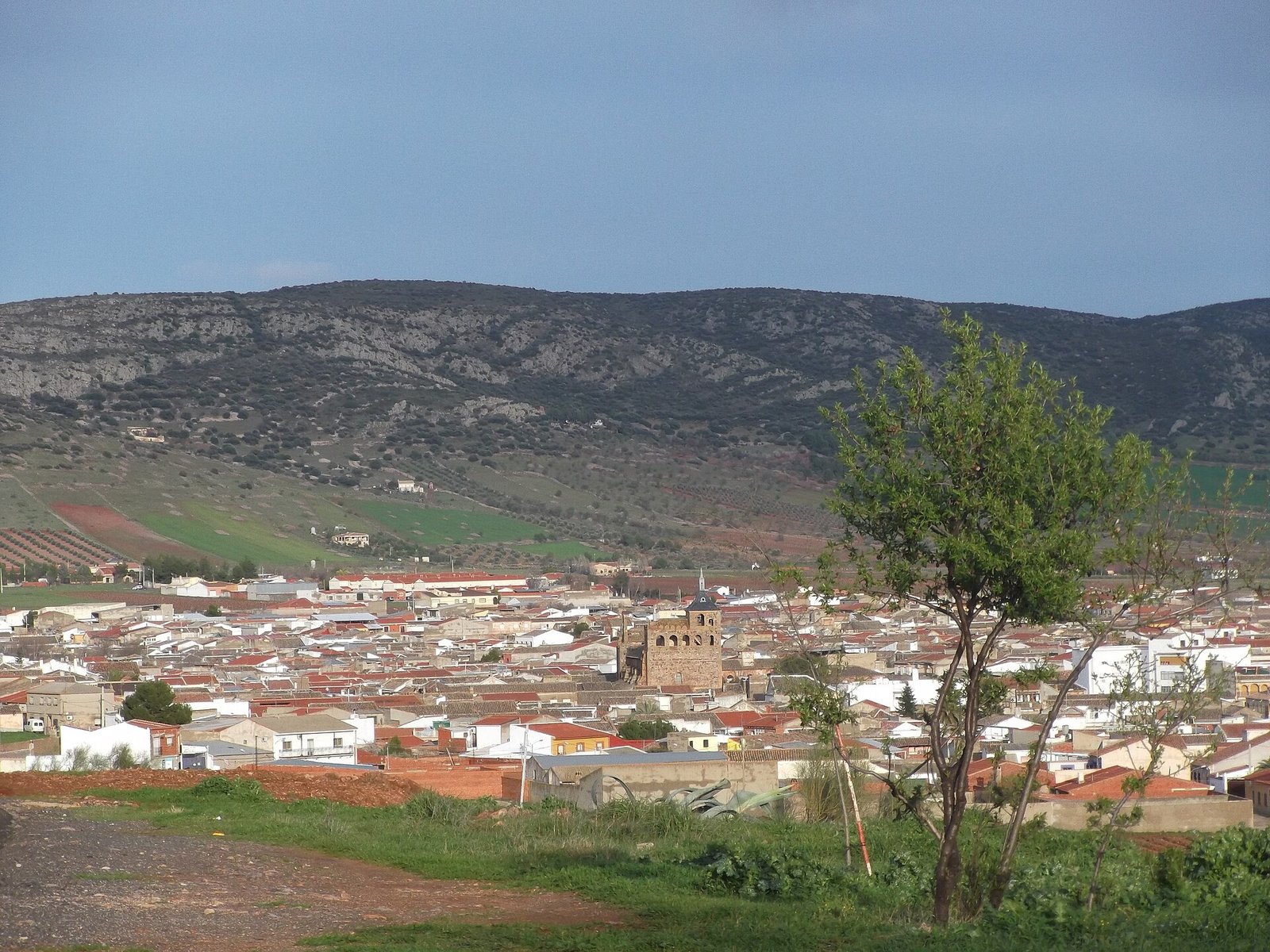
Plan your visitBegin in Plaza de España. Check church visiting arrangements locally and enter outside services; interior access is not guaranteed. The photograph shows the church from a nearby vantage point.
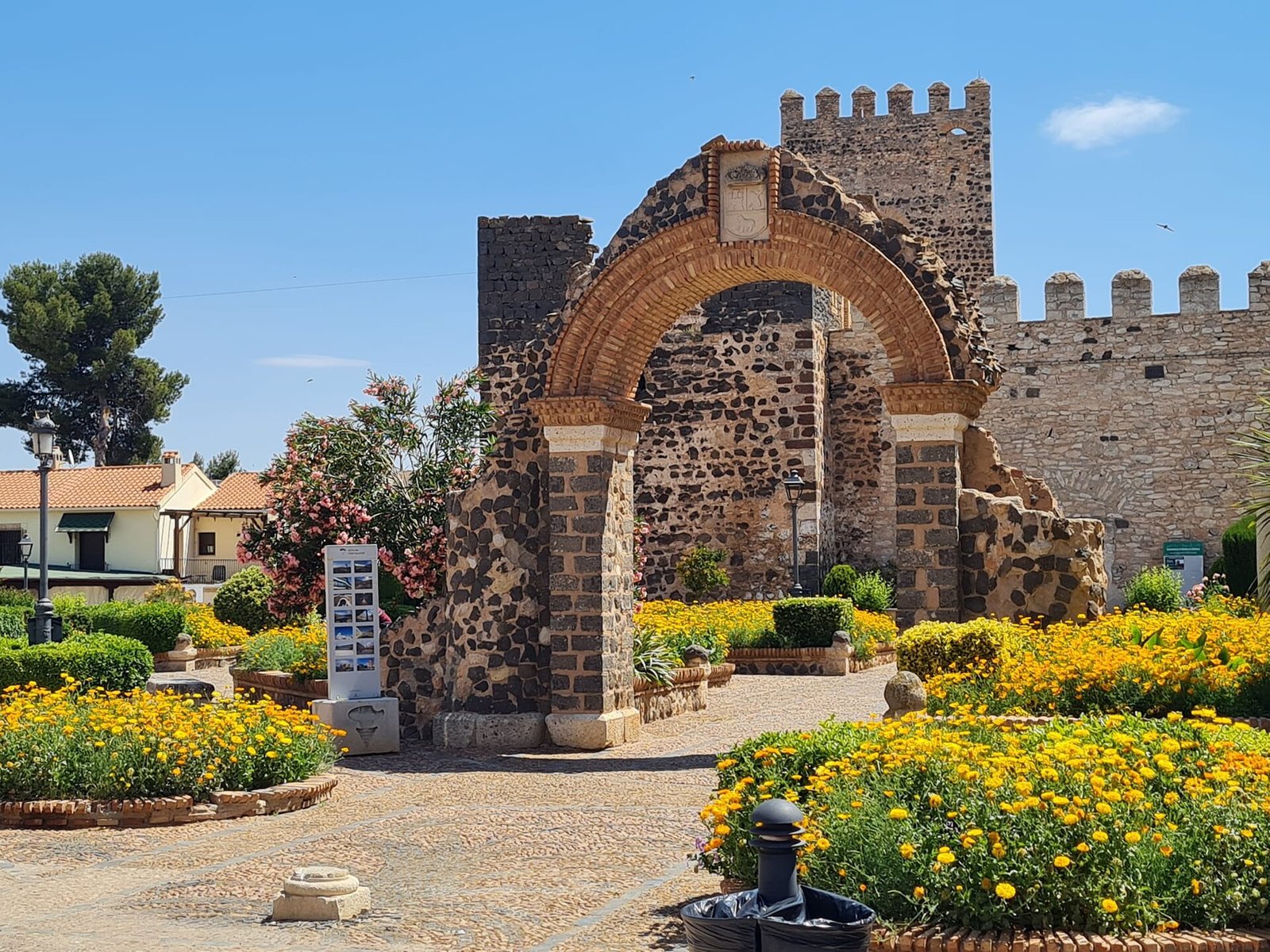
Leave the square for Calle Toledillo and the older lanes. The cultural park’s walking itinerary also takes in the Palacio del Gobernador and the Ermita de la Virgen de la Sierra. It is a good framework for a wander, with small details doing much of the storytelling.
From outside the centre, the rooftops and the hills reveal how compact the town is. For an easy visit, enjoy the streets rather than treating the hill behind them as an unmarked hiking route. The best discovery may simply be the corner you would have hurried past.
Plan your visitUse Calle Toledillo as a starting point, then ask locally about a guided historic-centre walk. Expect slopes and some steps; check a step-free route in advance if needed.
Pair Moral with Bolaños de Calatrava for a local two-town outing. Give each a proper stop rather than collecting two quick photographs. Argamasilla de Alba lies farther northeast: plan it as a separate drive or another day, with the Casa de Medrano visit arranged first.
Public business contacts for your convenience. Confirm availability, rates, room or whole-house arrangements and access directly with the property. Inclusion does not establish ATA membership.
Direct accommodation contact · Hotel · in Moral
Hotel Rural Palacio del Gobernador
A central option on Calle Virgen. Ask the hotel about room availability, meals and arrival arrangements for your dates.
Direct accommodation contact · Rural houses · in Moral
La Ermita de Moral
A house-style alternative on Calle Virgen de la Sierra. Confirm which accommodation you are booking and whether the reservation is for an entire house.
A car or pre-arranged transfer is the simplest way to combine these towns. For public transport, check the actual day’s services and return connection before setting out. Park legally outside the tightest old streets and continue on foot; groups should agree a drop-off point locally.
Researched 13 November 2026. Suggested routes are editorial planning ideas; opening, access and accommodation details can change. Photographs are credited beside each image. Cervantes’s association with the Cueva de Medrano is presented as a local tradition, not an established imprisonment record.


 Enlarge photo ↗