Pamplona offers much more than its best-known festival. A cathedral, Renaissance citadel, civic square and gardens integrated with former defences reveal a city shaped by pilgrimage, royal power, military engineering and everyday public life.
Understand the place
Pamplona: history & setting
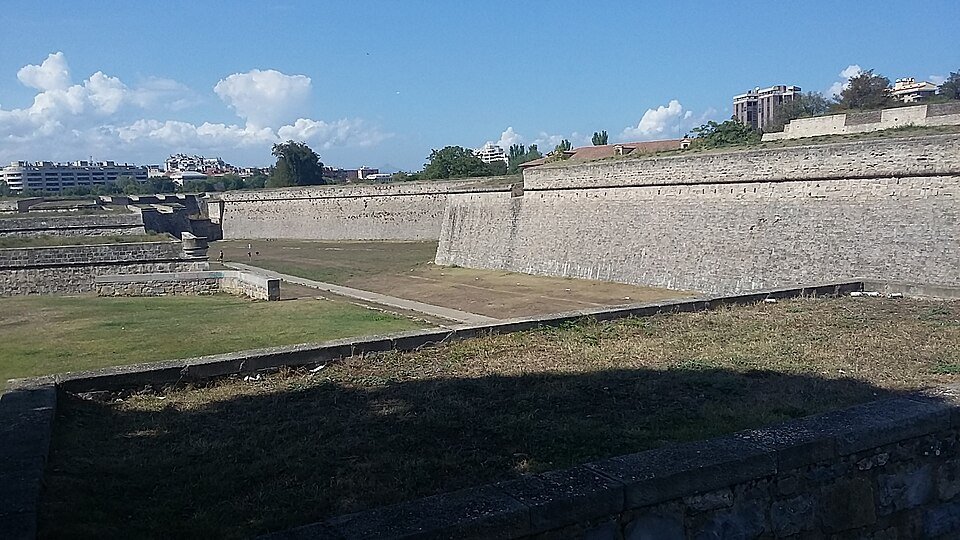
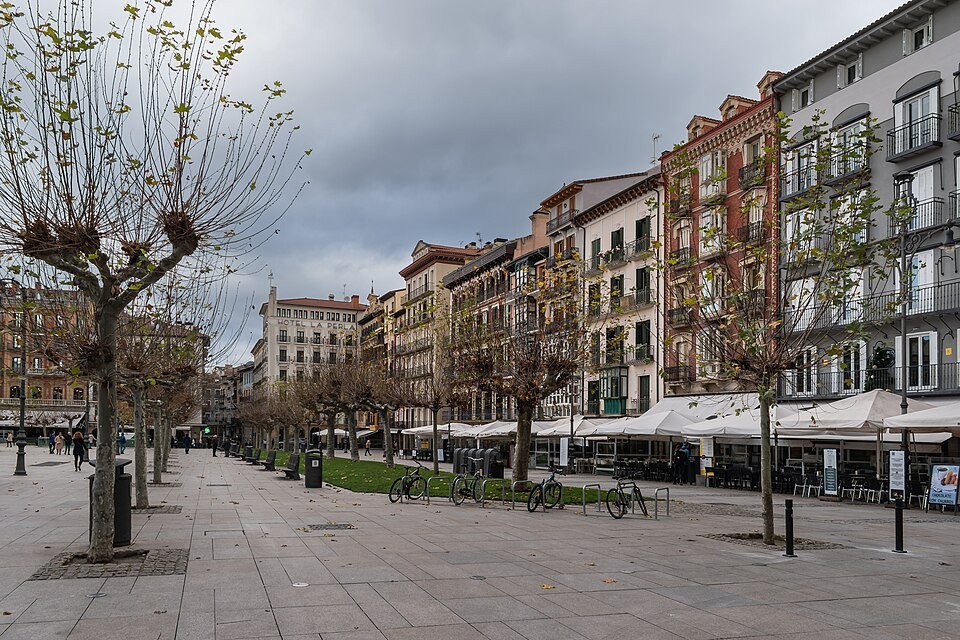
The historic city developed through neighbouring medieval boroughs, whose eventual union is reflected in the civic centre around the Town Hall. The cathedral preserves Gothic architecture behind a later neoclassical façade. From the sixteenth century, the Citadel introduced a different kind of planned geometry, responding to the demands of artillery warfare. As the city expanded, parts of the defensive landscape were transformed into public green spaces. The Taconera Gardens make that transition particularly clear, connecting formal planting with the remains of former fortifications.
More about Pamplona & original local links
Where Valor Runs with the Bulls - Pamplona, the Heartbeat of Navarre
Nestled in the verdant landscapes of Navarre, where the Arga River meanders through hills and valleys, Pamplona welcomes you with an embrace as warm as the Spanish sun.
A city steeped in tradition, brimming with history, and pulsating with a vibrant energy that belies its modest size. Welcome to Pamplona, the capital of Navarre, where the echo of the past meets the clamor of the present in a mesmerizing dance.
Where to stay
Pamplona, or Iruña as it's known in the local Basque language, is perhaps most famous for the Festival of San Fermín, a week-long explosion of joy, color, and excitement that envelops the city every July. This is the Pamplona of the Running of the Bulls, where bravery, or perhaps a touch of madness, sees men and women running through the cobbled streets with a herd of bulls in hot pursuit. The festival is a whirlwind of music, dance, and tradition, a spectacle that draws visitors from every corner of the globe.
Yet, there is so much more to Pamplona than the adrenaline rush of San Fermín. The city's history is etched into the stone of its well-preserved fortifications, among the best in Europe, and whispers in the hallowed halls of its Gothic cathedral. Walk along the city walls, through the Taconera Park, and you'll be walking the same path as the ancient Romans, the stalwart soldiers of the Middle Ages, and the pilgrims of the Camino de Santiago, whose footsteps still echo on the city's pavements.
The spirit of Ernest Hemingway, who fell in love with Pamplona and immortalized it in his works, lingers in the city's many cafes and bars, where you can taste the region's renowned pintxos, the Basque Country's answer to tapas, and wash them down with a glass of crisp Navarre wine. Follow in Hemingway's footsteps to Café Iruña, a favorite haunt of the author, and let the city's tales unfold around you.
Beyond its history and traditions, Pamplona is a city that pulses with life. Its bustling markets, like the Mercado de Santo Domingo, offer a bounty of local produce, while its green spaces, such as the enchanting Yamaguchi Park, provide a peaceful respite from the city's energetic pace. The city's vibrant arts scene, with institutions like the Museo Universidad de Navarra, showcases a commitment to culture that continues to push Pamplona towards the future.
But at the heart of Pamplona's charm are its people, the Pamplonicas. Warm, open-hearted, and proud of their city's heritage, they infuse Pamplona with a spirit of camaraderie that ensures every visitor feels welcome. From the cheers of the crowd during a pelota match to the lively conversations in the city's pintxo bars, their passion for life is truly infectious.
Pamplona invites you to join in its celebrations, to stroll along its ancient walls, to lose yourself in the richness of its culture, and to share in the infectious joy of its people. Come, let Pamplona charm you, and discover a city that celebrates life with an unbridled enthusiasm that is sure to captivate your heart.

 Enlarge photo