Gardens, railway heritage and a walkable historic heart
Aguascalientes is both a state and its capital. Start in the city for plazas, museums and the railway story, then use it as a base for the smaller towns. The compact historic center suits a first visit on foot; Tres Centurias and the countryside need separate time in the itinerary.
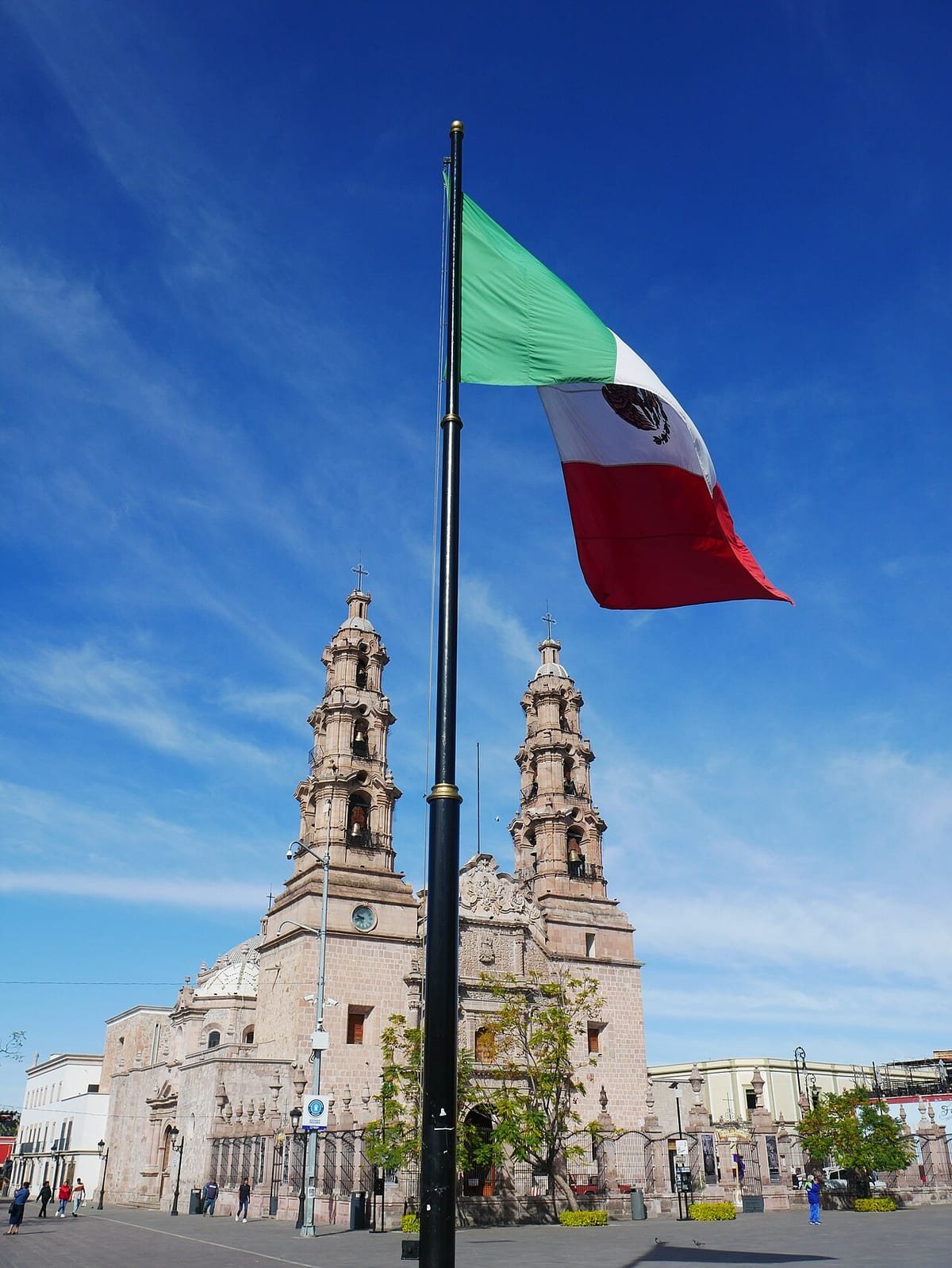
Enlarge photo ↗The cathedral and national flag in central Aguascalientes.
Begin in the main square to understand the city before heading into the surrounding streets. The cathedral anchors the historic center; visit quietly around services and spend time looking at its stonework rather than treating it as a photograph stop. This is a practical meeting point for a walking day.
The enclosed garden and neighboring San Marcos temple offer a different rhythm from the main square. Come for a shaded pause and a neighborhood walk. The area changes character during the Feria Nacional de San Marcos, when crowds and programmed events affect access, noise and hotel demand.
The former station and railway workshops explain why trains matter to the city. Combine the station museum with the surrounding public spaces; contemporary-art visitors can add Museo Espacio in the former workshop complex. Treat the museums as separate visits with their own opening days.
Make time for the visit
With one full day, walk the main square and historic streets in the morning, break for lunch, and finish around San Marcos. With two days, give the railway district and a museum their own morning. Add a third day for Calvillo or Real de Asientos rather than trying to squeeze both into one outing.
Food & local life
Choose a market or neighborhood fonda for a daytime meal, and ask which guisados are being served rather than relying on a fixed menu. Look for guava sweets from Calvillo. Festival food stalls can be enjoyable, but check prices before ordering and carry drinking water during long outdoor days.
Getting here & getting around
Arrive through Aguascalientes airport or the intercity bus terminal, then arrange the transfer to your accommodation. Central sights can be linked on foot, while Tres Centurias is a separate district. For country excursions, agree the return journey before leaving town; a ride out does not guarantee a car home.
Check opening days before fixing a museum visit. Ask each venue about steps, uneven surfaces and assistance if access is important for your party. For the wider journey, use our Mexico travel-planning and safety guide.
Choose a practical base
Where to stay
Choose a walkable historic-center stay, a garden-and-pool retreat, or a northern-city base for excursions. These three properties offer different settings; use their own websites to compare rooms and book directly.
A central base opposite the cathedral, convenient for walking to the main square and downtown museums. Choose from rooms and suites; ask about street-facing room noise and valet-parking arrangements, especially during the San Marcos fair.
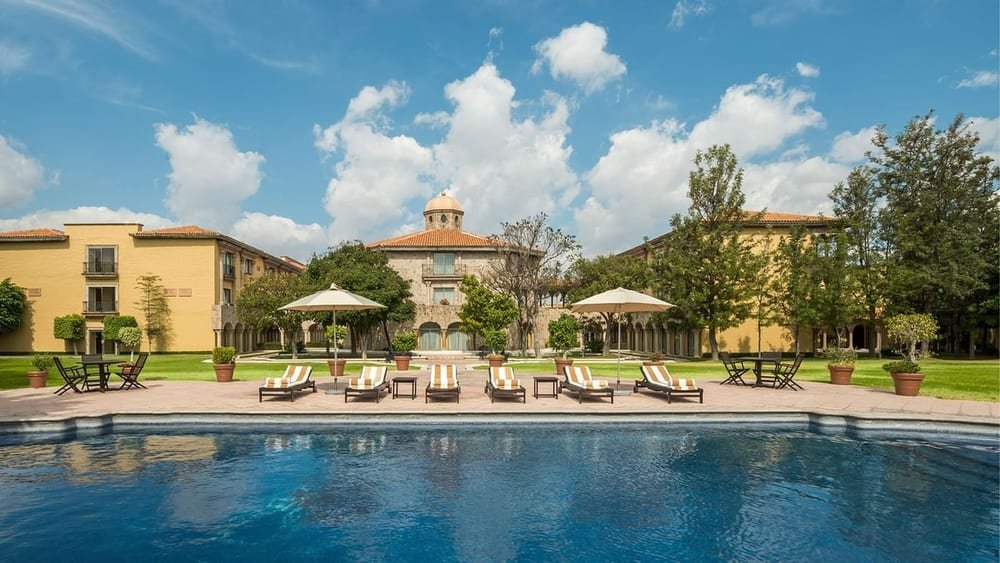
Suites, landscaped courtyards and an outdoor pool make this a choice for a more leisurely stay. It is outside the historic walking core: plan a ride into the center and compare room categories and breakfast packages before booking.
A northern-city base opposite the Altaria shopping area, with gardens, a pool, restaurant and parking. Useful for travelers combining city time with excursions north; allow for transfers to the historic center and the surrounding towns.
Check current rates, room availability, inclusions and cancellation terms directly with the property. Hotels outside the destination are labeled with their actual location.
ATA’s guide combines destination research with practical itinerary suggestions. Sources checked November 2026; event schedules and operating arrangements can change. Photographs are credited alongside each image.

 Enlarge photo ↗